[Blog]Japan’s ¥30 Million Business Manager Requirement: Rethinking the Distinction Between Professional Work and Business Management
2026-10-19
A Fundamental Question Raised by Stricter Business Manager Requirements
On October 16, 2025, Japan significantly tightened the requirements for the Business Manager status of residence, raising the capital requirement from ¥5 million to ¥30 million and introducing additional conditions, including the employment of at least one full-time employee. These changes have created substantial challenges for foreign nationals operating small businesses in Japan. Transitional arrangements apply to existing Business Manager status holders, meaning that failure to satisfy the new requirements does not automatically result in refusal of an extension during the transitional period ending October 16, 2028. Nevertheless, many foreign entrepreneurs face uncertainty about their long-term residence in Japan. This situation raises a fundamental question: Were all the activities previously classified under the Business Manager status genuinely business management activities in the first place?
What Do Small Business Owners Actually Do?
Owners of small businesses rarely devote themselves exclusively to corporate management. They often perform a wide range of professional tasks, including human resources management, labour administration, financial analysis, accounting, international trade, marketing, and information systems development. Consider a foreign entrepreneur working 40 hours per week, spending 30 hours on specialised human resources, financial analysis, and international sales, while devoting the remaining 10 hours to executive decision-making. Should all these activities automatically be classified as Business Manager activities? Working hours alone cannot determine the appropriate residence status. Some human resources and accounting responsibilities may themselves constitute business management, particularly when they involve organisational authority or strategic decisions. Nevertheless, professional work requiring specialised knowledge and executive decision-making are conceptually distinguishable. This distinction deserves closer examination.
Japan’s Immigration Authorities Recognise Overlapping Activities
The Immigration Services Agency of Japan (ISA) has previously acknowledged that activities under the Business Manager status may overlap with those under the Engineer/Specialist in Humanities/International Services status, commonly referred to as ESHIS. Business management may involve tasks requiring knowledge of the natural sciences or humanities. The ISA has explained that, even where an individual's duties include certain management-related activities, the ESHIS status may be appropriate if the overall activities do not fall within the Business Manager category. This interpretation is significant because it demonstrates that residence status should not necessarily be determined solely by a person's corporate title. However, the same guidance also indicates that where substantive business management overlaps with professional work, the Business Manager classification may take precedence. It further explains that individuals newly assuming or resuming executive management positions generally need to obtain the Business Manager status. Therefore, remaining a representative director while changing to ESHIS cannot be assumed to be permissible. Reference: Immigration Services Agency: Relationship Between Business Manager, Engineer/Specialist in Humanities/International Services, and Intra-company Transferee Statuses.
Were Some Business Managers Primarily Performing Professional Work?
The revised capital requirement creates an opportunity to reconsider how the activities of small foreign-owned businesses have traditionally been classified. Some foreign entrepreneurs may have held Business Manager status because they established companies and served as representative directors, even though much of their daily work involved specialised human resources, accounting, financial analysis, or international business operations. In such circumstances, it may be reasonable to examine whether their principal activities could instead qualify under ESHIS. This status generally requires relevant academic qualifications or professional experience. For certain technical and humanities-related occupations, at least ten years of relevant practical experience may satisfy the experience requirement in place of academic qualifications. However, ten years of general business ownership or management experience does not automatically establish eligibility. Applicants must demonstrate that their experience is directly relevant to the specialised duties they intend to perform. The central consideration should be the nature of their professional activities, rather than simply the amount of capital invested in their companies.
Could Business Management Be Treated as an Activity Outside the Primary Residence Status?
A further possibility deserves consideration: classifying specialised professional work as the principal activity under ESHIS while treating limited business management responsibilities as separately authorised activities outside the primary residence status. Article 19(2) of Japan's Immigration Control and Refugee Recognition Act provides a framework under which foreign nationals may receive permission to engage in certain income-generating business operations or remunerated activities not covered by their existing residence status. Such permission is commonly known as Permission to Engage in Activity Other Than That Permitted Under the Status of Residence Previously Granted. Depending on the circumstances, permission may be granted on a comprehensive or individual basis. The existence of this framework demonstrates that Japanese immigration law does not categorically prohibit foreign nationals from undertaking activities associated with more than one residence status. It is therefore worth examining whether a foreign national whose principal duties consist of specialised human resources or accounting work could obtain individual permission to perform limited executive management activities. However, this should be regarded as a legal and administrative question requiring clarification, rather than an established or routinely accepted immigration procedure. In particular, continuing to serve as a representative director with comprehensive management authority may make it difficult to characterise executive activities as genuinely secondary. Reference: Immigration Services Agency: Permission to Engage in Activity Other Than That Permitted Under the Status of Residence Previously Granted.
Does the ¥30 Million Requirement Apply to Secondary Business Activities?
One of the most important legal questions concerns the relationship between the revised Business Manager requirements and permission for activities outside an existing residence status. The ¥30 million capital requirement forms part of the criteria applicable to the Business Manager status. Permission for additional activities, however, is governed by a separate statutory framework under Article 19(2). It does not necessarily follow that every requirement applicable to obtaining Business Manager status must automatically apply in precisely the same way to an application for permission to engage in secondary activities. Nevertheless, this distinction does not establish that business management activities involving companies capitalised below ¥30 million will necessarily be permitted. The ISA has also explained that business operations conducted under permission for activities outside the primary residence status generally contemplate relatively small-scale activities. Its guidance indicates that operations involving the establishment of a corporation, employment of staff, or establishment of a business office may require a change to Business Manager status. The application of this guidance to an existing company whose representative director seeks to change their principal residence status remains an important issue. The central question is whether the capital threshold operates as an automatic barrier or whether the authorities must assess the actual nature, scale, continuity, and secondary character of the proposed business activities.
Regulatory Circumvention or a More Accurate Classification of Activities?
Critics might argue that combining ESHIS status with individual permission for business management activities would undermine the stricter Business Manager requirements. Such concerns cannot simply be dismissed. If a foreign national continues to devote most of their time and responsibility to running a company while nominally describing professional duties as their principal activity, the proposed arrangement may not accurately reflect the reality of their work. However, the opposite situation also deserves attention. Where a person's primary responsibilities genuinely involve specialised professional services and executive management occupies only a limited part of their activities, should the individual automatically be excluded from ESHIS simply because they retain the title of representative director? The distinction between legitimate classification and regulatory circumvention should depend on the substance of the activities, the distribution of responsibilities, and the applicable legal requirements. It should not be determined exclusively by corporate titles or capital levels.
What Evidence Would Be Necessary?
Any practical application of this approach would require careful documentation. First, the applicant would need to demonstrate the specialised nature of their principal duties and establish the relevant educational or professional experience requirements for ESHIS. Second, the actual allocation of working time and responsibilities would need to be explained. Third, professional duties such as developing human resources systems, conducting financial analysis, or managing international commercial projects should be distinguished from executive responsibilities such as approving corporate strategy, making final hiring decisions, arranging corporate financing, and exercising ultimate management authority. Fourth, the contractual relationship with the Japanese company, the basis of remuneration, and the individual's legal authority as a director would need to be documented. A Certificate of Authorized Employment may help establish the scope of employment activities already permitted under an existing residence status, but it does not provide advance approval for a future change to ESHIS. The sequence of applications also requires careful consideration. A foreign national changing from Business Manager to ESHIS cannot assume that previously authorised management activities may continue after the change without any additional permission that may be required.
Questions the Immigration Services Agency Should Clarify
Rather than asking only whether a representative director may change from Business Manager to ESHIS, a more precise legal inquiry should address several distinct questions. Can a foreign national whose principal activities genuinely satisfy the ESHIS requirements retain a representative director position while obtaining individual permission for limited business management activities? What criteria distinguish principal professional activities from secondary executive responsibilities? Does the ¥30 million capital requirement have any direct or indirect relevance when examining permission under Article 19(2)? How should the existing guidance concerning corporate establishment, employees, and business offices be applied to an already established company? If the proposed arrangement is considered impermissible, which statutory or regulatory requirements prevent its approval? Clear answers would improve predictability and help distinguish genuine professional activity from arrangements designed merely to avoid the Business Manager requirements.
From Stricter Business Manager Requirements to a Reassessment of Residence Status
The introduction of the ¥30 million capital requirement represents a major turning point for foreign entrepreneurs operating smaller businesses in Japan. However, the consequences should not be examined solely through the question of whether existing companies possess sufficient capital. The reform also invites a broader reassessment of how foreign nationals' activities are classified under Japan's residence status system. Some individuals previously treated primarily as business managers may in fact devote substantial portions of their working lives to specialised professional activities that deserve independent consideration. This does not mean that every small business owner qualifies for ESHIS or that executive management can automatically be authorised as a secondary activity. It does mean that capital requirements, professional qualifications, and the substantive nature of activities should not be confused. A coherent immigration system should evaluate what foreign nationals actually do, determine which legal categories apply to those activities, and explain the boundaries between principal and additional authorised work. Ultimately, the fundamental question is not simply how much capital a foreign entrepreneur possesses, but what activities that individual performs in Japan and how those activities should properly be regulated under immigration law.
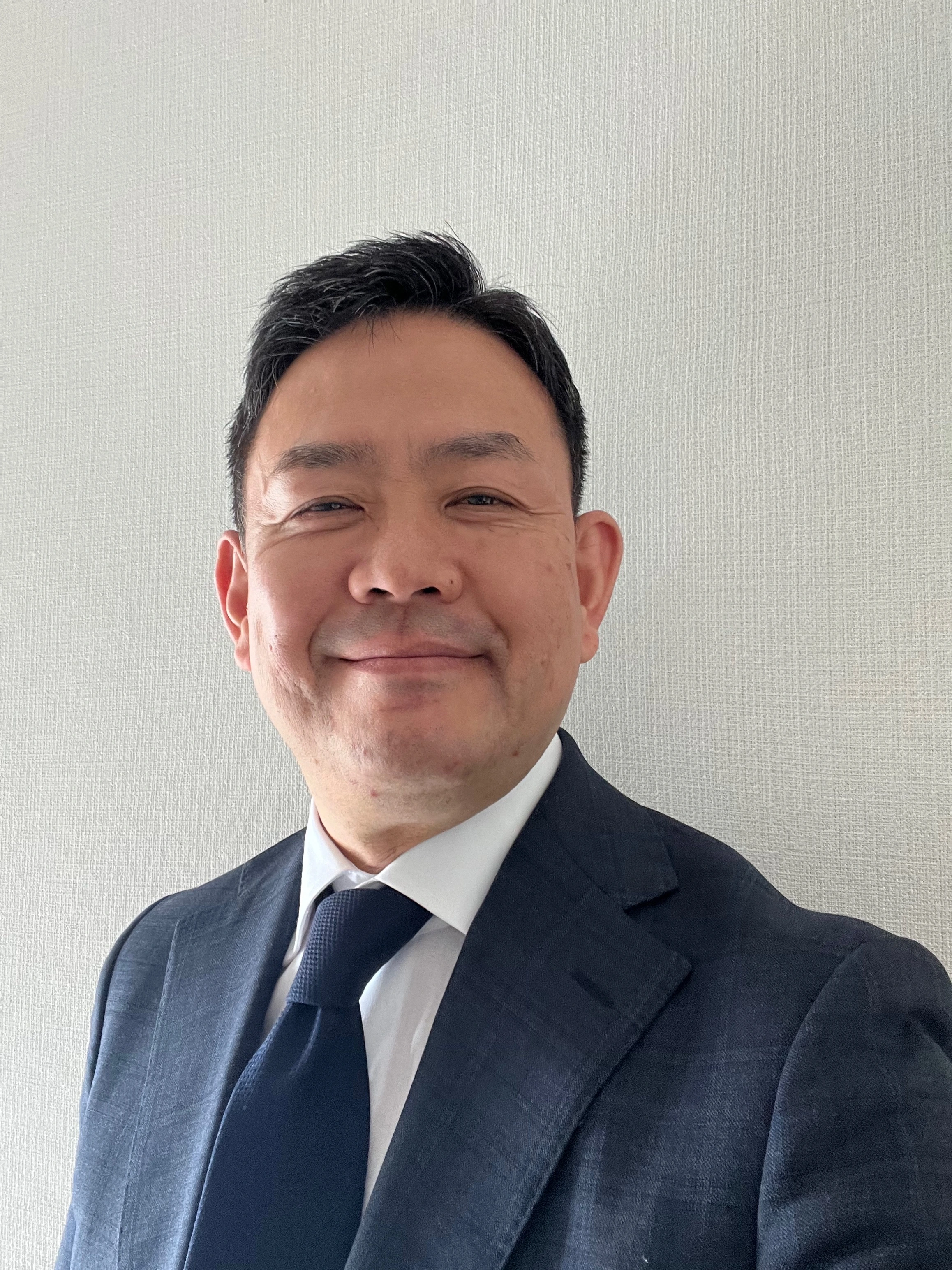
Author: Kenji Nishiyama (Certified Administrative Procedures Legal Specialist(Gyoseishoshi), Registration No.20081126)
Kenji Nishiyama is an Immigration and Visa Specialist who has supported many foreign residents with visa applications in Japan. On his firm’s website, he publishes daily updates and practical insights on immigration and residency procedures. He is also well-versed in foreign employment matters and serves as an advisor to companies that employ non-Japanese workers.