[Blog]An Unelegant Policy Shift — When Did Foreign Residents Become the --Beneficiaries--?
2026-10-09
The Real Issue Is Not the ¥75,000 Fee
On 1 October 2026, Japan substantially revised the fees for applications to change or extend a status of residence. What had essentially been a uniform fee was replaced by a structure in which the amount depends on the period of stay granted. For applications made at an immigration office, the fee is ¥33,000 for one year, ¥64,000 for three years or more but less than five years, and ¥75,000 for five years or more.
What I find most significant about this reform, however, is not the amount itself. It is the use of the concept of “benefit” to explain why the fee should differ according to the period of stay granted.
The Immigration Services Agency of Japan explains that the fees differ because “the degree of benefit derived from measures for the fair management of the entry, departure and residence of foreign nationals varies depending on the period of stay.” The explanation can be found in the Immigration Services Agency’s official QA.
I believe it is this word — “benefit” — that may reveal something more fundamental about the direction in which Japan’s immigration policy is moving.
There Was a Time When Japan as a Whole Was Described as the Beneficiary
An interesting contrast can be found in discussions held in 2009 by the Fifth Immigration Control Policy Roundtable. In discussing the acceptance of people of Japanese descent, one view recorded in the official minutes stated, in substance:
People of Japanese descent contribute to maintaining and enhancing Japan’s vitality, and Japan as a whole is therefore the beneficiary.
From that perspective, the costs associated with accepting foreign nationals should not simply be imposed on the companies employing them, but should be considered as an issue for society as a whole. This was not itself a final government policy decision, but an opinion expressed during an official policy advisory discussion. Nevertheless, it provides a striking example of how the concept of “benefit” was once framed in immigration-policy debate. The record can be found in the minutes of the 17th meeting of the Fifth Immigration Control Policy Roundtable.
In other words, at least within that discussion, the beneficiary of accepting foreign nationals was not understood to be the foreign nationals alone. Foreign nationals worked, contributed to the economy and supported Japanese society, and Japan as a whole was described as benefiting from their presence.
In 2026, the Location of the “Beneficiary” Has Changed
Seventeen years later, the direction in which the language of “benefit” is being used appears markedly different.
At the House of Representatives Committee on Judicial Affairs on 24 April 2026, the government described permission to change a status of residence and similar immigration permissions as administrative decisions that confer “a certain benefit or privilege” on foreign nationals wishing to reside in Japan.
The government further explained that the fee has the character of consideration for granting a foreign national the status necessary to reside in Japan, and that, from the perspective of the beneficiary-pays principle, it had become necessary to require foreign residents to bear an appropriate share of the costs associated with the fair administration of entry and residence. The discussion is recorded in the minutes of the House of Representatives Committee on Judicial Affairs, 221st Diet, No. 7.
In 2009, there was discussion of “Japan as a whole” being the beneficiary. In 2026, foreign residents themselves are expressly positioned as those who should bear costs under the beneficiary-pays principle.
Of course, these statements were made in different periods, in different institutional contexts and for different purposes. It would therefore be too simplistic to claim that government policy has simply reversed by 180 degrees. Nevertheless, the contrast raises an important question about from whose perspective “benefit” is being understood in Japan’s immigration policy.
Is Residence in Japan Itself a “Benefit”?
This leads to a more fundamental question.
Foreign nationals do not possess an unconditional right to remain in Japan equivalent to the freedom of residence enjoyed by Japanese nationals. They reside in Japan within the framework established by immigration law, under a particular status of residence and for a specified period of stay.
Certainly, a person granted a five-year period of stay gains a practical advantage over someone required to renew their status every year. But does that necessarily mean that the person receives five years’ worth of “benefit” from measures relating to the fair administration of immigration and residence?
Foreign nationals are also the subjects of that administrative system. Their permitted activities, periods of stay, affiliations and various notification obligations are regulated by law. If the person being regulated is simultaneously characterised as the “beneficiary” of that regulatory system and is therefore required to bear its costs, then the meaning of the benefit involved deserves careful explanation.
“A Longer Period of Stay Means a Greater Benefit” Is Not Self-Evident
The logic underlying the new fee structure can be simplified as follows: a longer period of stay means a greater degree of benefit, and a greater degree of benefit therefore justifies a higher fee.
But the first step in that reasoning is far from self-evident.
What precisely does a foreign national granted five years receive to a greater degree than someone granted one year? Is the benefit the ability to avoid annual renewal procedures? Is it the ability to live in Japan for a longer period? Is it the administrative service of residence management? Or does it include the wider advantages associated with living and working in Japanese society?
It can appear that the “degree of benefit” is being measured before “benefit” itself has been clearly defined.
That is where I find the policy design somewhat inelegant.
If We Discuss Benefit, What About the Benefit Received by Japanese Society?
There is another important dimension: benefit flows in both directions.
Foreign residents undoubtedly receive benefits from living in Japan. But Japanese society also benefits from their presence. Foreign nationals work, pay taxes and social insurance contributions, consume goods and services, support businesses, and provide skills and knowledge. In communities experiencing population decline, foreign residents may also play an increasingly important role in sustaining local industries and communities.
This is not an argument that immigration fees should therefore be abolished. Nor is it an argument that the benefits received by Japanese society should simply be offset against administrative fees.
The issue is one of conceptual symmetry.
If “benefit” is to become a principle of policy design, then the question of who benefits from whom, and in what way, cannot reasonably be examined in only one direction.
Seen from that perspective, the 2009 statement that “Japan as a whole is the beneficiary” takes on renewed significance.
Calling Someone a “Beneficiary” Creates Another Question
There is, moreover, another issue embedded in the beneficiary-pays principle — one that the government may not necessarily have intended to raise.
If the state tells foreign residents, “You are the beneficiaries of these policies, and therefore you should bear an appropriate share of their costs,” it would not be surprising if another question followed:
“Then how are we able to express our views on how those policies are designed?”
Of course, being a beneficiary or bearing public costs does not, as a matter of law, automatically give rise to voting rights for foreign nationals. The question of political participation must be considered separately in light of constitutional law, nationality, local autonomy and other legal principles.
But the issues cannot necessarily be separated so easily at the level of policy philosophy.
A foreign resident may live in Japan for many years, work, pay taxes and social insurance contributions, and then be required to bear an additional financial burden precisely because the government identifies that person as a “beneficiary” of immigration-related policies. It is then entirely conceivable that the person might ask: What mechanism exists for me to participate in decisions concerning the policies whose costs I am being asked to bear?
This does not necessarily mean voting rights in national elections. Policy participation can take many forms, including participation in local government processes, advisory councils, foreign-resident councils, public consultations and other mechanisms. Nevertheless, once the beneficiary-pays principle is introduced, it may inevitably raise broader questions about the relationship between rights, benefits, burdens and participation.
Policy Language Has Consequences Beyond the Policy in Which It First Appears
This is at the heart of my concern about the present policy shift.
The word “benefit” does not exist solely to explain an immigration fee.
Once someone is defined as a beneficiary, a rationale for imposing a burden can follow. Once a burden is imposed, questions may arise about participation in decisions concerning that burden. And once foreign residents are positioned as both beneficiaries and contributors within society, it becomes increasingly difficult to view them solely as objects of immigration control.
A concept introduced for one policy purpose cannot always be confined to that policy alone.
The Greater Risk Is Failing to Recognise a Turning Point as a Turning Point
Policy turning points do not necessarily arrive with an announcement saying, “From today, our policy philosophy has changed.”
Viewed separately, higher immigration fees, fees differentiated by period of stay, Japanese-language programmes, social integration measures, digitalisation of immigration administration and reforms to permanent residence may all appear to be independent policy changes. Looking back years later, however, those individual changes may appear as parts of a broader transformation in the philosophy underlying the system.
That is why it is not enough to ask what has changed.
We must also ask: What concept, previously absent or peripheral, has now begun to function as a principle guiding the system?
In this case, the figure of ¥75,000 may not be the most important development. The more significant development may be the policy language of the beneficiary-pays principle.
An Unelegant Policy Shift
There can legitimately be different views about the direction of immigration policy. As the administrative costs associated with immigration increase, whether foreign residents should bear some proportion of those costs is itself a legitimate subject for public debate.
But the larger the policy shift, the clearer its underlying concepts should be.
What is residence? What constitutes a benefit? Who is the beneficiary? What exactly is the burden paying for? And how should those who benefit and bear that burden participate in the formation of the policies concerned?
In 2009, there was discussion of “Japan as a whole” being the beneficiary. In 2026, the government expressly invoked the beneficiary-pays principle to justify requiring foreign residents to bear an appropriate share of the costs.
When, exactly, did the “beneficiary” shift from Japan as a whole to the foreign resident?
Building the next stage of immigration policy upon an insufficiently defined concept of “benefit,” without fully debating that shift, strikes me as institutionally inelegant.
The real issue is not simply the amount of the fee. The greater risk is that the language underlying policy changes, while we fail to recognise that change as a turning point — and then move on to the next reform with the new concept already embedded as an unquestioned premise.
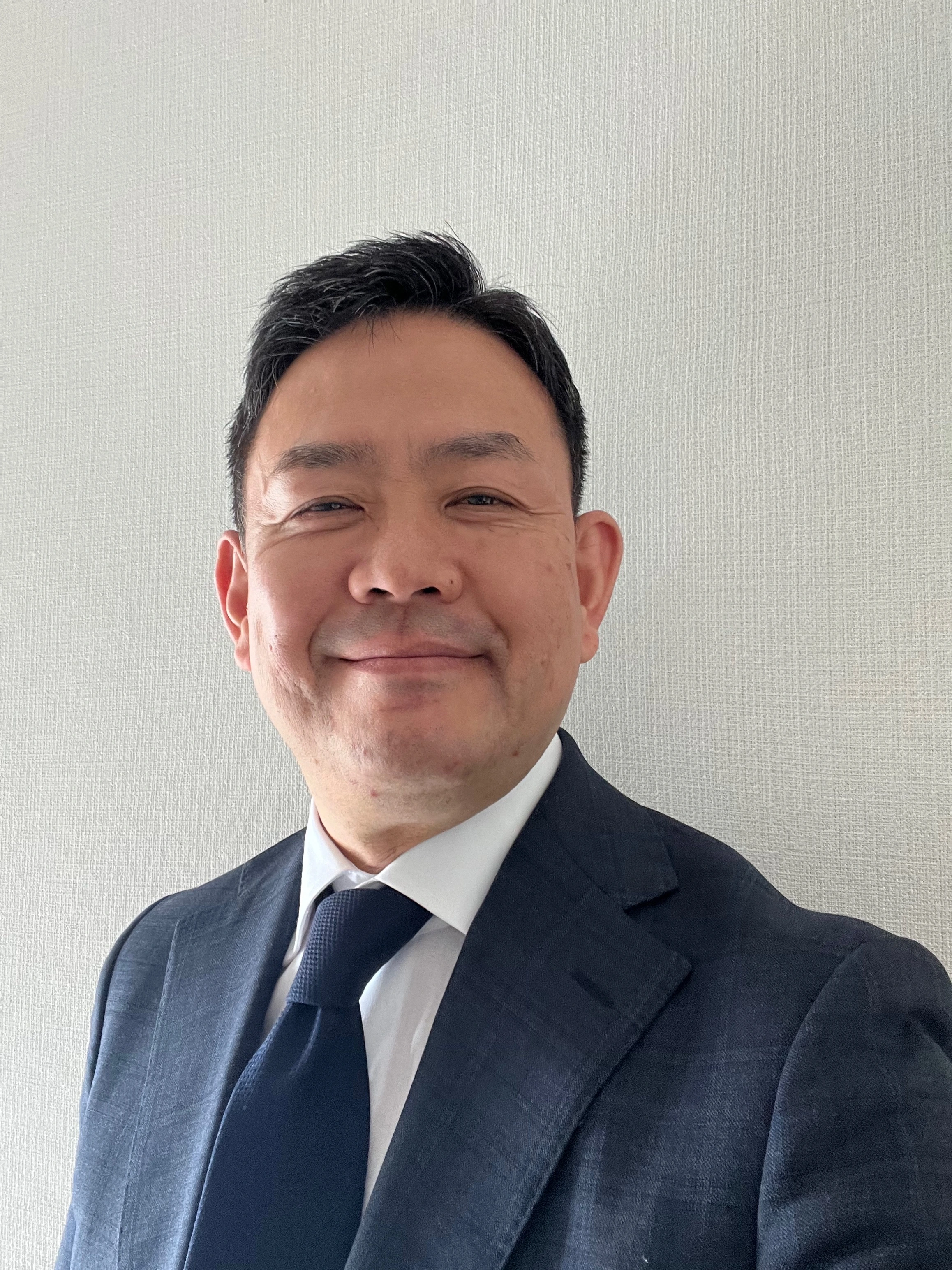
Author: Kenji Nishiyama (Certified Administrative Procedures Legal Specialist(Gyoseishoshi), Registration No.20081126)
Kenji Nishiyama is an Immigration and Visa Specialist who has supported many foreign residents with visa applications in Japan. On his firm’s website, he publishes daily updates and practical insights on immigration and residency procedures. He is also well-versed in foreign employment matters and serves as an advisor to companies that employ non-Japanese workers.