[Blog]Why Does One Person’s Behavior Become a Characteristic of an Entire Group? — Asymmetrical Attribution and Confirmation Bias —
2026-09-21
1. The Problem Is Not Only What We See
The previous chapter examined how the appearance of an outgroup—“them”—can make the ingroup—“us”—appear more favorable by comparison. It also pointed out that even when the same behavior occurs, an act by a Japanese person may be understood as an individual problem, while an act by a foreign resident may be interpreted as a problem of the group.
There is an even deeper issue behind this asymmetry.
We do not simply record events exactly as they happen. From the moment we observe an event, we begin interpreting its cause by asking, “Why did this person behave this way?”
Suppose a foreign resident fails to follow local garbage disposal rules. The cause may be the person’s attitude. But perhaps the person did not know the rules. Perhaps the rules were not explained adequately. Perhaps translated guidance was unavailable. Or perhaps similar violations are also common among Japanese residents in the same community.
Yet the moment we conclude, “Foreigners do not follow rules because they are foreigners,” nationality or culture is selected as the explanation from among several possible causes.
The Balanced Coexistence Model does not seek to deny that problems exist. It asks us to examine how we identify their causes. Social division can arise not only from facts themselves, but also from the meanings assigned to those facts.
2. People Search for the “Causes” of Behavior
When people observe the behavior of others, they naturally search for explanations. We ask, “Why was this person late?”, “Why did this person break a promise?”, or “Why did this person fail to follow the rules?”
Inferring the causes of behavior is essential to social life. Without some understanding of causes, it becomes difficult to predict what will happen next.
If someone is late once, for example, our expectations about future behavior will differ depending on whether the delay resulted from a train accident or from a persistent tendency not to respect time.
Thinking about causes is therefore closely connected to the “predictability” emphasized by the Balanced Coexistence Model.
However, human causal judgments are not always accurate. Without sufficient information, we may rely on visible characteristics or existing images when deciding why something happened. At that point, an individual act can begin to be transformed into a perceived characteristic of an entire group.
3. The Same Behavior Can Receive Different Explanations
Suppose a Japanese employee fails to understand an instruction at work. People may consider several possible explanations: “Perhaps the instruction was unclear,” “Perhaps the employee lacked experience,” or “Perhaps the employee was unable to concentrate that day.”
But when a foreign employee makes the same mistake, the explanation may become, “It is because their Japanese is inadequate,” or “Foreigners do not understand how work is done in Japan.”
Of course, Japanese-language ability may genuinely be the cause in some cases. Differences in culture or everyday practices may also affect behavior. There is no reason to exclude such factors from analysis.
The important question is whether we explain the same behavior differently depending on a person’s attributes even when the available evidence is essentially the same.
If circumstances are considered when evaluating Japanese people, while group attributes are emphasized when evaluating foreign residents, repeated asymmetrical attribution can transform an individual’s behavior into what appears to be a “characteristic of foreigners.”
4. “Because They Are Foreigners” Is an Easy Explanation
Nationality and culture are convenient explanations.
They are visible, easy to describe, and readily connected to existing categories. Expressions such as “their culture is different” or “because they are foreigners” can make a complex situation seem understandable in only a few words.
But simplicity does not guarantee accuracy.
A workplace problem may involve recruitment explanations, training methods, work instructions, employment conditions, the workplace environment, interpersonal relationships, or the individual’s skills. A community problem may require separate examination of information provision, language, housing management, the clarity of local rules, and the individual’s own conduct.
Nationality is only one piece of information among many. If the analysis begins and ends with “because they are foreigners,” the actual cause requiring correction may be overlooked.
This is not an argument for defending foreign residents regardless of their conduct. It is an argument for improving the accuracy of problem-solving.
5. If We Misidentify the Cause, We May Misdesign the Policy
Cognitive bias does not end with individual impressions. Once it enters policy judgment and institutional design, its consequences can become much larger.
Suppose a particular type of rule violation among foreign residents is increasing. If the cause is inadequate explanation of the rules, better information may be required. If deliberate violations are concentrated among particular businesses, stronger supervision or enforcement may be appropriate. If the structure of a particular residence system is generating the problem, the system itself may need reform.
But if the cause is simply defined as “an increase in foreigners,” the response can easily become “reduce the number of foreigners.”
Of course, the number and pace of arrivals can themselves become legitimate policy questions when they affect housing, education, administrative services, labor markets, or other social systems. But questions about the overall scale of migration must be distinguished from causal analysis of specific problems.
Policies cannot solve problems effectively if their causes are identified incorrectly. This is one reason the Balanced Coexistence Model places such importance on analyzing experience rather than merely reacting to it.
6. Once an Image Forms, It Changes How We See the Next Piece of Information
The problem becomes more complicated through “confirmation bias.”
Once people form a belief, they may pay greater attention to information that supports it, remember confirming examples more easily, and overlook or discount information that contradicts it.
For example, after forming the belief that “foreigners do not follow rules,” a person who sees a foreign resident violate a rule may strongly remember the incident as proof that “I was right.” Meanwhile, the many foreign residents who follow the rules every day may remain largely unnoticed precisely because nothing unusual happens.
A perception formed through one experience can therefore become a filter that selects and interprets subsequent information.
Experience shapes perception; perception changes the interpretation of the next experience; and that interpretation further strengthens the original perception. A self-reinforcing cycle can emerge.
7. The Fact That “Nothing Happened” Is Difficult to See
Some kinds of social information are structurally more visible than others.
Crime, accidents, conflicts, and violations become news. But the ordinary event of a foreign resident waking up, going to work, doing their job, paying taxes and social insurance contributions, shopping, spending time with family, and completing the day without causing any problem will usually never become a news story.
This does not mean that news reporting is wrong. News naturally focuses on events that depart from the ordinary.
However, events frequently seen in the news are not necessarily events that occur frequently in society.
If we infer the condition of society only from highly visible incidents, exceptional events may begin to feel ordinary. Confirmation bias can reinforce this tendency further.
This is why social understanding requires everyday interpersonal experience, institutional experience, and appropriate statistical comparison.
8. How Do We Treat Experiences That Contradict Our Beliefs?
One feature of confirmation bias is that even experiences contradicting an existing belief do not necessarily change that belief.
Suppose someone believes that “foreigners are not punctual” and then works with a foreign colleague who arrives on time every day. The person may reconsider the original belief. But it is also possible to dismiss the colleague by saying, “This person is an exception.”
If that same colleague is late once, however, the person may immediately conclude, “I knew it—foreigners are not punctual.”
Under this pattern, almost any experience can be interpreted in a way that preserves the original belief.
Chapters 49 through 53 emphasized learning from experience. Yet experience alone does not automatically update perception. When we encounter evidence that contradicts our expectations, we must consider whether our original understanding should be revised rather than simply classifying the new evidence as an exception.
Social learning requires not only more experience, but also the capacity to accept experiences that challenge existing beliefs.
9. Can Statistics Correct Cognitive Bias?
Individual experience is necessarily limited. Statistics therefore play an important role in understanding society as a whole.
But presenting statistics does not automatically eliminate cognitive bias.
The impression created by statistics depends on which numbers are selected, what comparison is used, and which period is examined. Are we looking only at the number of crimes involving foreign nationals, or comparing rates relative to relevant populations? Are factors such as residence status, age, sex, and employment situation relevant to the analysis? Different choices can produce very different interpretations.
Furthermore, if people search only for statistics that support what they already believe, data itself can become a tool for reinforcing confirmation bias.
The important question is not, “Which numbers prove my position?” It is, “Which data best explain reality, including the possibility that my original view may be wrong?”
Within the Balanced Coexistence Model, data should not be a weapon used to justify a predetermined position. It should function as a mechanism for correcting our understanding.
10. The Thought Experiment of Reversing Nationalities
There is a simple way to examine asymmetrical attribution: mentally reverse the nationalities of the people involved.
If an action by a foreign resident makes us think, “This is a cultural problem,” would we describe the same action by a Japanese person as “a problem with Japanese culture”?
If a crime committed by a foreign national makes us think, “This is a problem with immigration policy,” would a crime committed by a Japanese national lead us to think, “This is a problem with a social system composed of Japanese citizens”?
Conversely, do we explain a foreign resident’s success solely through individual effort while explaining a Japanese person’s success through the excellence of Japanese society?
Of course, nationality and residence status can create genuinely different institutional conditions, so the analysis cannot always be identical. Nevertheless, temporarily reversing attributes can help reveal whether we are unconsciously applying different standards.
This method can be useful not only in discussions of immigration policy but also in examining perceptions between many different social groups.
11. Separate Individual Responsibility from Institutional Responsibility
Considering multiple causes does not mean eliminating individual responsibility.
If a person understands a clearly explained rule and deliberately violates it, that person should bear responsibility. If a criminal offense is committed, it should be addressed appropriately under the law.
At the same time, if no adequate explanation was provided, the system was exceptionally difficult to understand, an employer failed to complete required procedures, or a support mechanism did not function, it may also be inappropriate to attribute the entire cause to the individual.
The Balanced Coexistence Model does not automatically defend either individuals or institutions.
It seeks, as far as possible, to distinguish the responsibilities of the individual, the employer, support organizations, public administration, and institutional design, and then respond to each appropriately. This is what “balance” means.
Accurately allocating responsibility is not merely a question of tolerance. It is also a question of governance and of making society function properly.
12. Toward a Society That Does Not Leap from “One Person” to “The Group”
The temptation to understand an entire group through the behavior of one person is powerful because categories make a complex society easier to explain.
But just as the success of one foreign resident does not prove that “foreigners are excellent,” the failure of one foreign resident does not prove that “foreigners are a problem.”
What is needed is a moment of reflection between behavior and attribute.
What happened? Why did it happen? Was it caused by the individual’s behavior? Was it an organizational problem? Was it an institutional problem? Does the same thing occur in other groups? How frequently does it occur? Is there evidence pointing in the opposite direction?
By asking these questions, experience can become material for social learning rather than material for prejudice.
The Balanced Coexistence Model does not seek a society that thinks positively about foreign residents, nor one that thinks negatively about them. It seeks a society capable of updating its understanding according to evidence.
When understanding can be revised, predictions about what may happen become more accurate. Greater predictability creates the possibility of relying on people and institutions. Sustainable trust can then be built on an understanding that remains open to correction.
Yet existing beliefs are not the only forces capable of distorting perception. When anxiety, pressure on daily life, fear about the future, or a sense of losing control over society becomes stronger, people may search for a clearly identifiable group to explain complex problems.
The next chapter examines why anxiety can create a demand for targets of exclusion through the concepts of threat perception, scapegoating, and sense of control. Criticizing exclusionary attitudes without understanding the anxieties beneath them cannot resolve the underlying causes of social division.
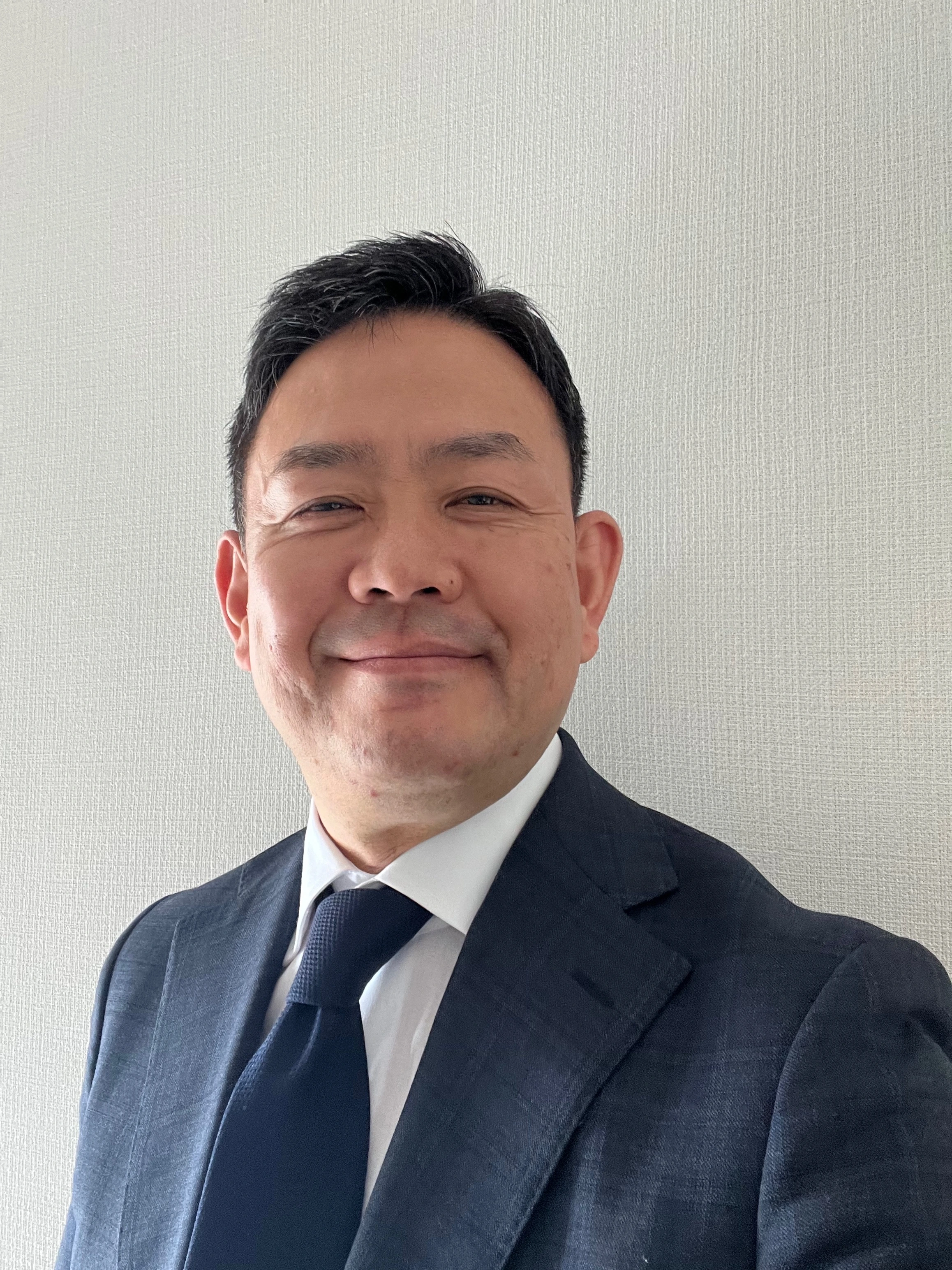
Author: Kenji Nishiyama (Certified Administrative Procedures Legal Specialist(Gyoseishoshi), Registration No.20081126)
Kenji Nishiyama is an Immigration and Visa Specialist who has supported many foreign residents with visa applications in Japan. On his firm’s website, he publishes daily updates and practical insights on immigration and residency procedures. He is also well-versed in foreign employment matters and serves as an advisor to companies that employ non-Japanese workers.