[Blog]Integration Is Not One-Way — The Principle of Mutual Obligations —
2026-09-14
1. Integration Is Not the Same as Unilateral Adaptation
When foreign residents are discussed in the context of social integration, the conversation often begins with what they must do. They should learn Japanese. They should understand local customs. They should follow the rules. They should adapt to the workplace. They should participate in the community. These expectations are not necessarily unreasonable. Anyone who lives in a society must understand its rules and fulfill certain responsibilities.
The problem arises when integration is understood only as a process in which foreign residents change while the receiving society remains unchanged. If all responsibility is placed on one side, integration becomes indistinguishable from assimilation.
The Balanced Coexistence Model takes a different position. Integration is a reciprocal process. Foreign residents have obligations toward the society in which they live, but governments, employers, institutions, and communities also have obligations toward those residents. Integration succeeds only when both sides understand and fulfill their respective responsibilities.
2. Rights and Responsibilities Must Be Considered Together
A society cannot be sustained by rights alone. At the same time, it cannot be sustained by obligations alone.
Foreign residents who work and live in Japan are protected by labor law, social insurance, administrative procedures, and other legal institutions. These protections are not favors granted by goodwill. They are part of the institutional framework of society.
At the same time, foreign residents are expected to comply with laws, fulfill tax and social insurance obligations where applicable, respect the rights of others, and follow basic rules necessary for communal life.
The important point is symmetry. If foreign residents are required to fulfill responsibilities, institutions must also explain those responsibilities in understandable ways. If people are expected to obey rules, those rules must be reasonably accessible and consistently applied. If society demands participation, meaningful opportunities for participation must exist.
The Balanced Coexistence Model therefore rejects both extremes: a model that speaks only of rights while ignoring responsibility, and a model that demands responsibility while failing to provide institutional protection.
3. Obligations Must Be Understandable
A responsibility that has never been explained cannot easily function as a fair basis for judgment.
Foreign residents may be required to understand employment rules, tax procedures, social insurance, residence requirements, community rules, and administrative obligations. Yet these systems are often complex even for native speakers.
It is therefore insufficient for institutions simply to declare that “everyone must follow the rules.” If compliance is expected, the rules must be presented in forms that people can reasonably understand.
This may require plain language, multilingual explanations, visual guidance, digital support, or access to consultation. Such measures do not weaken responsibility. They make responsibility real.
A system that explains obligations clearly can legitimately expect people to fulfill them. A system that leaves rules opaque and later punishes people for failing to understand them risks producing distrust rather than integration.
4. The Receiving Society Also Has Responsibilities
Mutual obligation means that the receiving society also bears responsibilities.
Government must operate institutions fairly and explain them adequately. Employers must provide lawful working conditions and communicate workplace expectations clearly. Support organizations must perform the assistance they are responsible for providing. Schools must create conditions in which children can access education. Local communities must provide basic information necessary for participation in communal life.
This does not mean that every difficulty faced by a foreign resident must be solved by someone else. Nor does it mean that foreign residents bear no responsibility for their own choices.
It means that responsibility should be allocated to the actor who is actually capable of fulfilling it. A foreign worker cannot correct an employer’s unlawful labor practice. A resident cannot comply with a procedure that was never made accessible. An employer cannot always solve a problem created by disconnected administrative systems.
Balanced coexistence requires responsibility to be distributed according to actual roles and capabilities.
5. Employers Are Part of Integration Policy
For many foreign workers, the workplace is one of the first and most important points of contact with Japanese society. Employers therefore play a role that extends beyond simply purchasing labor.
An employer explains work. It introduces workplace rules. It often provides information about social insurance, taxes, residence procedures, and daily life. Supervisors and colleagues become important sources of practical knowledge about Japanese society.
If this relationship is handled well, the workplace can become a powerful environment for integration. Foreign employees learn how institutions and organizations function, while Japanese employees gain direct experience of working with people from different backgrounds.
If it is handled poorly, the workplace can produce the opposite result. Unclear instructions, unfair treatment, unpaid wages, unexplained deductions, excessive dependence on intermediaries, or the withholding of information can create deep distrust.
Foreign labor policy therefore cannot treat employers merely as beneficiaries of labor supply. Employers are also actors responsible for creating the conditions under which integration occurs.
6. Support Must Not Become Dependency
Support is essential, especially for people who have recently arrived in a new society. Yet support that never leads toward greater understanding and autonomy can create dependency.
If every administrative procedure is completed entirely by intermediaries without explanation, the foreign resident may never learn how the system works. If workplace rules are continually handled by someone else rather than explained directly, the individual may remain dependent on support even after years of residence.
The purpose of support should therefore not be simply to perform tasks on behalf of foreign residents. It should also increase their ability to understand institutions, make decisions, and act independently where possible.
Good support reduces dependency over time. It helps people move from “someone must do this for me” toward “I understand what I need to do, and I know where to seek help when necessary.”
This transition from support to autonomy is another form of balanced coexistence.
7. Integration Requires Responsibility from Foreign Residents as Well
Mutual obligation also means that foreign residents cannot place all responsibility on the receiving society.
Living in another country involves learning. People must make reasonable efforts to understand laws, workplace expectations, public systems, and social rules. Language learning may also be necessary to the extent that it enables everyday participation and independence.
When explanations are available, individuals should make efforts to understand them. When obligations are clear, they should fulfill them. When mistakes occur, they should correct them. When they disagree with a rule, they may challenge it through lawful means, but they cannot simply ignore it.
This principle is important because coexistence based only on support is unstable. If one side is always expected to accommodate while the other side bears no responsibility, resentment can emerge.
Balanced coexistence requires both protection from unfair treatment and responsibility for one’s own conduct.
8. The Same Principle Applies to Japanese Society
Mutual obligation is not only a principle governing foreigners. It also applies to Japanese residents, institutions, and communities.
Japanese residents may reasonably expect foreign neighbors to follow community rules. But they also have a responsibility not to assume that those rules are self-evident. Employers may expect foreign employees to perform their duties properly. But they must explain the duties and provide appropriate working conditions. Government may require compliance with administrative procedures. But those procedures should be understandable and reasonably accessible.
In this sense, integration is also a learning process for the receiving society. As the composition of society changes, institutions and communities must learn how to communicate rules more clearly, how to resolve conflicts fairly, and how to distinguish genuine misconduct from misunderstanding or institutional failure.
The receiving society does not lose its rules by becoming more understandable. On the contrary, rules become more legitimate when people know what they are and why they exist.
9. Mutual Obligation Reduces Resentment
Social distrust often grows when people feel that burdens and responsibilities are distributed unfairly.
Japanese residents may believe that foreign residents receive support without fulfilling obligations. Foreign residents may believe that they are required to contribute while receiving insufficient protection or explanation. Employers may feel that the administrative burden is excessive. Local governments may face responsibilities without adequate national support.
Whether these perceptions are accurate or not, they can become politically powerful if institutions fail to explain who is responsible for what.
Mutual obligation makes the structure visible. Foreign residents have responsibilities. Employers have responsibilities. Government has responsibilities. Support organizations have responsibilities. Communities have responsibilities.
When responsibilities are clearly allocated, problems can be addressed at their actual source rather than being converted into generalized distrust toward “foreigners,” “government,” or “society.”
10. Integration Must Include Mechanisms for Correction
No system of mutual obligations will function perfectly. People misunderstand rules. Employers make mistakes. Government agencies provide inconsistent guidance. Foreign residents fail to complete procedures. Conflicts occur.
The important question is whether these failures can be corrected.
Can the person ask for clarification? Can missing information be supplemented? Can an employer correct an administrative error? Can inaccurate records be amended? Can a community dispute be mediated before it becomes a larger conflict?
Correction mechanisms are essential because obligations without the possibility of correction can become punitive. A society that expects people to fulfill responsibilities should also give them reasonable opportunities to repair mistakes.
This does not mean eliminating consequences for serious misconduct. It means distinguishing between deliberate abuse and correctable error.
Trust grows not because nobody fails, but because people know that failures can be addressed fairly.
11. Integration Is a Reciprocal Social Contract
The Balanced Coexistence Model understands integration as something close to a reciprocal social contract.
Foreign residents are not passive recipients of support. They are expected to participate, learn, obey the law, contribute where required, and respect the rights of others.
The receiving society is not merely a host that can demand adaptation without responsibility. Government, employers, institutions, and communities must provide understandable rules, fair procedures, lawful treatment, and reasonable opportunities for participation.
Neither side is required to surrender everything to the other. Foreign residents do not need to abandon their identity, and the receiving society does not need to abandon its legal order or common rules.
What is required is reciprocity.
Rights must be protected. Responsibilities must be clear. Support must enable independence. Rules must be understandable. Problems must be correctable. Participation must be possible.
Integration is therefore not a one-way journey from “foreign” to “Japanese.” It is an ongoing process in which people with different backgrounds learn how to live under shared institutions while maintaining legitimate differences.
Balanced coexistence begins when both sides stop asking only, “What must the other side do?” and begin asking, “What responsibilities do we each have in order to make this relationship sustainable?”
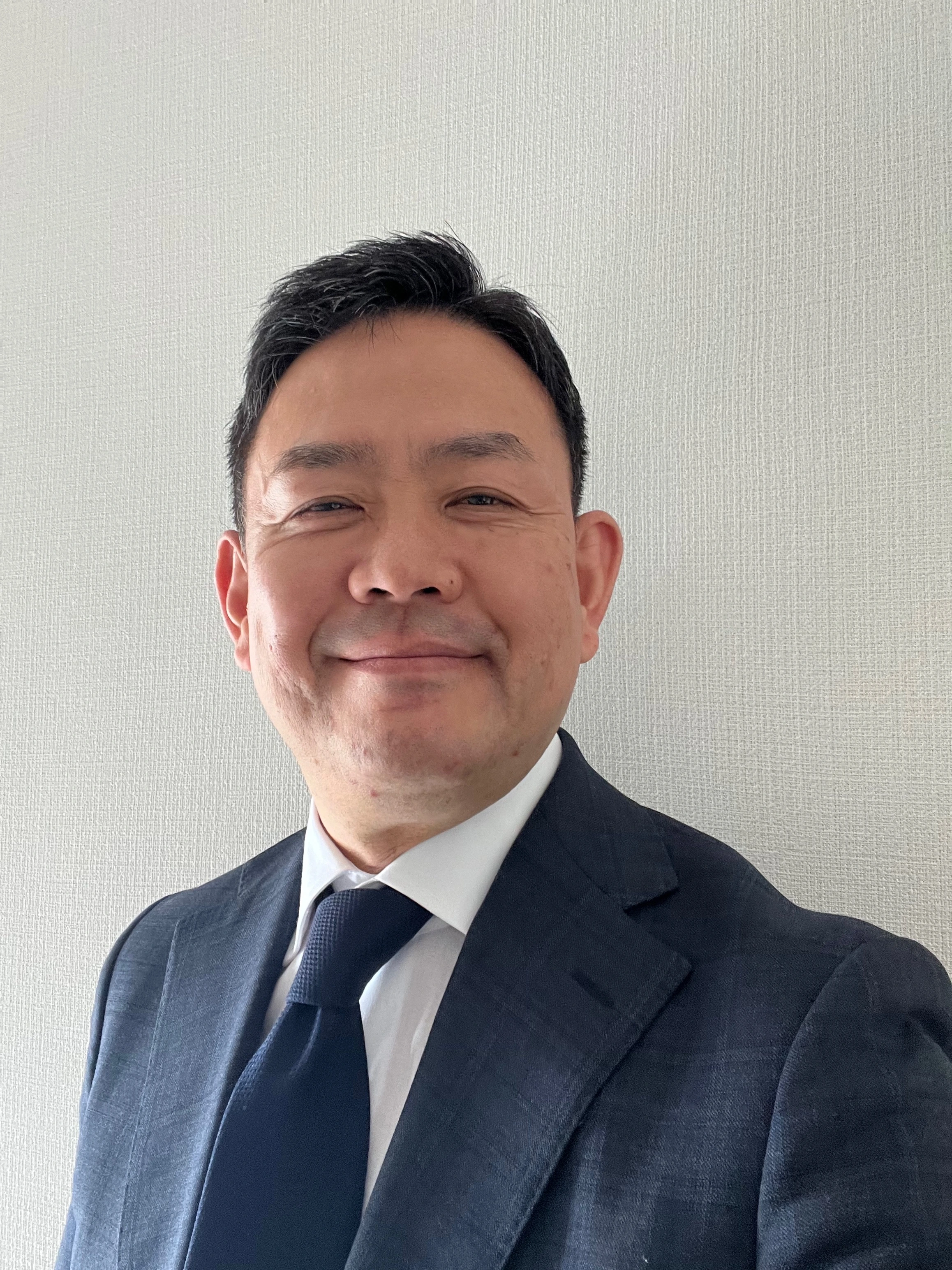
Author: Kenji Nishiyama (Certified Administrative Procedures Legal Specialist(Gyoseishoshi), Registration No.20081126)
Kenji Nishiyama is an Immigration and Visa Specialist who has supported many foreign residents with visa applications in Japan. On his firm’s website, he publishes daily updates and practical insights on immigration and residency procedures. He is also well-versed in foreign employment matters and serves as an advisor to companies that employ non-Japanese workers.