[Blog]Permanent Residence Institutionalizes Mutual Trust — Mutual Obligations Between Foreign Residents and the State
2026-09-11
1. Permanent Residence Is Not the “Completion of Trust,” but the “Institutionalization of Trust”
The previous chapter considered why permanent residents should be understood as enduring members of Japanese society. The next question is how institutions should support their status as such members.
The Balanced Coexistence Model does not regard permanent residence as merely the removal of a fixed period of stay. Permanent residence is an institution through which the state provides a certain degree of stability in recognition of the fact that a foreign resident has lived lawfully over a long period, worked, paid taxes, and accumulated relationships with society.
However, this does not mean that the state unilaterally grants a benefit. Foreign residents fulfill responsibilities toward society, while the state respects their settlement and the foundations of their lives. The essence of permanent residence lies in giving institutional form to this relationship between the two sides.
Permanent residence, therefore, is not the “completion of trust.” It is the establishment of continuing mutual trust as a legal and institutional relationship extending into the future.
2. Foreign Residents Should Not Be the Only Ones Required to “Earn Trust”
Discussions of permanent residence often concentrate on conditions imposed on foreign residents. Have they demonstrated good conduct? Do they maintain a stable livelihood? Have they properly fulfilled their tax and social insurance obligations? Do they comply with the rules of Japanese society?
These factors are important. When the state recognizes long-term settlement, it is reasonable to consider compliance with the law and the fulfillment of social responsibilities.
Trust, however, must not be understood as a one-way relationship. A system cannot be described as one of mutual trust if foreign residents alone are required to behave in ways that earn the state’s trust while the state assumes no corresponding obligations.
If foreign residents are expected to live lawfully, pay taxes and social insurance contributions, and comply with social rules, the state must also provide clear criteria, consistent administration, appropriate explanations, and sufficient stability to allow people to anticipate their future.
Mutual trust becomes possible only when responsibility exists on both sides.
3. The Responsibilities Foreign Residents Owe to the State and Society
Permanent residence does not mean freedom from responsibility. On the contrary, long-term participation in society means that one’s relationship with society continues.
Residents must obey the law, fulfill legally required tax and social insurance obligations, respect the rights of others, maintain their livelihood to the extent reasonably possible, and make efforts to understand the rules of the society in which they live.
These should not be regarded primarily as special moral obligations imposed on foreign nationals. They are basic responsibilities expected of members of society.
The Balanced Coexistence Model does not advocate foreign residents’ rights while disregarding their responsibilities. Coexistence does not mean unconditional acceptance. It presupposes participation in society under a shared framework of rules and responsibilities.
For precisely this reason, the responsibilities expected of permanent residents must be clear. A system cannot generate trust if people are not told what is required of them and are later judged to have done “too little.”
4. The State Also Bears Responsibilities Toward Permanent Residents
At the same time, the state bears certain responsibilities toward permanent residents.
Granting permanent residence means that the state has institutionally recognized a person’s long-term settlement in Japanese society. If, even after that recognition, the individual continues to be treated as merely a provisional resident whose foundations of life can easily be destabilized by institutional changes, the meaning of the word “permanent” becomes weaker.
Of course, permanent residence is not the same as acquiring nationality. Because the individual remains legally a foreign national, certain differences in legal treatment may be reasonable. Nor is it necessary to deny the legitimacy of mechanisms through which serious unlawful conduct may affect permanent resident status.
Nevertheless, the reasonable expectations of long-term stability created by the state’s own recognition should not be treated lightly.
Permanent residents need a high degree of institutional predictability so that they can plan their future lives, employment, housing, education, family formation, and business activities. Providing such predictability is part of the state’s reciprocal responsibility.
5. “Mutual Obligations” Do Not Turn Rights into Conditional Benefits
The concept of mutual obligations requires careful explanation. Misunderstood, it could suggest that only those who sufficiently fulfill their obligations deserve to receive rights.
That is not what the Balanced Coexistence Model means by mutual obligations.
Fundamental rights protected by law should not be freely expanded or reduced according to a person’s perceived contribution to the state. At the same time, long-term social relationships inevitably involve responsibilities as well as rights.
The important point is not to confuse rights with responsibilities. Rights should be protected as rights, and responsibilities should be defined as responsibilities. Institutions should then be designed so that both sides can continuously fulfill their respective roles.
Mutual obligation does not mean “obedience in exchange for rights.” It means a division of responsibility between parties engaged in a long-term social relationship so that each can better predict the conduct of the other.
6. Trust Requires Time
Time is essential to understanding trust within the permanent residence system.
Trust does not suddenly emerge from a single examination. It develops through repeated experiences over many years: lawful residence, employment, taxation, family life, and relationships with the local community.
The state evaluates this accumulation and, at a certain stage, grants permanent residence. But the time accumulated before permanent residence does not disappear once permission is granted. Permanent residence is itself the institutional recognition of that accumulated history.
For this reason, later changes to the system should not disregard the time and relationships that have already accumulated.
A person who arrived yesterday and a person who has lived in Japan for many years and has been recognized by the state as a permanent resident do not have the same depth of relationship with society. If institutions fail to recognize this difference, the meaning of permanent residence itself becomes diminished.
7. Institutional Change Requires Consistency Across Time
As social conditions change, permanent residence policy may also need to be reviewed. The state cannot be denied the ability to revise standards for the future.
Institutional change, however, requires consistency across time.
If permanent residence was previously granted under certain conditions and people have structured their lives in reliance on that status, applying newly introduced values or standards retrospectively without adequate consideration can weaken their ability to rely on the institution.
The important principle is not that institutions must never change. Rather, the reasons for change should be explained, the conduct and periods affected should be clearly identified, and transitional measures should be provided where appropriate.
Institutions must remain capable of responding to social change. But that flexibility should not destroy trust in earlier institutional decisions.
Changes that can be understood, that are applied consistently, and whose future consequences can reasonably be predicted are essential to maintaining institutional trust.
8. The Stability of Permanent Residents Affects More Than the Individual
The significance of stable permanent residence is not limited to the peace of mind of the individual resident.
Employers make long-term staffing decisions based on that person’s presence. Families make decisions about education and employment on the assumption that their lives will continue in Japan. Some permanent residents purchase homes, establish businesses, or take on responsibilities within their communities.
In other words, many third parties rely on the stability of a permanent resident’s status.
If institutional predictability is low, the resulting uncertainty spreads beyond the individual to families, employers, financial institutions, schools, and local communities.
Permanent residence therefore cannot be understood solely as a bilateral relationship between “the state and the foreign resident.” Institutional design must also consider the broader network of social relationships that has developed around the permanent resident.
The stability of permanent residents contributes to the stability of society itself.
9. Strictness Itself Does Not Destroy Trust
Distrust in institutions is not necessarily caused by strict regulation itself.
Even a strict system can sustain a degree of trust when its rules are clear, its reasons are explained, its administration is consistent, and people can reasonably predict its consequences.
Conversely, even a formally generous system can generate distrust if its criteria are opaque, its operation changes suddenly, and people cannot understand why particular decisions were made.
The same principle applies to permanent residence.
The Balanced Coexistence Model therefore does not reduce the debate to a choice between “tightening” and “relaxation.” What legitimate purpose does a requirement serve? Is the requirement necessary? Is the burden proportionate to that purpose? To whom does it apply, from when, and in what manner? And why was a particular decision made?
Institutional trust depends on the system’s ability to answer such questions.
10. The State Also Requires “Self-Restraint”
Administrative discretion is necessary. Because individual circumstances differ, not every case can be decided through mechanical rules alone.
But the existence of discretion does not mean that the state is free to decide anything without constraint.
When administrative authorities establish criteria and apply them consistently over time, people form certain expectations based on those criteria. The state itself must therefore remain conscious of consistency with the rules, explanations, and practices it has previously established.
This does not weaken administrative authority. Rather, it is a form of self-restraint that allows discretion to be exercised in a manner that society can trust.
A state that requires permanent residents to comply with the law must itself respect the consistency of its own rules, explanations, and decisions. Only when this symmetry exists does the concept of “mutual obligations” acquire substantive meaning.
11. Permanent Residence Is Infrastructure for Mutual Trust
The permanent residence system is not merely a mechanism for granting foreign residents stable residence. It is also social infrastructure through which foreign residents and the state can build a long-term relationship.
Foreign residents comply with the law, fulfill social responsibilities, and accumulate relationships with society. The state evaluates that accumulated history and, at a certain stage, institutionally guarantees a greater degree of long-term stability.
The responsibilities of both sides continue after permanent residence is granted. Permanent residents retain responsibilities as members of society, while the state bears responsibility for maintaining transparency, consistency, and predictability in its institutions.
As this relationship is repeated over time, understanding develops. Understanding makes institutional behavior more predictable. Greater predictability allows people to rely on the institution. And repeated experiences of reliability gradually create trust.
From understanding to predictability, from predictability to reliability, and from reliability to trust.
Permanent residence transforms this cycle into a long-term institutional relationship. Under the Balanced Coexistence Model, permanent residence is neither a unilateral benefit nor an unconditional right. It is the “institutionalization of mutual trust,” through which foreign residents and the state assume responsibilities toward one another and create conditions in which both can reasonably anticipate their shared future.
Yet institutional mutual trust alone does not necessarily mean that permanent residents are actually recognized as members of society in everyday life. A distance may remain between legal recognition and social recognition. The next chapter therefore examines the relationship between permanent residence and social integration, asking what it means for permanent residents to be recognized by Japanese society as genuine members of that society.
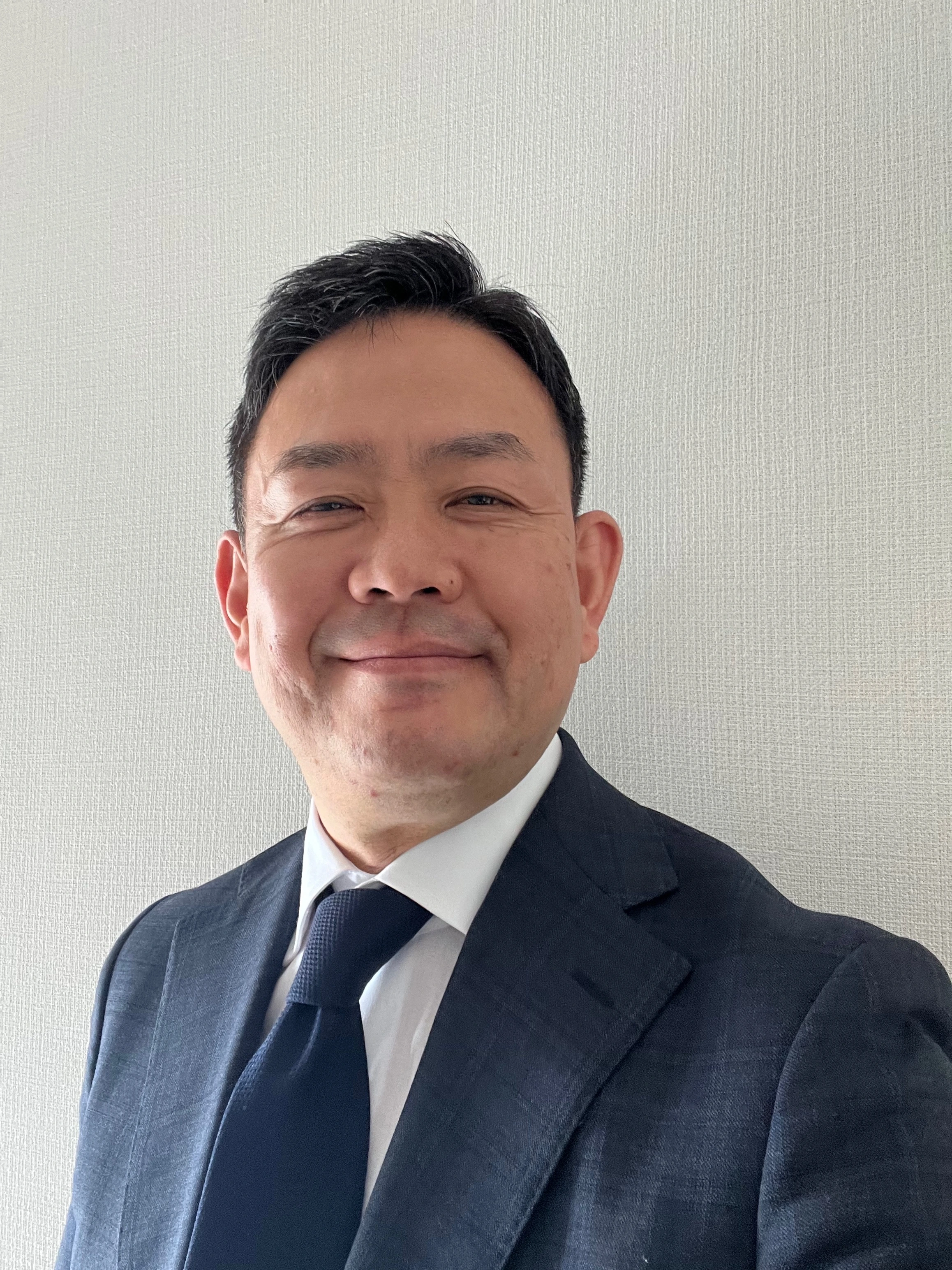
Author: Kenji Nishiyama (Certified Administrative Procedures Legal Specialist(Gyoseishoshi), Registration No.20081126)
Kenji Nishiyama is an Immigration and Visa Specialist who has supported many foreign residents with visa applications in Japan. On his firm’s website, he publishes daily updates and practical insights on immigration and residency procedures. He is also well-versed in foreign employment matters and serves as an advisor to companies that employ non-Japanese workers.