[Blog]Turning Experience into Social Learning — A Cycle of Reflection, Correction, and Redesign —
2026-09-09
1. Experience Alone Does Not Make Society Learn
People learn from experience. Yet learning does not occur automatically simply because something has been experienced. Whether an experience is positive or negative, it remains little more than a memory unless we reflect on why it occurred and examine the factors that shaped it.
The same is true of society. Cooperation with foreign residents may succeed. An administrative procedure may cause confusion. A misunderstanding may arise in the workplace. A community initiative may work well. But if these events end only as individual impressions, they do not become knowledge that society as a whole can use.
The previous chapter examined how high-quality interpersonal experiences do not emerge automatically but depend on appropriate conditions. This chapter takes the argument one step further. What can we learn from experience, and how can that learning be reflected in future institutions, organizations, and interpersonal relationships? The Balanced Coexistence Model understands coexistence not merely as an accumulation of experiences, but as society’s continuing capacity to learn from them.
2. Successful Experiences Must Also Be Analyzed to Be Reproduced
The need to analyze failure is easy to understand. Yet successful experiences also require analysis.
Suppose cooperation between foreign and Japanese employees works exceptionally well in a particular workplace. If the explanation ends with “they simply got along well,” it becomes difficult to reproduce that success elsewhere.
Perhaps work instructions were clear. Perhaps the immediate supervisor had developed a habit of confirming important points in short and understandable language. Perhaps employees could ask questions without fear of disadvantage. Perhaps the foreign employee actively studied Japanese while colleagues adjusted how they explained difficult matters when necessary.
Success has conditions. Only by identifying those conditions can a successful experience become reproducible knowledge. Rather than treating good outcomes as fortunate accidents, asking why they succeeded is the first step toward social learning.
3. Failure Should Be Examined Through “Why Did It Happen?” Rather Than Only “Who Was at Fault?”
When failure occurs, people naturally tend to search for someone to blame. Statements such as “the foreign resident was at fault,” “the company was at fault,” “the administration was at fault,” or “the system was at fault” make events easier to understand by assigning responsibility to a single actor.
In reality, however, problems often arise from multiple factors. An individual may have failed to understand a rule, but perhaps the rule was never adequately explained. A company may have failed to complete a required procedure, but the system itself may have been complex and the necessary information scattered across multiple sources.
The Balanced Coexistence Model does not seek to make responsibility ambiguous. Rather, it seeks to distinguish individual responsibility, organizational responsibility, and institutional problems.
Who knew what, and at what stage? What information was missing? Where could confirmation have occurred? Was there a mechanism capable of preventing the problem? By asking such questions, failure can be transformed from material for blame into information for improvement.
4. One Experience Should Not Be Generalized into an Attribute
One of the greatest risks in learning from experience is overgeneralizing an individual case.
If one foreign employee causes a problem, it does not follow that “people from that country cannot be trusted.” Conversely, if one foreign employee performs exceptionally well, it is equally inappropriate to assume that everyone of the same nationality will perform similarly.
The same principle applies to Japanese people and institutions. It is dangerous to judge the whole of Japanese administration from one official’s inappropriate conduct, just as it is dangerous to evaluate an entire system positively because of one particularly helpful official.
Experience matters, but the scope of the knowledge derived from it must be properly limited. We should distinguish between conclusions such as “this person acted in this way,” “this happened within this organization,” and “this problem arose under these particular conditions.”
Precisely because the Balanced Coexistence Model values experience, it also requires us not to transform experience into attribute-based prejudice.
5. Reflection Transforms Experience into Knowledge
Reflection lies at the center of turning experience into social learning. Immediately after an event, emotions and impressions may be particularly strong. But when the facts are reconsidered after some time has passed, different causes may become visible.
What happened? What did I expect? What did the other person understand? Where did our perceptions diverge? Were the institutional or organizational arrangements appropriate? What should be changed if a similar situation occurs again?
Questions such as these transform experience from a simple impression that something was “good” or “bad” into knowledge that can guide future action.
Reflection is not an exercise in blaming the past. It is a process for increasing future predictability. Once causes are understood, people become better able to anticipate how to respond when similar circumstances arise. Here again we see the fundamental structure of the Balanced Coexistence Model: understanding leads to predictability.
6. Turning Individual Learning into Organizational Learning
Even if one employee or manager learns from experience, the social effect remains limited if that knowledge stays with that individual. If the person transfers to another position or leaves the organization, the knowledge may disappear as well.
What is therefore needed is a mechanism for transforming individual experience into organizational knowledge.
For example, if foreign employees repeatedly ask the same questions about an explanation, the explanatory materials can be improved. If the same misunderstanding repeatedly occurs at an administrative counter, guidance documents or website information can be revised. If a registered support organization repeatedly receives the same type of consultation about everyday life, that issue can be incorporated into initial guidance.
This does not require large-scale institutional reform. Organizational learning can occur by recording and sharing small everyday problems and gradually adjusting procedures and explanations.
Micro-experiences can lead to micro-improvements. Through repetition, individual experience becomes organizational capability.
7. Turning Organizational Learning into Institutional Learning
When the same problem repeatedly appears across multiple companies, administrative bodies, or communities, the cause may lie not within individual organizations but within institutional design itself.
For example, if many foreign residents misunderstand the same procedure, the problem should not automatically be attributed only to their lack of understanding. The method of explanation or the structure of the system itself may be difficult to understand.
If many employers struggle to determine how residence status relates to permitted employment activities, the problem may involve more than insufficient knowledge among companies. Necessary institutional information may not be adequately connected to the practical situations in which employers need it.
Mechanisms are therefore needed to aggregate recurring problems and feed them back into institutional improvement. When information flows from frontline practice to administration, from users to institutional designers, and from companies to relevant authorities, institutions themselves can learn from experience.
Under the Balanced Coexistence Model, institutions are not finished and immutable structures. They operate within society, their outcomes are observed, and they are corrected when necessary. Institutions should be capable of learning.
8. A Society That Cannot Report Failure Cannot Learn
One major obstacle to social learning is a culture in which failures are hidden.
In organizations where reporting a mistake leads only to blame or punishment, people learn to conceal problems. If small mistakes are not shared, the same problem may recur elsewhere. It may become visible only after it has grown into something much more serious.
Of course, responsibility for unlawful conduct or serious negligence must be properly addressed. But assigning responsibility and learning from causes are different tasks.
We must ask not only “Who was at fault?” but also “Why was this problem not detected earlier?” and “What should be changed in the system to prevent recurrence?”
The existence of safe channels for reporting failures and connecting them to improvement can itself contribute to organizational trust. People may have greater confidence not in an organization that claims never to fail, but in one that can identify failures and correct them appropriately.
9. RegTech Can Become Infrastructure for Social Learning
RegTech should not be understood solely as technology for monitoring people and enforcing compliance. It can also help identify where people encounter difficulties, at what stage misunderstandings arise, and which explanations are insufficient.
For example, if corrections repeatedly concentrate on a particular field in a residence application, the explanation for that field may be unclear. If the same types of deadlines are repeatedly missed, there may be room to reconsider the timing or method of notifications.
If residence information is appropriately connected with everyday infrastructure such as banking, employment, insurance, and housing, small warning signs may be detected before problems become serious, allowing necessary information to reach individuals at the appropriate time.
Collecting data, however, does not automatically create learning. Governance is necessary to determine what should be recorded, who should analyze it, and how analysis should lead to improvement. Privacy protection and safeguards against use for unrelated purposes are equally essential.
The value of technology lies not in subjecting people to one-sided surveillance, but in enabling institutions themselves to learn from experience and become more understandable and predictable.
10. Social Perceptions Must Also Be Updated
Learning is required not only of institutions. People must also be willing to update their perceptions of society through new experiences.
A negative experience in the past does not require a person to preserve the same perception forever. Revising previous assumptions in response to new experiences is itself a healthy form of learning.
Someone may think, “I once believed that working with foreign colleagues was difficult, but cooperation worked well in another workplace,” or “I thought Japanese institutions were cold, but another administrative office gave me a careful explanation.” Such experiences do not erase the past. Instead, they allow people to understand more precisely the conditions under which earlier perceptions arose.
Positive impressions should not be fixed permanently either. When problems arise, they should be confronted and perceptions should be revised accordingly.
Social learning does not mean learning to view foreign residents positively or negatively. It means maintaining the ability to update one’s understanding in response to new experience.
11. The Cycle of Reflection, Correction, and Redesign
The society envisioned by the Balanced Coexistence Model is not one that becomes complete once the “correct” institutions have been created. Both institutions and human relationships generate new problems as social conditions change.
What is therefore needed is a continuing cycle: experience something, reflect on it, understand its causes, make necessary corrections, and experience the results again.
Experience, reflection, correction, redesign, and new experience. Through the repetition of this cycle, institutions and society gradually learn.
Both successful and unsuccessful experiences have value within this process. Success teaches us which conditions can be reproduced. Failure teaches us which conditions require correction. Individual experience should become organizational learning, organizational experience should inform institutional improvement, and improved institutions should return to individuals in the form of better experiences.
The purpose of this cycle is not to eliminate every problem. It is to create a society capable of understanding why problems occur and using that understanding to make the next experience better.
As understanding deepens, people become better able to predict what will happen next. Greater predictability allows them to rely on institutions and on one another. When experiences of such reliability are repeated, trust develops.
Trust in society does not mean believing that society will never fail. It can also mean expecting that society is capable of learning from failure, correcting itself, and developing better institutions. By transforming individual experiences into social learning, balanced coexistence becomes not a fixed ideal, but a social mechanism capable of continuously updating itself.
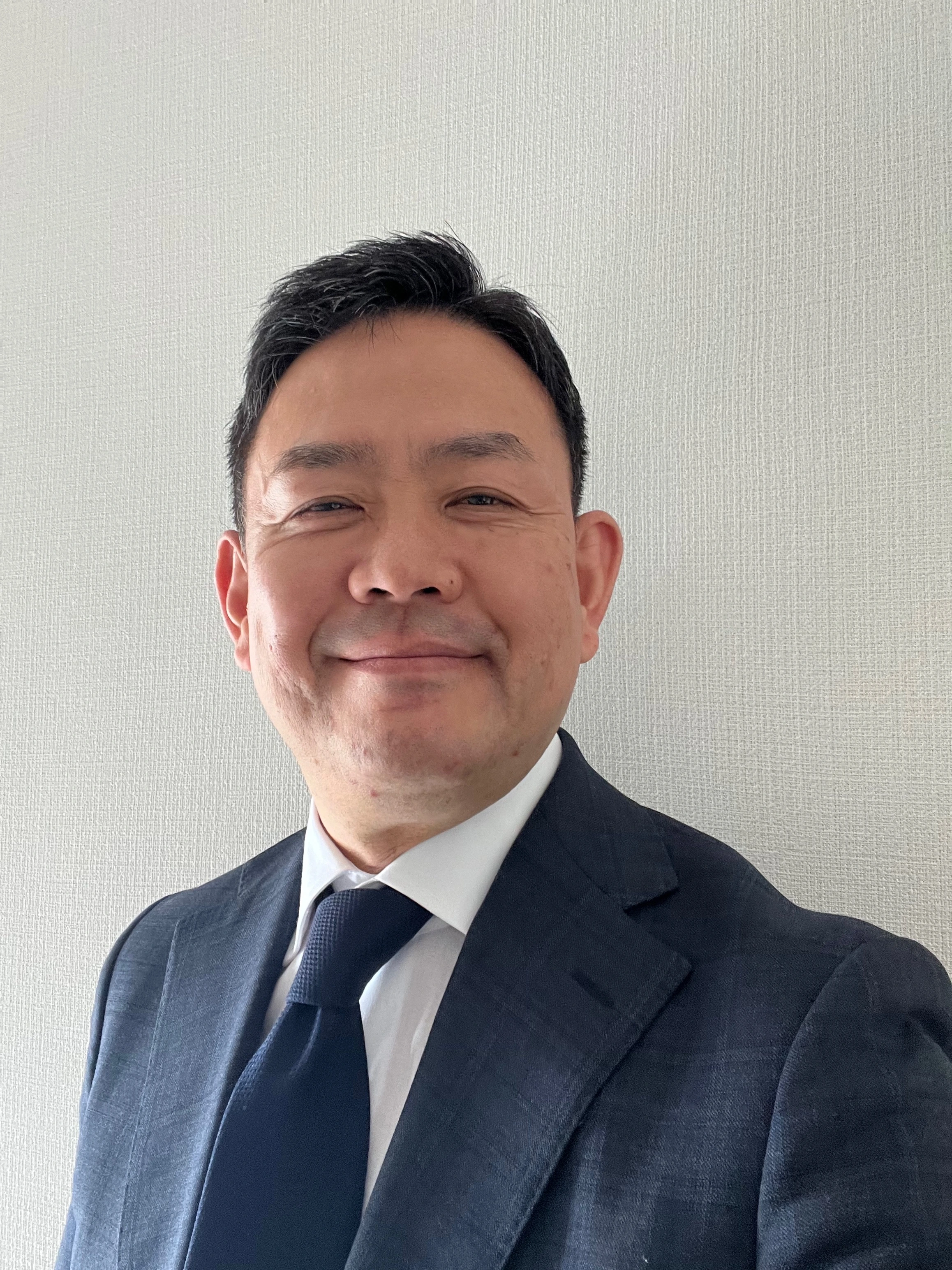
Author: Kenji Nishiyama (Certified Administrative Procedures Legal Specialist(Gyoseishoshi), Registration No.20081126)
Kenji Nishiyama is an Immigration and Visa Specialist who has supported many foreign residents with visa applications in Japan. On his firm’s website, he publishes daily updates and practical insights on immigration and residency procedures. He is also well-versed in foreign employment matters and serves as an advisor to companies that employ non-Japanese workers.