[Blog]Permanent Residents Are Enduring Members of Japanese Society — Moving Beyond the Temporariness Implied by the Label --Foreigner-- —
2026-09-07
1. The Limits of Viewing Permanent Residents Simply as “Foreigners”
Permanent residents are legally foreign nationals. Yet nationality alone cannot justify treating their presence in Japanese society as temporary. People who have lived in Japan for many years, worked, paid taxes, participated in social insurance, raised families, and built relationships within their communities have, in a dimension distinct from nationality, become enduring members of Japanese society.
The previous chapter described residence as “permission,” permanent residence as “recognition,” and nationality as “membership in the state.” Permanent residence does not simply mean the removal of limits on the period of stay. It represents a stage at which the state recognizes, to a significant degree, that the individual is expected to remain part of society into the future.
If this is so, there is a contradiction in continuing to treat permanent residents in policy as though they were equivalent to foreigners staying only temporarily. If the state grants permanent residence while society continues to regard the person’s position as inherently provisional, a gap emerges between the recognition provided by the institution and the recognition expressed by society.
The Balanced Coexistence Model seeks to reconsider this gap. Permanent residents are not identical to nationals, but neither are they merely temporary residents. They should be understood as occupying a distinct institutional position as enduring members of Japanese society.
2. What Does “Enduring Member” Mean?
The term “enduring member” does not mean that permanent residents are legally identical to Japanese nationals. Political rights and formal legal membership in the state remain distinguished by nationality. In terms of participation in everyday society, however, permanent residents continuously take part in communities, companies, schools, families, healthcare, social security, consumption, taxation, and many other areas.
Society is not sustained by nationality alone. It is maintained every day by people who work, operate businesses, raise children, participate in communities, pay taxes and insurance contributions, use services, and support others.
From this perspective, permanent residents are not outsiders participating temporarily in society. They are people involved from within in sustaining that society. Moreover, because permanent residence itself assumes long-term settlement, this relationship is expected to continue into the future.
The concept of an enduring member provides a way to recognize this social reality within institutional theory.
3. Permanent Residents Do More Than “Use” Society
Debates about foreign residents often focus on the extent to which they use social security or public services. Yet viewing their relationship with society only through benefits and assistance cannot accurately describe the position of permanent residents.
Many permanent residents work, pay income and resident taxes, contribute to social insurance, and participate in local economies as consumers. Some operate businesses and employ workers. Others raise children and contribute to the generational continuity of their communities.
Permanent residents therefore not only “use” institutions; they also help “support” them. The same is true of Japanese nationals. Social security does not permanently divide society into beneficiaries and contributors. Over the course of life, people may move between supporting others and receiving support themselves.
Viewing permanent residents only in terms of benefits or costs obscures this reciprocity. The Balanced Coexistence Model considers both rights and burdens, benefits and contributions, when defining a person’s position as a member of society.
4. The Accumulation of Time Changes Social Relationships
A relationship with society is not created in a single day. Over years and decades, people accumulate relationships through work, family, housing, education, friendship, and community life.
For someone who has just arrived in Japan, Japanese society may still feel external. But after years of living in the country, developing relationships with colleagues, sending children to school, establishing a home, and building ties with neighbors, Japan gradually changes from “a country where I am staying” into “the society in which I live.”
Permanent residence is one institutional milestone at which this accumulation of time is recognized. If the individual continues living in Japan for many years after obtaining permanent residence, their life itself becomes increasingly embedded in Japanese society.
Institutional design should not ignore this accumulation of time. Even among people who share foreign nationality, someone who arrived yesterday and a permanent resident who has lived in Japan for decades have very different relationships with society. Policy should appropriately reflect that difference.
5. Social Ties Extend Beyond the Individual
The life of a permanent resident does not exist in isolation. It is embedded in relationships with spouses, children, employers, employees, business partners, friends, neighbors, and many others.
If the status of a permanent resident becomes unstable, the consequences may extend far beyond that individual. Family planning, children’s education, workplace staffing, business relationships, housing loans, and other aspects of Japanese society may also be affected.
This is an important perspective when considering permanent residence. If residence status is viewed solely as a relationship between an individual and the state, the broader effects of institutional change may be underestimated. The legal position of a long-settled person has already become part of the foundation supporting many social relationships.
Treating permanent residents as enduring members therefore does not mean protecting only their individual rights. It also means considering the stability of the broader network of social relationships that has developed around them.
6. The Responsibilities of Permanent Residents Also Continue
Recognizing permanent residents as enduring members does not diminish their responsibilities. On the contrary, because their relationship with society is long-term, their responsibilities should also be understood as continuing ones.
Compliance with laws, payment of applicable taxes and social insurance contributions, understanding basic social rules, and fulfilling responsibilities within family and community relationships remain important elements of membership in society.
Responsibility, however, should not be imposed only on foreign residents. The state and society also have responsibilities toward permanent residents: to provide clear rules, make necessary information accessible, and properly explain institutional changes.
The Balanced Coexistence Model emphasizes symmetry between rights and responsibilities. If permanent residents are expected to assume responsibilities as members of society, society must also assume responsibility for treating them as stable members.
7. Enduring Members Need Predictability
Building a long-term life requires a reasonable degree of predictability about the future. Buying a home, planning a child’s education, changing careers, starting a business, or preparing for retirement all depend on an expectation that the foundations of one’s life will not suddenly disappear tomorrow.
Permanent residence matters because it increases this predictability. Unlike time-limited residence statuses, it does not depend on periodic extensions of a period of stay, allowing individuals to plan their lives over a longer time horizon.
For this reason, changes that significantly reduce predictability within the permanent residence system require particularly careful explanation. If people cannot understand what is expected of them, what conduct may create problems, or how their past record of settlement will be treated, trust in permanent residence itself may be undermined.
Recognizing permanent residents as enduring members does not mean guaranteeing their status unconditionally. It means requiring a degree of institutional predictability appropriate to the depth of their relationship with society.
8. “Because They Are Foreigners” Is Not a Sufficient Explanation
When institutional restrictions or changes affecting permanent residents are introduced, saying simply that they are justified “because they are foreigners” is insufficient. There are circumstances in which differences in nationality may justify different legal treatment, but the purpose, necessity, and proportionality of those differences should be explained.
This is particularly important for permanent residents because the state itself has already recognized their long-term settlement. A restriction that may be reasonable for a temporary resident is not necessarily appropriate when applied in exactly the same way to a permanent resident.
The Balanced Coexistence Model does not argue that foreign nationals and Japanese nationals must always be treated identically. Rather, when differences in treatment exist, they should be explained by reference to legitimate institutional purposes, and their necessity and proportionality should be demonstrated.
Institutional design should therefore move beyond simple distinctions based on attributes and instead consider the stability of residence, depth of social ties, fulfillment of responsibilities, and the objectives of the relevant institution.
9. Do Legal Recognition and Social Recognition Correspond?
Permanent residence constitutes legal recognition by the state. Yet becoming a permanent resident does not automatically produce social recognition.
A person may have lived in Japan for many years and still be asked when they intend to “go back.” A child raised in Japan may still be treated as someone from outside Japan because of appearance or name. Such experiences create a dual condition in which settlement is legally recognized while the person continues to be socially treated as an outsider.
Conversely, after years of relationships in workplaces and communities, people may come to see one another simply as colleagues, neighbors, friends, or members of the local community without constantly focusing on nationality. Such social recognition cannot be created by legislation alone.
This is why the institutional and interpersonal experiences discussed from Chapter 48 onward are important. Through fair institutional experiences and repeated high-quality interpersonal relationships, perceptions can gradually shift from the abstract category of “foreigner” toward recognition of a concrete individual as a member of society.
10. Recognizing Permanent Residents as Enduring Members Also Benefits Japanese Society
Greater stability for permanent residents is not a policy that benefits foreign residents alone. It can also contribute to the stability of society as a whole.
Employers can more confidently invest in the long-term development of employees. Communities can benefit from residents who continue to participate over time. Financial institutions can build longer-term credit relationships. Families can plan their futures with less uncertainty.
Conversely, if the status of people who are already deeply settled becomes significantly unstable, employers, communities, families, and other institutions may also experience the consequences. Institutional uncertainty does not remain confined to the individual; it spreads through the social relationships connected to that person.
Recognizing permanent residents as enduring members is therefore not about granting special privileges to foreign nationals. It is about stabilizing relationships that already exist and increasing predictability for society as a whole.
11. From Enduring Membership to Mutual Trust
Once permanent residents are understood as enduring members of Japanese society, the meaning of permanent residence becomes clearer. It is an institution through which foreign residents accumulate years of life and participation, the state recognizes their settlement, and both sides build their future relationship on the basis of that recognition.
Foreign residents develop their relationship with society through compliance with laws, taxation, social insurance participation, work, family life, and broader social participation. The state evaluates that record, grants permanent residence, and provides greater stability. Society, in turn, gradually recognizes the individual not as a temporary presence but as someone who will participate in shaping its shared future.
This reflects the process emphasized throughout the Balanced Coexistence Model: understanding leads to predictability, predictability leads to reliability, and reliability leads to trust. Individuals expect institutions to remain reasonably stable and design their lives in reliance on them. The state, meanwhile, expects permanent residents to continue fulfilling their responsibilities as members of society.
Recognizing permanent residents as enduring members is therefore neither simply a question of expanding rights nor merely a matter of consideration toward foreign residents. It is a question of social design: recognizing relationships that have already been formed and creating conditions in which both sides can sustain them.
Taking this idea one step further, permanent residence can be understood not merely as “recognition of settlement,” but as an institution through which foreign residents and the state place a degree of trust in one another and accept reciprocal responsibilities. The next chapter examines this relationship from the perspective that permanent residence institutionalizes mutual trust.
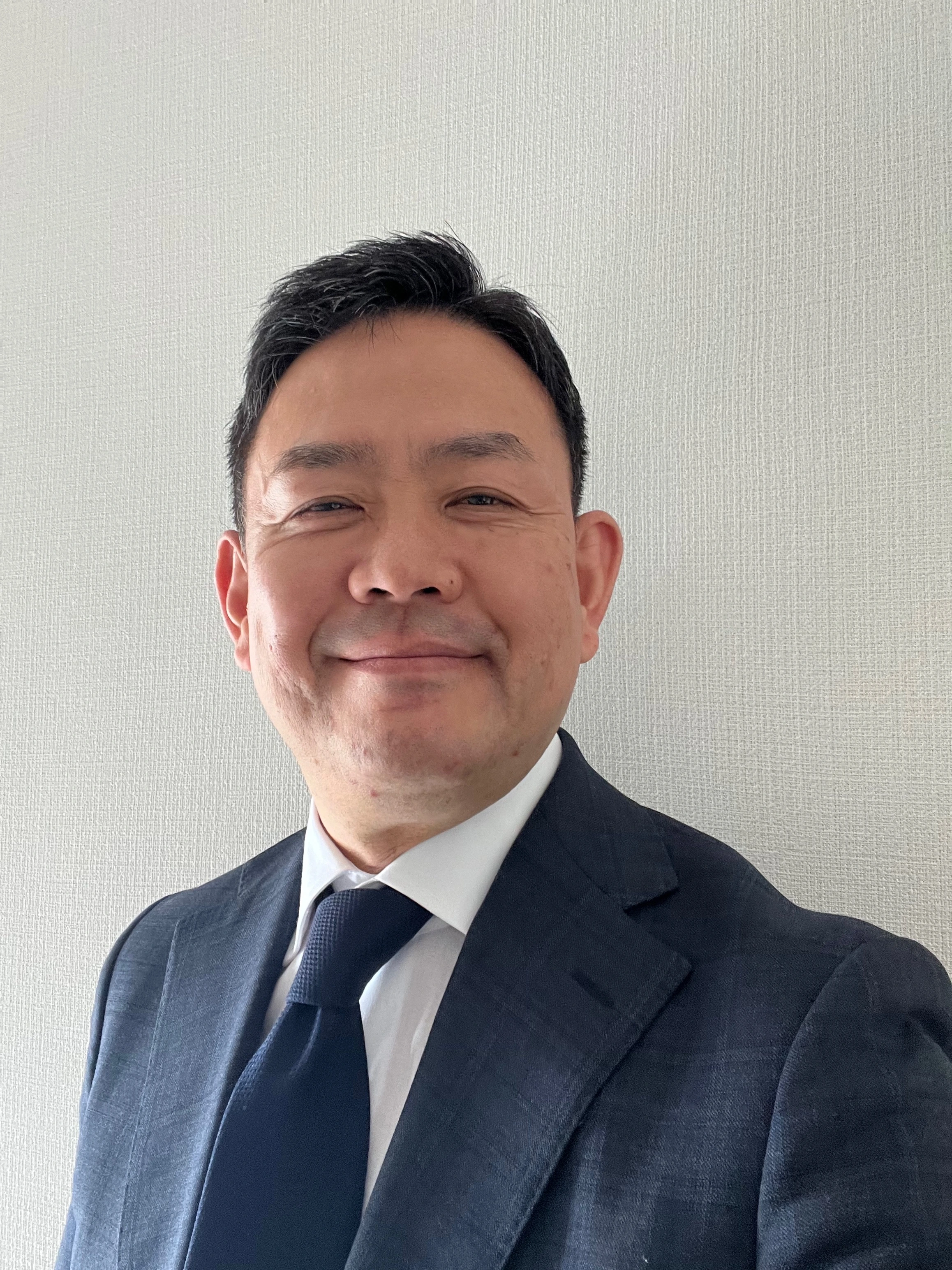
Author: Kenji Nishiyama (Certified Administrative Procedures Legal Specialist(Gyoseishoshi), Registration No.20081126)
Kenji Nishiyama is an Immigration and Visa Specialist who has supported many foreign residents with visa applications in Japan. On his firm’s website, he publishes daily updates and practical insights on immigration and residency procedures. He is also well-versed in foreign employment matters and serves as an advisor to companies that employ non-Japanese workers.