[Blog]Contact Does Not Automatically Create Coexistence — How Can We Design High-Quality Interpersonal Experiences? —
2026-09-05
1. Meeting Each Other Does Not Necessarily Create Understanding
It is tempting to assume that increasing contact between foreign residents and Japanese people will naturally deepen mutual understanding and create a society of coexistence. In reality, however, interpersonal relationships are not so simple. Contact itself may generate trust, but it can also strengthen distrust.
Working alongside foreign colleagues may allow people to recognize one another’s abilities, responsibility, and sincerity. On the other hand, inadequate explanations, unclear roles, language-related misunderstandings, or unfair treatment may lead to perceptions such as “foreigners are difficult to work with” or “Japanese people cannot be trusted.”
Social integration therefore requires more than simply increasing the quantity of contact. What matters is the quality of contact: under what conditions people meet and what kinds of experiences emerge from those encounters. The Balanced Coexistence Model focuses not merely on bringing people closer together, but on creating conditions that produce high-quality interpersonal experiences capable of generating mutual understanding and trust.
2. Interpersonal Experiences Shape Social Perceptions
People do not understand society only through institutions. They also experience society through direct relationships with supervisors, colleagues, government officials, neighbors, teachers, support providers, and others.
If a government official provides a careful and understandable explanation, the experience may create the impression that “this institution treats me properly.” Conversely, being rejected without an understandable explanation may generate distrust that extends beyond the individual official to the administration as a whole.
The same process occurs among Japanese people. When a foreign colleague keeps promises, fulfills responsibilities, and offers help when needed, that experience may create trust not only in that individual but may also provide an opportunity to reconsider previously held assumptions about foreign residents.
As discussed in Chapter 50, institutional experience and interpersonal experience are two points of contact through which trust is formed. Many of the “micro-experiences” discussed in Chapter 51 also occur within interpersonal relationships. Small conversations, cooperation, explanations, and fulfilled promises gradually update how people perceive one another and society.
3. Poor Contact Can Reinforce Prejudice
Contact does not always reduce prejudice. Under unfavorable conditions, it can instead transform vague distrust into stronger conviction.
Suppose a company provides insufficient training to a foreign employee and assigns only simple tasks because of limited Japanese proficiency. If the employee subsequently fails because the work was not adequately explained, the company may conclude that “foreign workers cannot be trusted with important work.” Yet the real cause of the failure may not have been the employee’s nationality or personal characteristics, but inadequate training, explanation, or role design.
The same applies from the foreign resident’s perspective. If someone receives little explanation about Japanese institutions or workplace practices, encounters a problem, and is then subjected only to strict instructions, the person may conclude that “Japanese people are harsh toward foreigners.” Yet the underlying problem may have arisen not from nationality but from failures in communication or organizational management.
When one negative experience is generalized from an individual to an organization, from an organization to society, and eventually to an entire nationality or ethnic group, prejudice becomes stronger. This is why interpersonal experience cannot simply be left to chance.
4. High-Quality Contact Requires Certain Conditions
There are several conditions that make high-quality interpersonal experiences more likely. First, both sides should treat the other person as an individual rather than merely as a role or an attribute. If foreign residents are viewed only as “labor” or Japanese people only as “those who manage them,” it becomes difficult to establish a relationship based on mutual respect.
Second, roles and expectations should be clear. In a workplace, people should understand what responsibilities they have, what standards are expected, and whom they can consult when difficulties arise. Ambiguous expectations can transform minor misunderstandings into serious conflict.
A shared objective is also important. Merely occupying the same space does not necessarily create understanding. When people work together to complete a task, participate in a community activity, or support children’s education, they gain opportunities to observe one another’s behavior and abilities through concrete cooperation.
High-quality contact therefore does not depend simply on accidentally meeting compatible people. It involves creating conditions in which cooperation is more likely to succeed through mutual respect, clear roles, shared objectives, and understandable rules.
5. Equality Does Not Mean Being Identical
Equality in this context does not mean treating everyone under exactly identical conditions. People differ in their positions, roles, experience, and language abilities. Companies have supervisors and subordinates, while immigration administration necessarily involves authorities making decisions and individuals submitting applications.
What matters is that differences in roles do not become differences in human worth. Practices such as withholding explanations because someone is a foreign national, or refusing to hear a person’s views because they are assumed not to understand, are inconsistent with an equal relationship.
At the same time, a one-directional approach in which foreign residents must always receive special treatment is also inappropriate. Necessary support should be provided, while individuals should also be expected to make reasonable efforts to understand, confirm information, comply with laws, and fulfill commitments.
Equality under the Balanced Coexistence Model does not mean eliminating differences. It means recognizing those differences while distributing reciprocal rights and responsibilities: the right to receive explanations and the responsibility to understand them, the responsibility to provide support and the responsibility to cooperate.
6. A Language Barrier Is Not the Same as a Barrier in Ability
Language is one of the most visible obstacles in interpersonal relationships involving foreign residents. Yet limited language proficiency should not automatically be equated with limited professional ability, understanding, or sincerity.
A person who cannot fully express complex ideas in Japanese may nevertheless possess substantial professional knowledge and occupational skills. Conversely, fluency in Japanese does not itself guarantee professional competence or responsibility.
Creating high-quality interpersonal experiences therefore requires efforts to communicate in forms that the other person can understand. Depending on the situation, this may include plain Japanese, multilingual materials, visual explanations, or translation tools.
At the same time, foreign residents who live and work in Japan may reasonably be expected to make efforts to learn Japanese and understand the rules of society. Again, adaptation should not be one-directional. Those providing information should create understandable conditions, while those receiving it should make efforts to understand. The quality of interpersonal experience improves through this reciprocal process.
7. The Ability to Repair Failed Relationships Matters
No matter how carefully institutions are designed, failures in interpersonal relationships cannot be completely eliminated. Misunderstandings, emotional conflicts, inadequate explanations, and errors in judgment will inevitably occur.
The goal should therefore not be a society in which failure never occurs, but a society capable of repairing relationships after failure. Re-explaining a situation, apologizing, correcting inaccurate information, adjusting roles, or consulting a third party can prevent a single failure from becoming permanent distrust.
Correction is particularly important while problems remain small micro-experiences. If minor discomfort is ignored, it can become a framework through which later experiences are interpreted. Once people begin to think, “This is happening again,” distrust can become increasingly difficult to reverse.
Indeed, the experience of acknowledging a mistake, explaining its cause, and correcting it may sometimes strengthen trust. Trust does not mean believing that failures will never occur. It also means being able to predict that when problems arise, they will be addressed and repaired appropriately.
8. Institutions Create the Setting for Interpersonal Experience
Interpersonal experience may appear to be purely a matter between individuals. In reality, however, its quality is strongly influenced by institutions and organizations.
If supervisors of foreign employees are not given appropriate information or training, goodwill alone may not enable them to provide effective support. If government officials lack sufficient time, multilingual resources, or institutional guidance, there are practical limits to how carefully they can explain procedures to each person.
Conversely, when consultation channels, explanatory materials, training, interpretation, digital support, and clear procedures are available, organizations become less dependent on the personal ability or goodwill of individual staff members and are more capable of providing consistently high-quality interpersonal experiences.
Institutions cannot directly create human relationships. They can, however, design the setting in which good relationships are more likely to develop. This is one reason why institutional design occupies such an important place in the Balanced Coexistence Model.
9. RegTech Should Support, Not Replace, Human Relationships
As digitalization and RegTech develop, opportunities for direct human contact may decrease. Yet the purpose of technology should not be to eliminate human relationships.
Instead, technology can provide necessary information at appropriate moments, automate routine confirmations, and make procedures and required actions more visible. This can allow people to devote more time to situations where genuine explanation, consultation, and human judgment are needed.
Automatically notifying residents that their period of stay is approaching expiration, explaining the meaning of social insurance participation in a language they understand, or allowing them to confirm required documents in advance can reduce conflicts arising from statements such as “I did not know” or “Nobody told me.”
Technology should therefore not replace interpersonal experience, but improve the conditions under which it occurs. People still explain, understand, cooperate, and build relationships. Technology should function as infrastructure supporting those human interactions.
10. We Should Not Try to Manufacture Only Positive Experiences
The idea of “designing high-quality interpersonal experiences” could be misunderstood as an attempt to improve social perceptions by presenting only successful examples. That is not the objective of the Balanced Coexistence Model.
In reality, relationships with foreign residents sometimes fail. Japanese employers, institutions, or individuals may behave improperly, and foreign residents themselves may sometimes fail to fulfill their responsibilities. There is no need to conceal these realities. What matters is analyzing both successes and failures and asking why they occurred.
Successful experiences reveal the conditions that generated trust. Negative experiences can be analyzed by separating possible causes involving individual behavior, organizational management, institutional defects, or inadequate explanation. A failure involving one person should not automatically be generalized into a characteristic of an entire nationality or ethnic group.
A high-quality interpersonal experience is therefore not necessarily an experience without failure. It is a relationship in which people can learn from both success and failure and revise their perceptions and behavior when necessary.
11. Coexistence Means Creating Conditions for Good Contact to Continue
A society of coexistence does not emerge automatically simply because different people are placed in the same space. Increasing the quantity of contact alone guarantees neither understanding nor trust.
What is needed is an environment in which people are treated with mutual respect, understand their roles, cooperate toward shared objectives, and can correct misunderstandings when they occur. Small successful experiences within such an environment create the expectation that “I can cooperate with this person.” When that expectation is repeatedly confirmed, it can develop into trust that “I can continue to rely on this relationship.”
This reflects the process repeatedly emphasized by the Balanced Coexistence Model: understanding leads to predictability, predictability leads to reliability, and reliability leads to trust. In interpersonal relationships as well, trust is not an abstract ideal. It develops through repeated concrete experiences.
Yet if the successes and failures generated through these encounters remain only in individual memory, they cannot become learning for society as a whole. We must reflect on what conditions produced good relationships, what generated distrust, and how those lessons can be incorporated into improvements in organizations and institutions.
One experience should inform the next experience; individual learning should become organizational learning; and organizational learning should contribute to institutional improvement. When this cycle develops, interpersonal experience becomes more than a private event. It becomes a force through which society itself can learn. The next chapter examines how experience can be transformed into social learning.
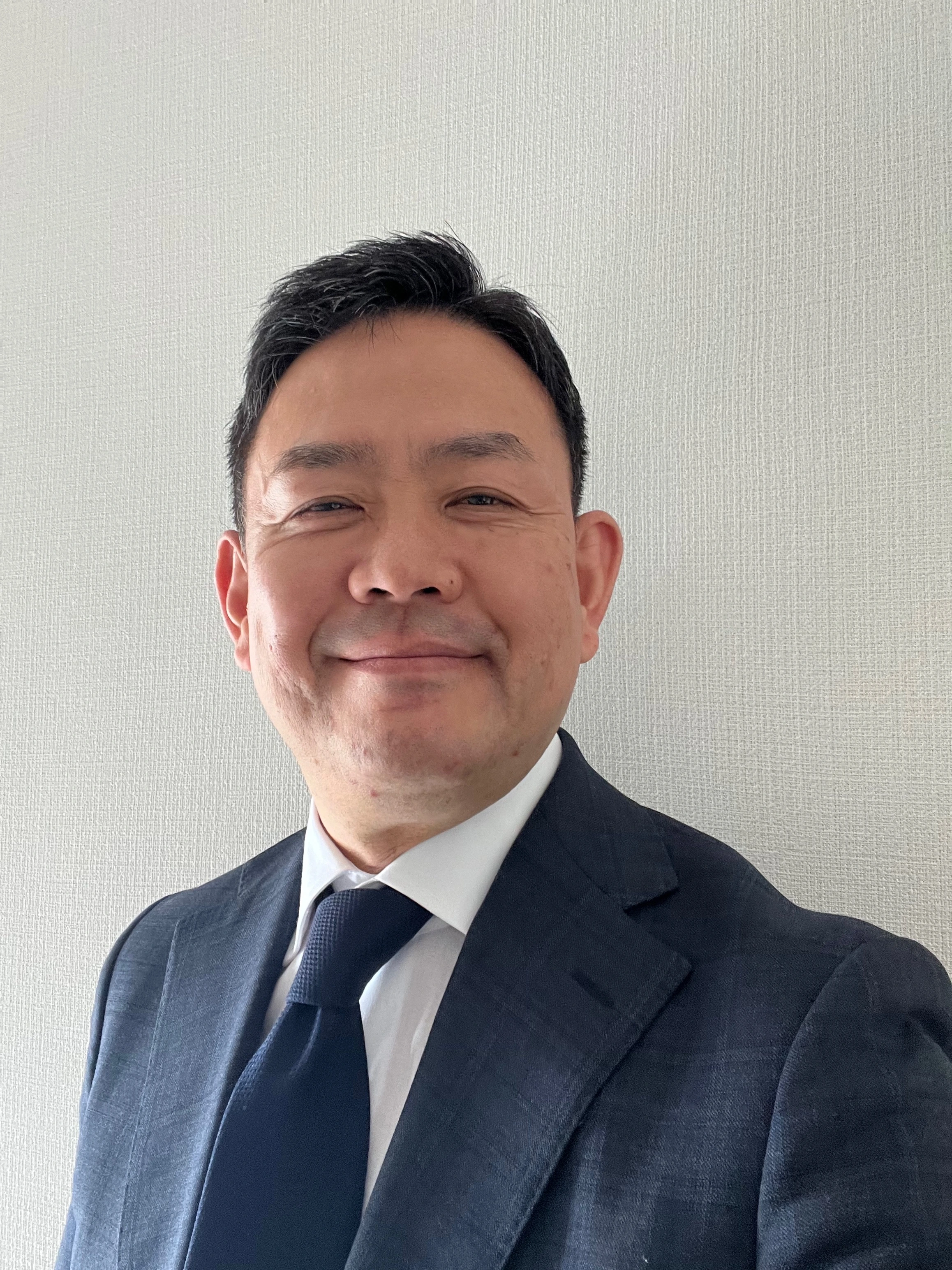
Author: Kenji Nishiyama (Certified Administrative Procedures Legal Specialist(Gyoseishoshi), Registration No.20081126)
Kenji Nishiyama is an Immigration and Visa Specialist who has supported many foreign residents with visa applications in Japan. On his firm’s website, he publishes daily updates and practical insights on immigration and residency procedures. He is also well-versed in foreign employment matters and serves as an advisor to companies that employ non-Japanese workers.