[Blog]Small Experiences Shape Larger Perceptions — From Microlearning to Micro-Experiences —
2026-08-25
1. Social Perceptions Are Not Formed All at Once
People do not form their understanding of society through a single explanation or a single event. Japanese perceptions of foreign residents, and foreign residents’ perceptions of Japanese society, are gradually shaped by small experiences repeated throughout everyday life.
You greet someone and they greet you back. You ask about something you do not understand and receive an explanation. An agreed time is respected. An administrative procedure proceeds as explained. When you encounter a problem, someone is available to help. Each of these events may appear insignificant on its own. Yet when they are repeated, people gradually develop perceptions such as, “I can trust this person,” “This company keeps its promises,” or “I can rely on this institution.”
The opposite is also true. If explanations repeatedly differ, promises are not kept, questions go unanswered, or rules suddenly change, these small experiences can accumulate into significant distrust. Both trust and distrust are learned through the accumulation of everyday experiences.
2. What Microlearning Teaches Us About Accumulation
In education and human-resource development, microlearning is an approach that divides learning into small units and delivers them repeatedly over short periods. Rather than presenting a large volume of information at once, it seeks to establish knowledge and behavior through repeated exposure to manageable content connected with practical situations.
What interests the Balanced Coexistence Model is not the educational technique itself, but the underlying structure: human understanding can be shaped through the repetition of small experiences.
The same principle can be applied to social integration. A single training session, one informational brochure, or one intercultural event will not necessarily transform how people understand one another. More important over the long term may be the repeated experience of understanding something, successfully cooperating with someone, or resolving a problem when it occurs.
3. The Concept of “Micro-Experiences”
The Balanced Coexistence Model therefore describes the small institutional and interpersonal experiences repeatedly encountered in everyday life as “micro-experiences.”
A foreign resident receives an understandable explanation at a municipal office. An employer explains how employment insurance works. A bank understands that the customer is currently renewing their period of stay. A neighbor explains local waste-disposal rules. A colleague explains an unfamiliar Japanese expression at work. Each of these is a small experience.
The same process occurs for Japanese residents. A foreign colleague completes promised work by the deadline. A foreign resident participates in a community activity. A foreign neighbor helps others during a disaster. Someone observes a foreign resident making a sincere effort to understand despite limited Japanese ability. Through experiences such as these, the abstract category of “foreigners” begins to give way to concrete human relationships.
Before people understand large social principles, they are already learning about society through small experiences.
4. Institutional Experience Also Consists of Micro-Experiences
Public institutions are not evaluated only through major decisions such as approval, denial, renewal, or revocation. The smaller points of contact along the way also shape how people perceive institutions.
Was the application procedure understandable? Were the required documents clearly identified? Was an inquiry answered? Was the reason for requesting additional documents explained? Could the applicant understand what was happening during the process? Was there an opportunity to correct a mistake? Each of these constitutes an institutional experience.
Even if an application is ultimately approved, trust in the institution may not increase if the process was opaque, explanations were absent, and the applicant spent a long period in uncertainty. Conversely, even when the final outcome is unfavorable, trust in the institution does not necessarily disappear if the reasons can be understood and a pathway for correction or reapplication is available.
Trust in institutions is therefore shaped not only by final outcomes, but by the many small experiences that occur on the way to those outcomes.
5. Interpersonal Relationships Are Also Built Through Repeated Small Actions
The same applies to interpersonal trust. People do not necessarily trust another person because of one significant act of goodwill. Instead, they gradually learn to predict another person's behavior through repeated small actions.
Being punctual. Explaining something that another person does not understand. Offering help when someone is struggling. Doing what was promised. Apologizing and making corrections when a mistake occurs. As these behaviors are repeated, a sense of predictability develops: “This person will probably behave in a similar way next time.”
This process is not determined by nationality. The way foreign residents learn to trust Japanese people and the way Japanese people learn to trust foreign residents are fundamentally similar. Trust does not mean believing in another person unconditionally. It means becoming reasonably able to predict that person's behavior based on accumulated experience.
6. Small Failures Accumulate as Well
Micro-experiences are not limited to positive experiences. Small negative experiences also accumulate.
A person asks for an explanation but is simply told, “I don't know.” A foreign resident is refused housing solely because of nationality. An employer provides no explanation of social insurance. A resident is criticized for violating a community rule that nobody had previously explained. A foreign employee receives instructions but repeatedly makes the same mistake without checking whether they have understood them. If such events occur only once, they may be treated as isolated problems.
When similar experiences continue, however, they can produce broader conclusions: “This institution cannot be trusted,” “Foreigners do not follow rules,” or “Japanese people do not accept foreigners.”
Major social divisions do not necessarily begin with major incidents. Small frustrations and misunderstandings can accumulate without correction until they become fixed perceptions of entire groups or institutions.
7. Small Experiences Can Be Corrected Early
The perspective of micro-experiences also offers an important advantage: when a problem is still small, it is easier to correct.
If work instructions have not been understood, the method of explanation can be changed immediately. If someone does not know community rules, multilingual guidance can be provided. If social insurance is poorly understood, the employer can explain what is deducted from wages and what benefits the employee may receive. If local residents do not understand why foreign workers are being accepted into their community, employers or local authorities can provide relevant information.
Explaining, confirming, and correcting a small misunderstanding at an early stage generally imposes lower social costs than waiting until the problem develops into punishment, dismissal, loss of residence, or exclusion.
This corresponds with the preventive approach emphasized by the Balanced Coexistence Model. Observing micro-experiences also means identifying early signs of distrust before they develop into larger problems.
8. RegTech Can Create Small Institutional Points of Contact
Technology can also be used to create continuous small points of contact between people and institutions.
A notification can be sent several months before a period of stay expires. Guidance can appear when a change of address requires a procedure. Necessary information about social insurance and taxation can be provided at the relevant moment. Banks and insurers can appropriately recognize that a residence procedure is pending. If an important procedure has not been completed, the individual can be informed before serious disadvantages arise.
Such mechanisms do not seek to manage foreign residents only through occasional large-scale screening decisions. Instead, they support continued lawful residence through small interventions involving information, confirmation, and timely guidance.
The value of RegTech therefore lies not only in making administration more efficient. It can create small but continuous connections between institutions and individuals, reducing failures caused by situations such as “I didn't know,” “I didn't notice,” or “I didn't know whom to ask.”
9. Social Integration Cannot Be Completed Through One-Time Education
It is important for foreign residents to learn Japanese, understand cultural practices, and know the rules of everyday life. Yet it is unrealistic to explain everything once upon arrival and then expect complete and permanent understanding.
The knowledge a person needs changes according to their circumstances. When starting a job, they may need to understand labor law and social insurance. When moving, they need to understand resident registration procedures. When their children enter school, they need information about the education system. When leaving a job, they may need to understand employment insurance and how unemployment affects their residence status.
Information necessary for integration is therefore more likely to lead to practical understanding when it is provided in small, understandable units at the moment when the individual actually needs it. Like microlearning, this approach connects learning directly with real-life situations.
Learning is also necessary on the Japanese side. When Japanese residents encounter foreign residents in workplaces or communities, access to relevant information about residence systems and cultural differences can reduce unnecessary misunderstandings. Learning for integration must therefore be reciprocal rather than one-directional.
10. Micro-Experiences Must Not Become a Tool for Manipulation
Increasing positive experiences is not the same as showing people only experiences that produce a convenient narrative. If policymakers present only successful cases while concealing problems, the result is not trust-building but impression management.
Positive interactions with foreign residents alone cannot represent the full reality of coexistence. If abuse of institutions, labor problems, or community friction exists, these realities must also be acknowledged. Conversely, repeatedly highlighting only crime or failure while making invisible the many foreign residents who contribute to society in ordinary daily life also distorts social perception.
The important task is to recognize both success and failure as experiences from which society can learn. Successful experiences can reveal the conditions that made cooperation possible. Negative experiences can reveal what needs to be improved. Micro-experiences should not be used to steer people's thinking toward a predetermined conclusion, but to help society learn from reality.
11. Turning Small Experiences into a Cycle of Trust
The Balanced Coexistence Model does not focus only on large institutions intended to transform society at once. It also emphasizes continuously improving the quality of the small institutional and interpersonal experiences that occur in everyday life.
Something is explained. It can be understood. A promise is kept. Help is available when a problem occurs. A mistake can be corrected. Cooperation produces a positive result. When experiences such as these are repeated, people become better able to anticipate what will happen next.
We can rely on people whose behavior is reasonably predictable. We can also rely on institutions whose operation is reasonably predictable. When experiences of relying on both people and institutions accumulate, trust in society itself begins to develop.
From understanding to predictability. From predictability to reliability. From reliability to trust. The smallest unit at the beginning of this process is the everyday micro-experience.
Society is not transformed by grand principles alone. It is also shaped by the accumulation of small successes and small failures that were recognized and corrected. A balanced coexistence society is one in which people and institutions continually learn from these micro-experiences and gradually accumulate trust.
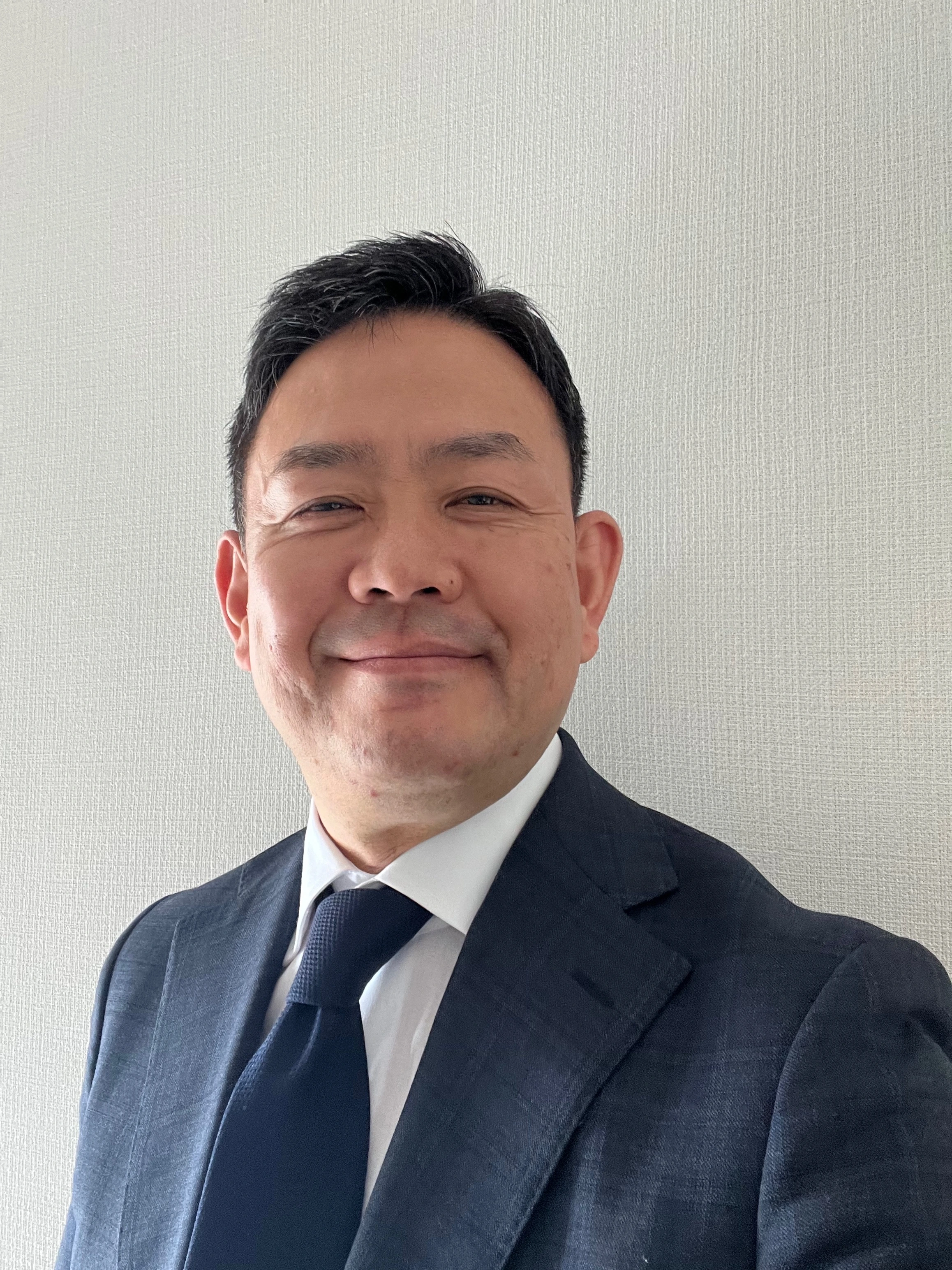
Author: Kenji Nishiyama (Certified Administrative Procedures Legal Specialist(Gyoseishoshi), Registration No.20081126)
Kenji Nishiyama is an Immigration and Visa Specialist who has supported many foreign residents with visa applications in Japan. On his firm’s website, he publishes daily updates and practical insights on immigration and residency procedures. He is also well-versed in foreign employment matters and serves as an advisor to companies that employ non-Japanese workers.