[Blog]What Is the Purpose of Permanent Residence?
2026-08-16
What the Term “Permanent Residence” Implies
The status of residence known as “Permanent Resident” occupies a distinctive position within Japan’s immigration system. Permanent residents are not subject to a fixed period of stay, and in principle there are no restrictions on the activities in which they may engage for employment. Unlike holders of ordinary statuses of residence, they are not required to repeatedly apply for extensions of their period of stay every few years. In this sense, permanent residence is one of the most stable legal statuses available to a foreign national living in Japan. Yet this gives rise to a simple but fundamental question: for what purpose does Japan grant foreign nationals the status of permanent residence in the first place?
Ordinary Statuses of Residence Explain Why Residence Is Permitted
For most statuses of residence, this question is relatively easy to answer. “Engineer/Specialist in Humanities/International Services” exists to permit foreign nationals to engage in professional or technical activities requiring particular knowledge or expertise. “Student” permits residence for the purpose of receiving education at an institution in Japan. “Specified Skilled Worker” is connected to the policy objective of accepting foreign workers with certain skills in industrial sectors facing labor shortages. Even among statuses based on personal status or position, “Spouse or Child of Japanese National” is grounded in a relationship with a Japanese national, while “Spouse or Child of Permanent Resident” is based on a family relationship with a permanent resident. In other words, for many statuses of residence, the applicable activities, personal relationships, and landing criteria make it possible to understand, at least to a considerable extent, why Japan permits the foreign national concerned to reside in the country.
The Definition of Permanent Resident Does Not State Its Purpose
Permanent residence is different. The definition in Appended Table II of the Immigration Control and Refugee Recognition Act is remarkably concise. A permanent resident is simply a person “permitted by the Minister of Justice to reside permanently in Japan.” The Immigration Services Agency sets out conditions for granting permanent residence, including good conduct, possession of sufficient assets or skills to make an independent living, and recognition that the person’s permanent residence accords with the interests of Japan. The Guidelines for Permission for Permanent Residence further specify how such considerations are applied. Yet these are criteria for determining who may be granted permanent residence. They do not, in themselves, answer the different question of why the institution of permanent residence exists.
Eligibility Requirements Are Not the Same as Institutional Purpose
This distinction matters. Establishing conditions for selecting the persons eligible for a legal status is not the same as defining what that legal status is intended to achieve within society. A state may require a certain level of income, proper payment of taxes and social insurance contributions, compliance with laws, or other conditions for permanent residence. Yet another question remains: why should a foreign national who satisfies those conditions be granted a special status free from restrictions on period of stay and, in principle, on activities? One possible answer is that such residence serves the interests of Japan. However, “national interest” is an extremely broad concept. By itself, it does not adequately explain the distinctive purpose of permanent residence as an institution.
Is Permanent Residence Merely a System That Eliminates Renewals?
In practical terms, one of the major advantages of obtaining permanent residence is that the holder no longer needs to apply for extensions of the period of stay. Permanent residence might therefore be understood simply as a mechanism for releasing certain foreign nationals from repeated renewal procedures. But this alone cannot adequately explain the institution. If reducing the burden of renewal were the sole objective, the same result could largely be achieved by granting much longer periods of stay or simplifying renewal procedures. Nevertheless, Japanese immigration law creates an independent status of “Permanent Resident,” imposes no fixed period of stay on its holders, and generally imposes no restrictions on their activities. This suggests that permanent residence must carry a legal significance beyond mere administrative convenience.
The System Already Functions as a Recognition of Settlement
Looking at the actual operation of Japan’s permanent residence system, its subjects are not merely people who have remained in Japan for a long time. In principle, importance is placed on continuous residence for a substantial period, the establishment of a stable basis of life, compliance with laws, and the fulfillment of public obligations such as taxes and social insurance contributions. In practice, therefore, the system already functions to assess the extent to which a foreign national has become settled in Japanese society. A person may have worked in Japan for many years, formed a family, established a home, contributed through taxes and social insurance, and developed continuing relationships within the community. Permanent residence then removes the temporal and activity-based restrictions characteristic of ordinary residence. If this is so, the system is already dealing substantively with “settlement,” while failing to clearly articulate why such settlement should be transformed into a distinct legal status.
If Integration Is Expected, What Lies Beyond It Must Also Be Defined
This issue becomes more important as public policy places greater emphasis on the social integration of foreign residents. If foreign nationals are expected to learn Japanese, understand Japanese institutions and social rules, fulfill obligations such as taxation and social insurance contributions, and establish a stable basis of life, the state must also explain what legal status lies at the end of that process. If foreign residents are told to “fulfill their responsibilities as members of Japanese society,” yet those who have done so consistently over many years remain conceptually little more than “foreign nationals permitted to reside in Japan,” integration risks becoming a one-way demand.
The Gap Between Coexistence Policy and Permanent Residence
The Japanese government promotes the realization of a “society of harmonious coexistence with foreign nationals,” pursuing measures relating to Japanese-language education, support for daily life, appropriate working conditions, and participation in society. The Roadmap for the Realization of a Society of Harmonious Coexistence with Foreign Nationals also reflects an understanding of foreign residents as people who participate in building Japanese society. Yet the question of what legal position should ultimately be accorded to a foreign national who has participated in society and lived in Japan over a long period remains insufficiently connected to the permanent residence system. Coexistence exists as a field of social policy, while permanent residence exists as an immigration-law permission. The principle connecting the two remains unclear.
Should Permanent Residents Remain Simply “Foreigners”?
Permanent residents are, of course, not Japanese nationals. They do not possess Japanese nationality, they do not have the right to vote in national or local elections, and they cannot obtain Japanese passports. There is no need to eliminate the distinction between rights inherent in nationality and the rights of permanent residents. At the same time, there are limits to treating permanent residents simply as “foreigners” in the same conceptual category as short-term visitors or temporary foreign workers. Permanent residents make Japan the principal base of their lives, reside without a fixed period of stay, contribute to society through taxation and participation in social security systems, and develop enduring relationships with families and local communities. How such people should be understood within Japanese society is therefore not merely a question of immigration administration. It is a question of social design.
Reconsidering the Purpose of Permanent Residence
The Balanced Coexistence Model seeks neither the unconditional expansion of foreign immigration nor an immigration system dominated solely by control and selection. Its premise is that if foreign residents are expected to assume responsibilities toward society, corresponding responsibilities must also be borne by the state and society. Viewed from this perspective, the central question concerning permanent residence is not simply “Who should be granted permanent residence?” Before answering that question, Japan must ask, “For what purpose does permanent residence exist?” Once that purpose is defined, individual policies concerning income, taxation, Japanese-language ability, social insurance, and revocation of permanent resident status can be evaluated according to whether they are rationally connected to that purpose. If the purpose remains unclear, eligibility requirements can change according to the policy priorities of the moment, reducing predictability for foreign residents who have structured many years of their lives around the prospect of permanent residence.
From “Permission” to “Recognition”
This book proposes that permanent residence should not be understood merely as an exception within the system of immigration control. Rather, it should be understood as the legal boundary at which the relationship between a foreign resident and Japanese society changes from temporary to permanent. When a foreign national has lived in Japanese society over a substantial period and has continuously fulfilled responsibilities toward that society, what legal status should the state accord to that reality? One possible answer is expressed in the proposition that “residence is permission, while permanent residence is recognition.” Permanent residence can be reconstructed not merely as permission to continue living in Japan, but as the state’s legal recognition of an enduring relationship between the individual and Japanese society.
Defining “Membership in Society” Through Permanent Residence
Immigration and refugee policy has traditionally devoted considerable attention to deciding who may enter the country and who may remain. Far less attention has been paid to a different question: at what point should a foreign national who has lived in Japan for many years cease to be regarded as merely a temporary resident and instead be recognized as a permanent member of Japanese society? To consider the purpose of permanent residence is ultimately to reconsider who counts as a member of society. A permanent resident is not a Japanese national. Yet neither is a permanent resident merely a temporary foreign resident. Clarifying the legal status that exists between these categories, and communicating its meaning in a way that is understandable both to foreign residents and to Japanese society, is essential to the future of coexistence.
Permanent Residence as a Test of the Balanced Coexistence Model
How permanent residence is understood is one of the clearest tests of the Balanced Coexistence Model. If foreign residents are expected to adapt to society and assume responsibilities toward it, to what extent should the state guarantee the stability of their lives and legal status? How should Japan recognize long-settled foreign nationals as members of society while preserving the distinction between nationality and foreign nationality? Where should the balance be drawn between control and inclusion, rights and obligations, national interests and individual lives, and nationality and social membership? Defining the purpose of permanent residence is therefore not merely a matter of improving immigration administration. It is a question of what kind of state Japan intends to be in designing permanent relationships with people who remain foreign nationals while becoming enduring members of its society.
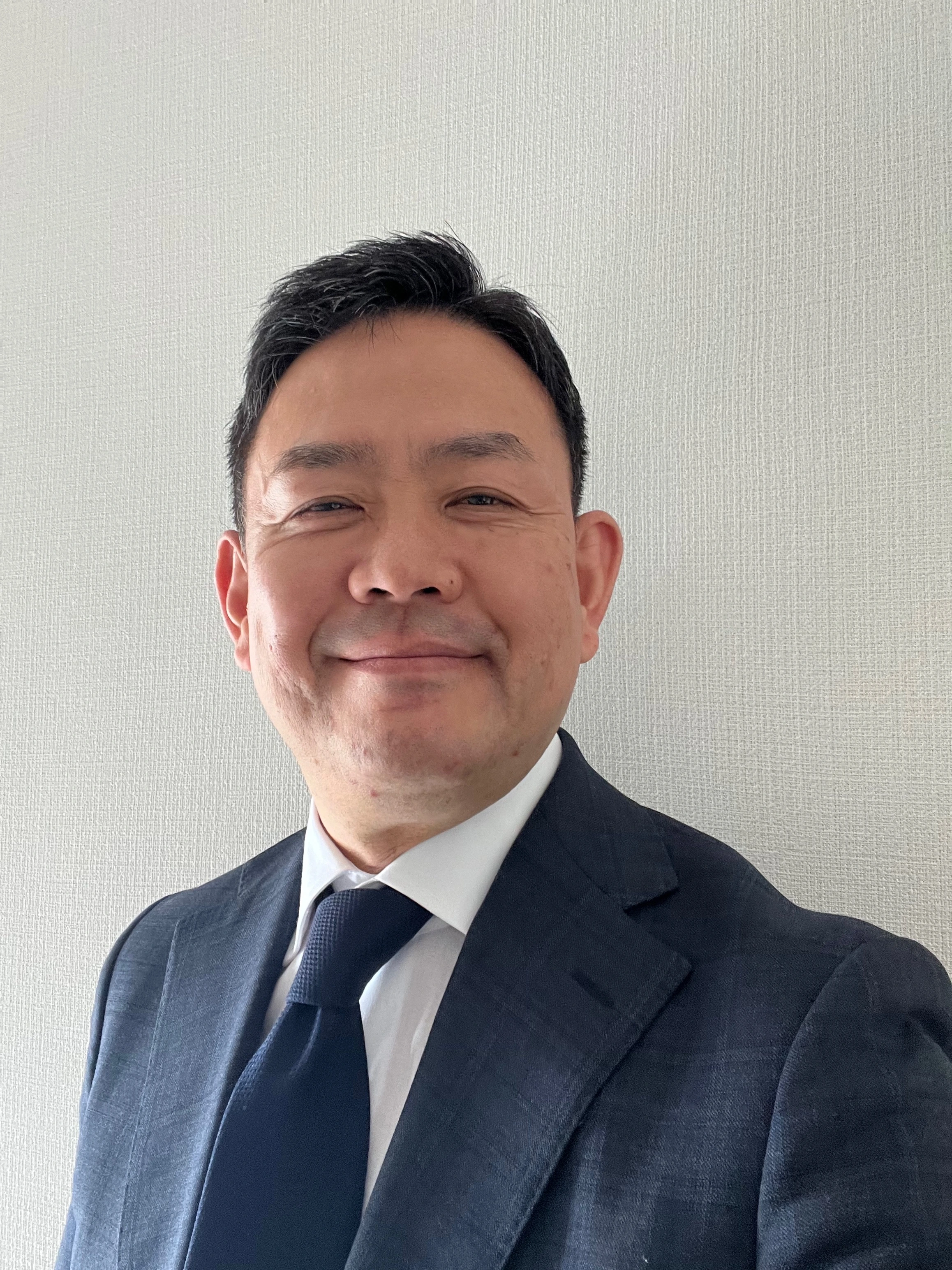
Author: Kenji Nishiyama (Certified Administrative Procedures Legal Specialist(Gyoseishoshi), Registration No.20081126)
Kenji Nishiyama is an Immigration and Visa Specialist who has supported many foreign residents with visa applications in Japan. On his firm’s website, he publishes daily updates and practical insights on immigration and residency procedures. He is also well-versed in foreign employment matters and serves as an advisor to companies that employ non-Japanese workers.