[Blog]Foreign Residents as Members of Society — Rethinking Exclusion and Rights Protection Through the Balanced Coexistence Model
2026-08-12
How Should We Understand the Tightening of Policies Toward Foreign Residents?
On August 7, 2026, Bengo4.com published an interview with attorney Masako Suzuki, who has worked for approximately a quarter of a century to protect the rights of foreign nationals in Japan. Under the theme that the division of society itself is something to fear, the article discusses concerns surrounding recent changes affecting foreign residents, including stricter screening for residence status and naturalization, expanded grounds for revoking permanent resident status, and higher fees for immigration procedures. For details, see the Bengo4.com article.
The McLean Case and Administrative Discretion
One particularly important point raised in the article concerns the 1978 Supreme Court decision commonly known as the McLean case. While the decision addressed the constitutional rights of foreign nationals, it also became highly influential for recognizing broad governmental discretion over the admission and residence of foreign nationals. Suzuki argues that this broad administrative discretion has long constituted a major obstacle when considering the protection of their rights.
The Balanced Coexistence Model does not deny the authority of the state to determine the admission and residence of foreign nationals. Deciding whom to admit and under what conditions is an important function of the state. However, broad discretion does not mean that decisions require no explanation. On the contrary, the greater the discretion, the more important it becomes to ensure consistency, predictability, and explainability. These qualities determine whether people can reasonably trust the institution exercising that discretion.
Stricter Rules Are Not Necessarily the Problem
It is important not to assume that every tightening of immigration policy is inherently undesirable. If an institution is being abused or existing requirements no longer achieve their policy objectives, revising eligibility requirements or screening methods may be justified. Protecting public safety and maintaining the sustainability of institutions are also legitimate responsibilities of the state.
The more important questions are why the change is necessary, what evidence supports it, how continuity with previous rules will be maintained, and how the change will affect people who have already built their lives in Japan. When multiple policy changes occur rapidly without sufficient explanation of their rationale or future direction, uncertainty affects not only foreign residents but also employers, families, financial institutions, and local communities.
The Balanced Coexistence Model describes this issue in terms of “consistency across time.” Institutions may change, but reform should simultaneously consider people who organized their lives and businesses in reliance on previous rules, consistency in current administration, and reasonable predictability for the future.
Are Foreign Residents Outside Japanese Society?
Another important issue raised by the article is whether foreign residents should be understood as members of Japanese society. Suzuki questions the assumption that matters concerning foreign nationals should simply be financed or dealt with by foreign nationals themselves, particularly when many foreign residents work in Japan and pay taxes and social insurance contributions.
This question is closely connected to the Balanced Coexistence Model's concept of “trust that society has built.” Employment insurance, health insurance, pensions, workers' compensation, and other systems were developed over many decades after the war through shared contributions and responsibilities among workers, businesses, and the state. Foreign workers also participate in these systems under applicable requirements and contribute through taxes and insurance premiums. Seeing foreign residents only as users or beneficiaries of institutions therefore captures only one side of the relationship.
Foreign residents may receive support, but they also work, pay taxes and insurance contributions, sustain businesses, and participate in local communities. It is therefore insufficient to discuss only rights, just as it is insufficient to discuss only burdens and responsibilities. Rights and obligations, contributions and benefits, must be explained symmetrically if foreign residents are to be properly understood as participants in society.
Neither Exclusion nor Unconditional Acceptance
Debates about immigration policy are often reduced to a simple choice between being “strict” or “generous” toward foreign nationals. The Balanced Coexistence Model rejects this binary framework. Misconduct should not be tolerated merely because the person involved is a foreign national, and compliance with laws and social rules can legitimately be required. At the same time, institutional protection and explainability should not be weakened merely because a person holds foreign nationality.
The challenge is to institutionally balance values that may conflict: national interests and individual dignity, security and freedom, rights and obligations, admission and integration. Violations should be addressed appropriately and abuse of institutions should be prevented. At the same time, those who live lawfully and fulfill their responsibilities should be provided with stability and reasonable predictability. Making this distinction clearly is itself an important foundation of institutional trust.
Understanding “Social Division” Through Experience
Suzuki's concern about the division of society can also be considered through another perspective recently developed within the Balanced Coexistence Model: “trust built through experience.” People do not form perceptions of foreign residents solely through news, social media, or political discourse. Their views are also shaped by concrete interpersonal experiences—working with foreign colleagues, living alongside foreign neighbors, and interacting through public institutions, schools, and local communities.
When crimes or abuses involving foreign nationals are reported, those problems should be examined seriously. Yet a single incident cannot establish the characteristics of foreign residents as a whole. Conversely, highlighting only positive stories about intercultural interaction while ignoring genuine conflicts would also distort reality. Both successful and unsuccessful experiences should be examined to determine what worked, what failed, and why.
The Balanced Coexistence Model does not seek to make people feel positively toward foreign residents. It seeks to encourage judgments based on concrete conduct, actual outcomes, and the role played by institutions rather than on nationality as an attribute. Accumulated in this way, experience can produce social perceptions that avoid both exclusionary narratives and idealism detached from reality.
Increasing Positive Institutional and Interpersonal Experiences
Institutions do more than regulate people. They also influence the experiences through which people understand society. Receiving a clear explanation during an administrative procedure, being properly informed about social insurance by an employer, or seeing local government respond effectively when a community problem occurs are small institutional experiences that can build trust.
At the same time, interpersonal experiences also matter: a foreign colleague keeping a promise, neighbors cooperating in a community activity, or people helping one another when difficulties arise. These seemingly small encounters can gradually create trust between people.
The opposite is equally true. When institutions leave problems unresolved and responsibility remains unclear, frustration can turn into distrust of foreign residents, Japanese residents, employers, or government itself. Preventing social division therefore requires more than promoting the abstract ideal of “coexistence.” Society must create conditions in which positive institutional experiences and positive interpersonal experiences can repeatedly occur.
Creating Trustworthy Boundaries Rather Than Simply Excluding
As long as national borders exist, immigration systems will necessarily contain boundaries governing admission and residence. Coexistence does not require eliminating those boundaries. What matters is whether they are reasonable, explainable, consistently applied, and sufficiently predictable for people who have established their lives within society.
The questions of rights protection and social division raised by the Bengo4.com article therefore extend beyond whether Japan should adopt stricter or more permissive policies toward foreign nationals. They concern the design of society itself: whom society recognizes as its members, what responsibilities it requires from them, and what institutional stability it provides in return.
The Balanced Coexistence Model seeks neither unconditional admission nor exclusion. The state should maintain necessary boundaries while providing understandable and predictable institutions to those who lawfully live within those boundaries and contribute to society, regardless of nationality. By establishing symmetry between rights and responsibilities and accumulating small experiences of trust between institutions and people, it may be possible to build a society in which order and coexistence reinforce rather than undermine one another.
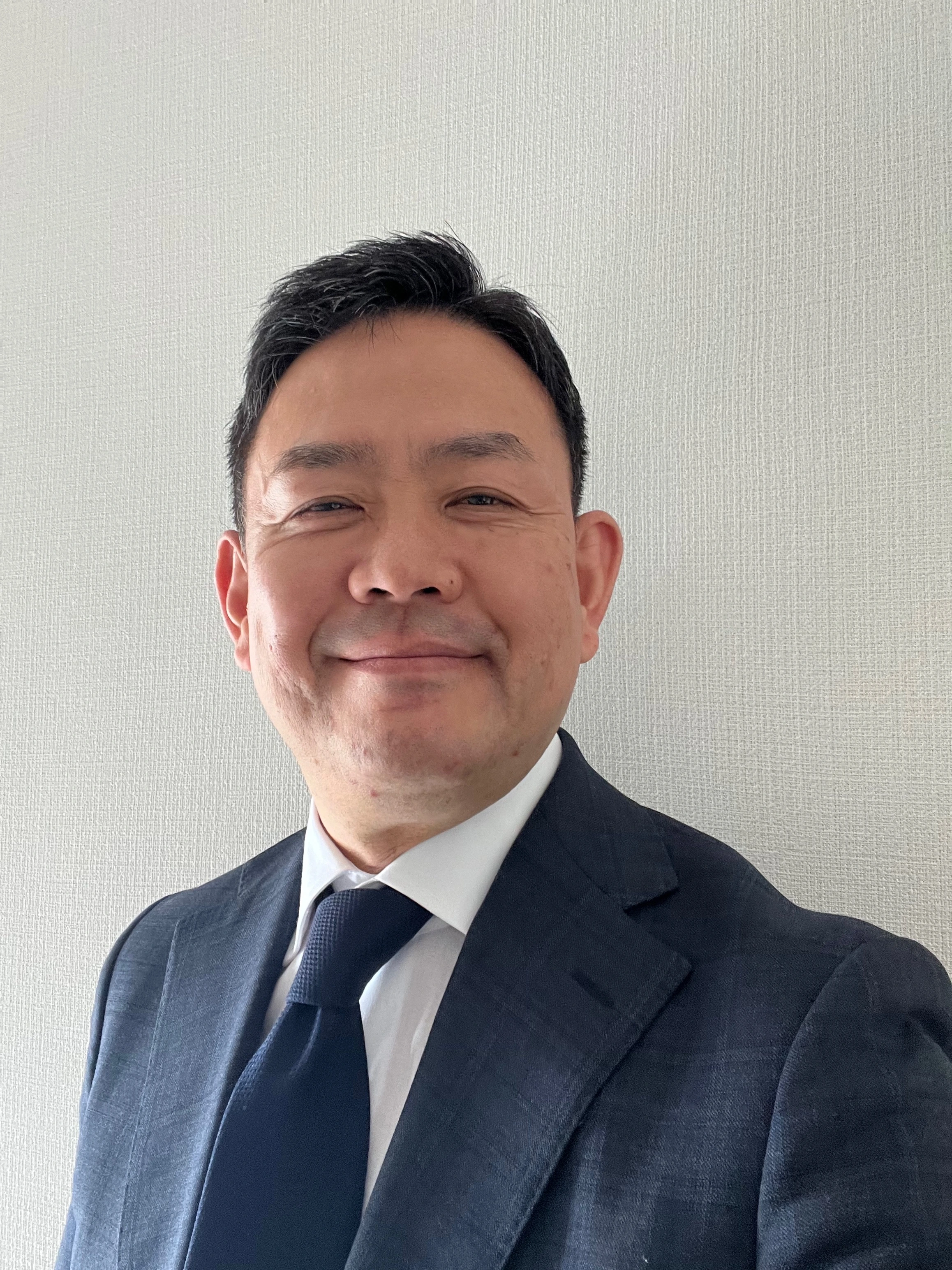
Author: Kenji Nishiyama (Certified Administrative Procedures Legal Specialist(Gyoseishoshi), Registration No.20081126)
Kenji Nishiyama is an Immigration and Visa Specialist who has supported many foreign residents with visa applications in Japan. On his firm’s website, he publishes daily updates and practical insights on immigration and residency procedures. He is also well-versed in foreign employment matters and serves as an advisor to companies that employ non-Japanese workers.