[Blog]Prologue: The Premise of Institutional Design—Immigration and Refugee Policy Beginning with Trust (Revised)
2026-07-31
Toward a Society in Which People and Institutions Support One Another by Reducing Distrust and Misfortune
1. What Is Immigration and Refugee Policy For?
What is immigration and refugee policy for? It is not merely a system of management or control. Nor should it be limited to restricting human movement and maintaining order at national borders.
The state has a responsibility to decide whom to admit, under what conditions residence should be permitted, and how public safety and social order should be protected. Yet this authority does not exist for the sake of classifying, excluding, or controlling people. Its proper purpose is to protect the sustainability of the state and society while supporting human dignity and daily life, thereby reducing distrust and misfortune.
Safety alone does not make people happy. Freedom alone cannot provide a stable life. A foundation for better lives emerges only when order, freedom, security, dignity, and the continuity of life are institutionally balanced. Immigration and refugee policy is one of the essential social systems through which this balance must be achieved.
2. The Structure Through Which Distrust Reproduces Misfortune
In reality, however, institutions sometimes generate distrust instead of protecting people. Decision-making standards are unclear. Explanations are inconsistent. Outcomes cannot be predicted. When problems arise, people do not know where to seek help. Institutions remain disconnected, preventing individuals from reaching the support they need.
When such experiences accumulate, foreign residents lose trust in public authorities and employers. Businesses become uncertain about the conduct of foreign workers and grow more anxious. Local communities cannot be confident that problems are being properly managed through institutions. Citizens do not understand the relationship between burdens and benefits and begin to perceive unfairness. Public authorities, in turn, become increasingly suspicious of people who fail to comply with institutional requirements.
One form of distrust produces another. Distrust of foreign residents, government, employers, and local communities reinforces itself, reproducing misfortune throughout society. This structure cannot be explained solely by individual prejudice or emotion. At its foundation lies the absence of institutional design and implementation capable of generating trust.
3. Trust Emerges from Experience, Not Command
Trust does not arise naturally. People will not trust institutions simply because a government asks them to do so. Corporate declarations of legal compliance are insufficient, as are social slogans promoting coexistence.
Trust develops gradually when promises are kept, decisions are consistent, reasons are explained, responsibilities are fairly shared, and pathways for correction exist when problems arise. Institutional trust accumulates within society through repeated experiences of fairness and predictability whenever people interact with the system.
When people understand an institution, they can anticipate how it will operate. When they can anticipate it, they can organize their lives and futures on the assumption that the institution will function. When they experience that they can actually rely on the institution during difficult moments, that experience becomes trust.
From understanding to predictability. From predictability to the ability to rely on institutions. And from institutional reliance to trust. The institutional trust discussed in this book exists within this continuous process.
4. Institutions Built by Society Are Also Foundations of Trust
When considering trust, we must not focus exclusively on new institutions and technologies. The systems supporting contemporary society have long histories. Labor law, labor insurance, social insurance, and employment administration are shared social foundations built through repeated trial and error as postwar society sought to reconcile economic growth with stability in everyday life.
These systems do not exist for a single nationality or a limited group of people. They are sustained through mutual support among workers, businesses, public authorities, taxpayers, insurance contributors, and people who require assistance. Foreign nationals working in Japan are not temporary outsiders standing beyond these institutions. Through their labor, taxes, and insurance contributions, they participate in and support Japanese companies, local communities, and the institutions themselves.
Coexistence therefore does not require creating entirely separate institutions only for foreign residents. It requires sharing the history and purpose of the institutions society has already built and correctly recognizing foreign residents as participants who help sustain them. Explaining whom institutions serve and who supports them is the starting point of mutual understanding and trust.
Institutions do not become the property of society merely by existing. Only when their history, purpose, rights, burdens, and methods of use are explained can people understand, participate in, and support them. Explaining institutions is also an act of passing the trust accumulated by society to future generations and new members.
5. Trust as an Institutional Structure
The first layer supporting trust in modern society is “institutional trust,” guaranteed by the legislature and the executive.
Transparency, consistency, predictability, and explainability are essential. Only when these conditions are secured can people understand institutions, anticipate their outcomes, and rely upon them when necessary.
Institutions require a certain degree of discretion. Not every circumstance can be assessed through numerical or formal criteria alone. Yet the need for discretion does not mean that reasons need not be explained. By showing which circumstances were considered important and how the conclusion was reached, discretion can be understood as reasoned judgment rather than arbitrary power.
Institutional trust does not depend on institutions always producing favorable outcomes. Even an adverse decision may preserve trust when the reasons are understandable, similar conditions produce similar outcomes, and errors can be corrected.
Institutional trust does not mean that the state declares itself to be correct. It means that people can understand how institutions operate, observe their consistency, and experience that problems can be resolved within the institutional framework.
6. Trust Through Implementation
The second layer is “trust through implementation,” realized through technology and practical administration.
No matter how well laws or policy principles are designed, they cannot protect people unless they reach everyday life. Procedures may be too complicated to use. Necessary information may be scattered among multiple institutions. Systems may remain disconnected, allowing a delay in one procedure to destabilize an entire life. Under such conditions, formal rights exist but cannot be meaningfully exercised.
Simplifying procedures, making information visible, supporting decision-making, enabling users to check application status, and connecting information across institutions are essential foundations for making systems function in society.
Digitalization itself, however, does not create trust. A system that fails to explain the meaning of its fields, the reason for an error, or who ultimately bears responsibility creates a new form of opacity. Technology must not be used to avoid explanation. It must provide consistent explanations and guarantee access to institutions.
Institutions alone cannot carry trust into people’s lives. Technology alone cannot establish legitimate trust. Institutions provide direction, while technology and practice make them function in society. Only when these layers overlap does trust become rooted in daily experience.
7. What Is the Balanced Coexistence Model?
The Balanced Coexistence Model presented in this book is a redesign of immigration and refugee policy centered on trust.
It does not advocate the unconditional expansion of foreign admissions. Nor does it treat foreign nationals primarily as dangers or burdens and place management and exclusion at the center of policy.
National interests and individual dignity. Security and freedom. Humanitarian protection and institutional sustainability. Admission and social integration. Rights and obligations. Administrative discretion and explainability. These values frequently conflict. If either side is made absolute, the other is sacrificed.
Balanced coexistence does not mean vaguely blending competing values. It means recognizing each value clearly, balancing them within institutions, and guiding them toward coexistence. It is neither admission alone nor control alone. It is neither support alone nor individual responsibility alone. It means designing a structure of mutual obligations in which the state, businesses, foreign residents, and local communities each fulfill responsibilities appropriate to their roles.
Foreign residents must not be viewed only as recipients of support, but also as participants who sustain society. Because they participate in Japanese society, they are expected to obey the law and bear appropriate responsibilities. At the same time, public authorities and businesses must ensure fair administration, proper employment practices, understandable explanations, and mechanisms through which problems can be corrected. This is the fundamental position of the Balanced Coexistence Model.
8. Labor Markets Must Not Be Viewed Only from the Receiving Country’s Perspective
Policies concerning foreign workers often focus primarily on labor shortages and economic demand in receiving countries. How many workers are required in each industry? Which regions face labor shortages? How many employees do companies need? These are important policy questions. Yet labor markets cannot be designed solely around the needs of receiving countries.
Foreign workers are not quantities moved merely to fill domestic labor shortages. Each person has a family, a livelihood, skills, and hopes for the future. Their movement also affects local communities, educational systems, industries, human-resource development, and family life in their countries of origin.
Even when a receiving country secures needed workers in the short term, the system will not remain stable if it causes excessive outflows of skilled workers or young people and undermines the sustainability of industries and communities in countries of origin. Likewise, if foreign workers are treated as easily replaceable labor when demand changes, both workers and their families face severe instability, while international trust is also damaged.
Policy must therefore consider simultaneously the interests of receiving countries, the sustainability of countries of origin, and the dignity and development of workers themselves. Skills assessment, pre-departure education, post-arrival training, the use of acquired skills after return, and fair allocation of recruitment and migration costs should all be incorporated into a system that treats human mobility not as one-way consumption but as international circulation of human resources.
Workers are not commodities. They must not be recruited only when receiving countries need them and sent away when they are no longer required. Designing labor markets as structures of mutual benefit that include countries of origin, without separating work from human life, is another condition of trust within the Balanced Coexistence Model.
9. RegTech That Prevents the Separation of Institutions from Everyday Life
The Balanced Coexistence Model is not limited to theory. Through the Immigration RegTech Japan pilot project series, I am also working to construct the technological foundations necessary to make institutions function in practice.
Residence procedures do not end within immigration administration. They are connected to bank accounts, insurance, housing, employment, taxation, social insurance, and many other forms of infrastructure supporting the lives of foreign residents. Yet these systems are currently operated separately, often requiring individuals and businesses to move between institutions and repeatedly submit the same information.
If changes or renewals of residence status are appropriately connected with employment, banking, housing, and insurance procedures, changes in immigration status need not suddenly destabilize an entire life. By connecting necessary information under the individual’s consent and appropriate access controls, public authorities, businesses, financial institutions, and support organizations can cooperate within clearly defined limits. This can transform isolated screenings and procedures into a continuous system supporting life as a whole.
Banking, insurance, housing, and employment. Embedding residence procedures within social infrastructure and implementing systems that prevent institutions from becoming disconnected from everyday life is an attempt to convert “institutional trust” into “trust that functions within society.”
10. Moving Back and Forth Between Theory and Implementation
Theory and implementation must not be separated.
Implementation without theory loses direction and may pursue efficiency for its own sake. Even when processing becomes faster, trust may be further damaged if opaque or unfair institutions are merely strengthened.
Theory without implementation, however, does not reach everyday life. No matter how strongly human rights or coexistence are proclaimed, anxiety will remain when people cannot access necessary procedures and when employment, housing, insurance, and residence remain disconnected.
Institutions must express the values they seek to protect, the results of implementation must be examined, and those experiences must be returned to institutional design. Through this movement in both directions, theory acquires practical relevance and implementation receives legitimate direction.
This book reviews the history of institutions built by society, analyzes the present structure of distrust, considers institutions and technologies capable of producing trust, and presents new possibilities for immigration and refugee policy from a broader perspective that includes domestic and international labor markets and human mobility.
11. Designing, Explaining, Implementing, and Sharing Trust
Immigration and refugee policy is not a matter concerning foreign nationals alone. It concerns the values the state chooses to protect, the relationships society seeks to build, and the experiences institutions provide to people. It is therefore a question of the design of society as a whole.
Design trust. Clarify institutional purposes, standards, rights, obligations, and responsibilities, and establish transparent and consistent systems.
Explain trust. Enable people to understand institutions, anticipate their outcomes, and seek correction when problems arise.
Implement trust. Connect institutions with employment, housing, finance, insurance, education, and local communities so that they function in everyday life.
Share trust. Build structures in which Japanese and foreign residents, receiving and origin countries, government and businesses, local communities and individuals understand their respective responsibilities and interests and support one another.
Beyond this lies a society that reduces distrust and misfortune and enables more people to live securely and imagine their futures.
This book does not present a completed answer for reaching that society. It is a starting point for reconsidering immigration and refugee policy on the foundation of trust and for testing institutional design and implementation within society.
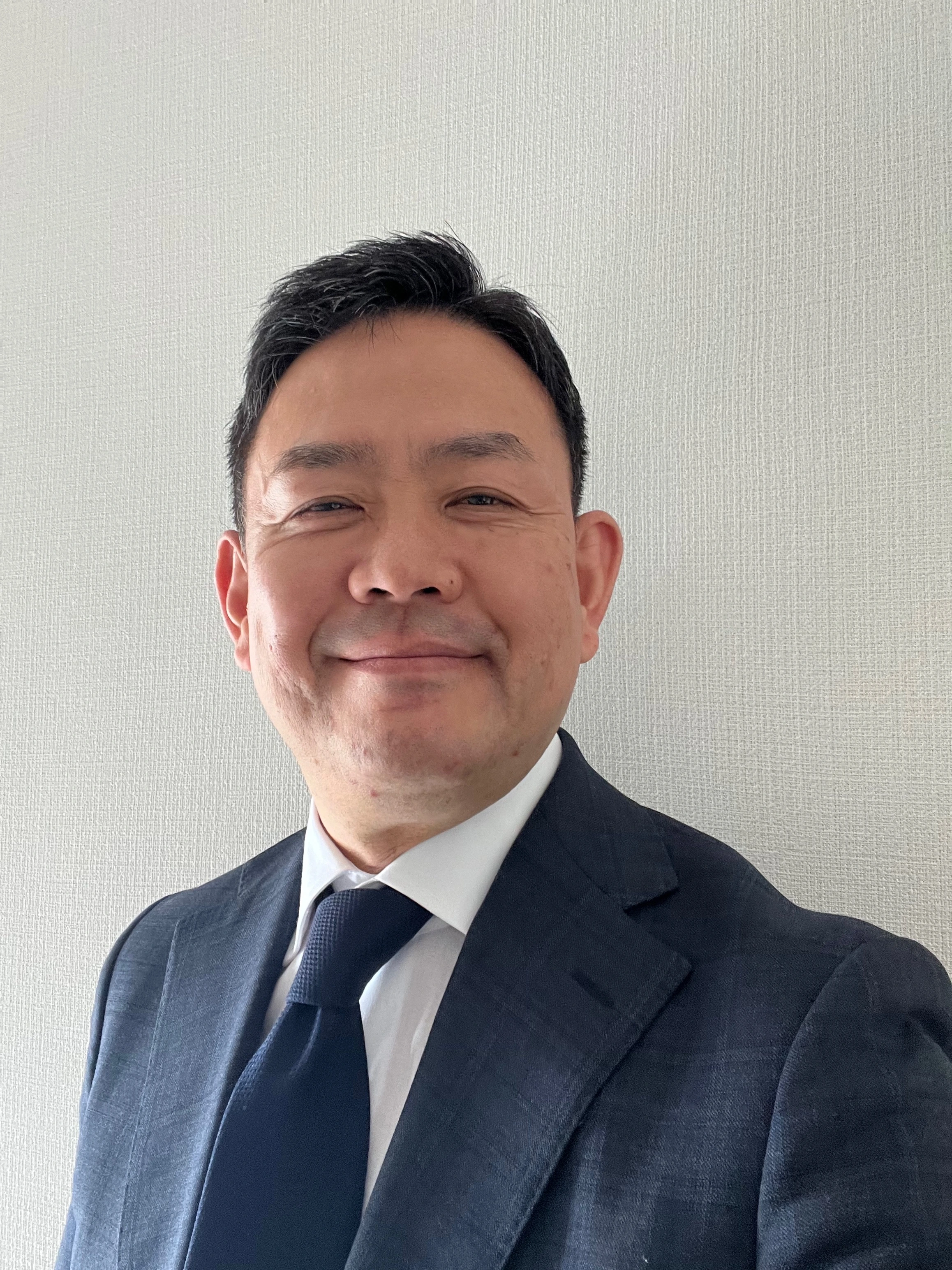
Author: Kenji Nishiyama (Certified Administrative Procedures Legal Specialist(Gyoseishoshi), Registration No.20081126)
Kenji Nishiyama is an Immigration and Visa Specialist who has supported many foreign residents with visa applications in Japan. On his firm’s website, he publishes daily updates and practical insights on immigration and residency procedures. He is also well-versed in foreign employment matters and serves as an advisor to companies that employ non-Japanese workers.