[Blog]Toward the Realization of a Balanced Coexistence Society — Designing a Future Built on Trust
2026-07-07
1. The Question
What is a balanced coexistence society?
Is it merely an idealistic vision?
Or is it a practical model that can be implemented through public institutions?
Throughout this book, the Balanced Coexistence Model has examined immigration governance through the lenses of distrust, institutional design, technology, social integration, international comparison, and public policy.
This final chapter brings these ideas together by describing the society they are intended to create.
A balanced coexistence society is neither a society that simply accepts migrants nor one that merely controls them.
It is a society in which competing values are balanced through institutions that people can genuinely trust.
2. Coexistence Must Become Institutional
Coexistence is an attractive ideal.
Yet ideals alone cannot resolve real social problems.
Simply encouraging people to "live together" does not eliminate distrust.
Declaring support for multiculturalism does not solve problems involving housing, employment, finance, education, healthcare, or immigration procedures.
Coexistence cannot rely solely on goodwill.
It must become part of institutional design.
Explainable administration.
Connected institutions.
Fairly shared responsibilities.
Preventive support.
Correctable procedures.
Only when these elements exist does coexistence become an everyday reality rather than a political slogan.
3. Balance Is Dynamic
Balance does not mean freezing competing values in permanent equilibrium.
Human rights and national sovereignty.
Freedom and responsibility.
Openness and security.
Labor demand and worker protection.
Integration and diversity.
Fairness and efficiency.
These values naturally exist in tension.
If one becomes absolute, the other is weakened.
Balance therefore requires continuous adjustment rather than permanent compromise.
A balanced coexistence society is not a finished destination.
It is a society capable of maintaining equilibrium as circumstances change.
4. From Control to Trust
Immigration policy has traditionally focused on control.
Who may enter?
Which residence status applies?
What activities are permitted?
How should violations be addressed?
Such functions remain necessary.
Every nation has a responsibility to protect its borders and maintain public order.
Yet control alone cannot sustain coexistence.
The future requires transforming control into trust.
Residence status should become a bridge connecting individuals with society rather than merely a category for regulation.
Administrative decisions should become understandable institutional experiences rather than opaque procedures.
Public administration should evolve into infrastructure that supports people's lives.
5. Benefits for Society as a Whole
A balanced coexistence society benefits everyone.
Foreign residents gain stable lives and secure participation.
Employers gain long-term workforce stability.
Government can prevent problems before they become costly.
Financial institutions and housing providers face less uncertainty.
Local communities gain confidence through transparent institutions rather than fear of the unknown.
Trust is not a benefit reserved for one group.
It is a public good that strengthens society as a whole.
6. Neither Exclusion nor Unlimited Acceptance
The Balanced Coexistence Model rejects two extremes.
It does not advocate unlimited immigration.
Nor does it support exclusion as a governing principle.
The real challenge is to move beyond this false choice.
When migrants are accepted, institutions must support employment, housing, education, finance, healthcare, and social participation.
When applications are refused, procedures must remain transparent, fair, and legally accountable.
Serious violations require firm responses.
Minor administrative failures should not unnecessarily push individuals outside society.
Balanced coexistence combines openness with responsibility and order.
7. Long-Term Social Participation
Foreign residents should not be viewed solely as temporary labor.
People do more than work.
They build families, raise children, learn, contribute to communities, and grow older.
Immigration policy must therefore extend beyond short-term labor shortages.
It should support skills, careers, family life, children's education, permanent residence, entrepreneurship, and even future reintegration into home countries.
Viewing migrants only as labor creates instability.
Viewing them as participants in society creates trust.
8. Technology Supports the Future
Technology plays an important role in balanced coexistence.
API connectivity, RegTech, explainable AI, digital procedures, audit logs, and secure data governance allow institutions to function more effectively.
Yet technology is not the future itself.
If institutions lack clear purposes, technology cannot generate trust.
Artificial intelligence cannot replace human accountability.
Data integration without consent or correction mechanisms becomes surveillance rather than support.
The future depends not on technology alone but on the values guiding its use.
9. A Model Beyond Japan
The Balanced Coexistence Model is not limited to Japan.
Aging populations.
International migration.
Refugee movements.
Global labor markets.
Artificial intelligence.
Social polarization.
Tourism pressures.
These are global challenges.
Different countries will develop different institutional solutions.
Yet every society ultimately depends upon trust.
The Balanced Coexistence Model therefore offers not a uniquely Japanese system but a transferable framework for balancing competing values through institutional trust.
10. There Is No Final Model
No society remains unchanged.
Demographics evolve.
Technology advances.
Economies transform.
Public values shift.
Institutions must evolve accordingly.
The Balanced Coexistence Model is therefore not a fixed blueprint.
It is a method of continual institutional adjustment.
The objective is not to create perfect institutions once and for all.
It is to build institutions capable of continuous improvement.
11. What We Leave to Future Generations
We cannot hand future generations a perfect society.
But we can leave them institutions that continue to improve.
A society that does not ignore distrust.
A society that does not treat hardship solely as personal failure.
A society that explains, corrects, and connects its institutions.
A society that balances competing values rather than allowing them to become permanent conflicts.
Balanced coexistence is therefore not a finished destination.
It is a shared commitment to continuous institutional improvement.
12. Conclusion
A balanced coexistence society is not simply the final stage of immigration policy.
It is a philosophy for designing society itself.
It balances human rights and sovereignty, freedom and responsibility, openness and security, integration and diversity, fairness and efficiency through institutional design.
It transforms trust from an abstract ideal into everyday institutional experience.
It uses technology not for surveillance but for connection and support.
It transforms administration from a system of control into infrastructure for social participation.
Under these conditions, coexistence becomes not merely an aspiration but the structure of society itself.
The realization of a balanced coexistence society does not mean achieving perfection.
It means continuously reducing distrust and hardship while steadily expanding trust.
That is the future envisioned by the Balanced Coexistence Model.
This article is positioned as a chapter within the table of contents of the Balanced Coexistence Model.
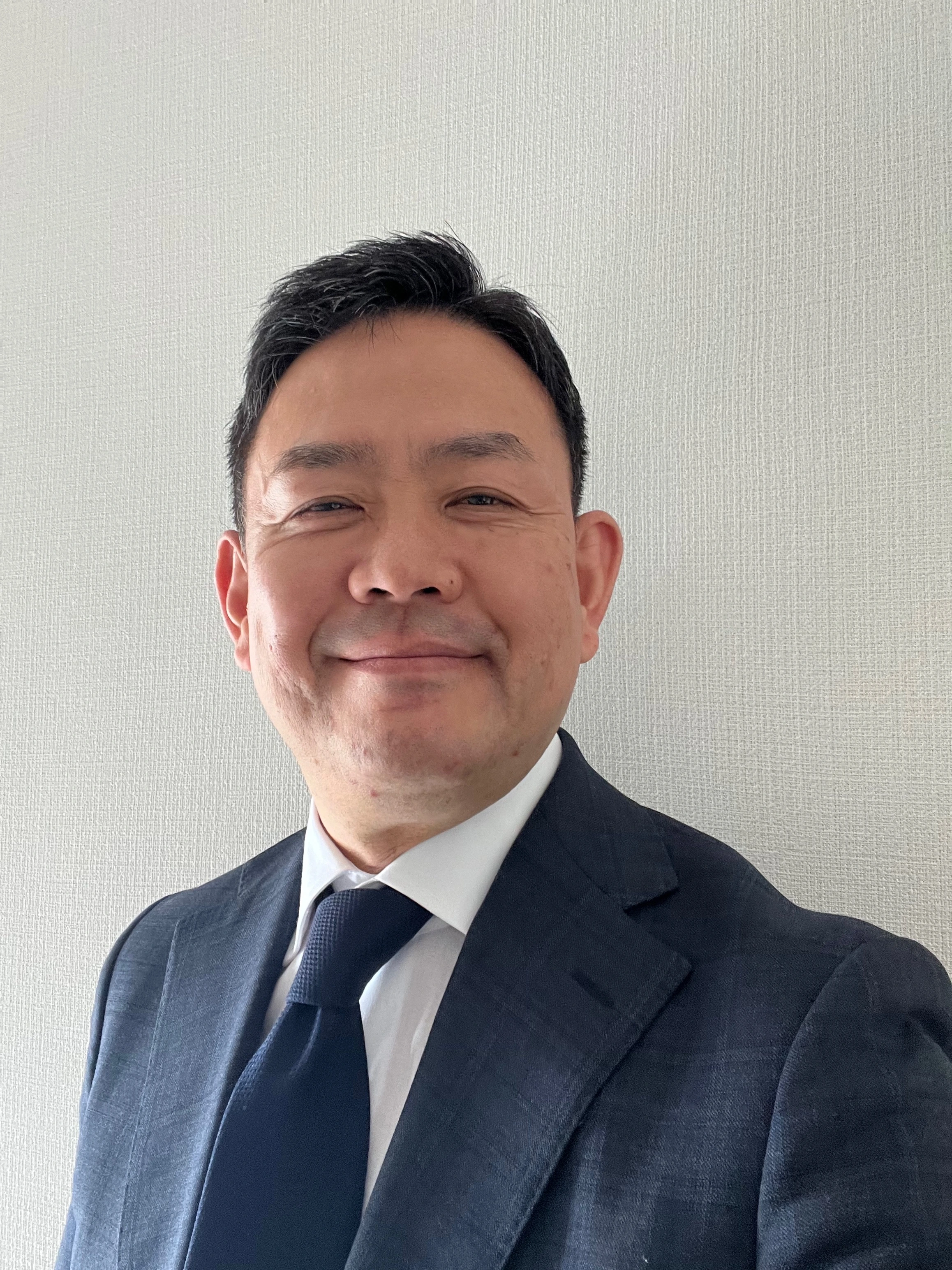
Author: Kenji Nishiyama (Certified Administrative Procedures Legal Specialist(Gyoseishoshi), Registration No.20081126)
Kenji Nishiyama is an Immigration and Visa Specialist who has supported many foreign residents with visa applications in Japan. On his firm’s website, he publishes daily updates and practical insights on immigration and residency procedures. He is also well-versed in foreign employment matters and serves as an advisor to companies that employ non-Japanese workers.