[Blog]Designing a Society That Reduces Distrust and Misfortune — Rebuilding Institutions Around People's Lives —
2026-07-02
1. The Question
What is social design?
Is it simply the creation of new laws?
Is it the strengthening of regulations?
Is it about increasing or reducing immigration?
The Balanced Coexistence Model offers a different perspective.
Social design means restructuring the institutional mechanisms that continuously generate distrust and social hardship.
Immigration policy is therefore not merely an administrative function.
It shapes how people work, live, study, raise families, and participate in society.
2. Distrust Is Not Accidental
Distrust is not simply an emotion.
It is produced through repeated institutional experiences.
People cannot understand why an application was rejected.
Similar cases receive different outcomes.
Individuals do not know which institution is responsible for solving their problems.
Immigration, employment, banking, housing, taxation, and social insurance operate independently without coordination.
Under such circumstances, confidence in institutions naturally declines.
Distrust is not accidental.
It is produced by opacity, fragmentation, uneven responsibility, and inadequate explanation.
3. Misfortune Is Also Institutional
Misfortune does not arise solely from individual mistakes.
A migrant may follow every rule.
An employer may fail to complete required procedures.
Social insurance obligations may remain unclear.
A pending visa renewal may not be recognized by a financial institution.
A housing application may be rejected solely because of a limited period of stay.
A child may lose educational opportunities because institutions fail to cooperate.
As these problems accumulate, lives become unstable, residence status becomes uncertain, and connections with society weaken.
These are not simply personal failures.
They are institutional failures.
4. The Purpose of Social Design
The purpose of social design is not to identify more violations.
It is to create a society in which violations become less likely.
Its purpose is not merely to assist people after they experience hardship.
Its purpose is to connect support before hardship becomes severe.
Its purpose is not to restore trust after distrust has spread.
It is to create institutional experiences that prevent distrust from accumulating.
The Balanced Coexistence Model therefore emphasizes prevention rather than reaction.
5. Toward a Preventive Society
Immigration governance should evolve toward preventive administration.
Healthcare has shifted from treatment alone toward prevention.
Public administration should follow the same path.
Employment problems should be detected before illegal work occurs.
Residence renewals should begin before visas expire.
Insurance compliance should be corrected before long-term exclusion develops.
Housing, finance, education, and welfare should become accessible before people's lives collapse.
A preventive society is not a surveillance society.
It is a society designed to prevent distrust and hardship from becoming irreversible.
6. Seeing Institutions Through Everyday Life
Government institutions are often organized vertically.
Immigration handles residence.
Labor authorities oversee employment.
Banks provide financial services.
Housing providers manage accommodation.
Educational institutions provide learning.
Yet human lives are not divided into administrative categories.
Work, housing, finance, education, healthcare, and family responsibilities are interconnected.
Social design therefore requires institutions to be reorganized from the perspective of everyday life rather than from administrative convenience.
7. Institutional Connectivity Reduces Misfortune
Connecting institutions is not merely an efficiency measure.
It is a mechanism for reducing social hardship.
Linking immigration and employment systems allows irregular employment to be identified early.
Connecting immigration and finance reduces unnecessary banking restrictions during visa renewals.
Connecting immigration and housing improves residential stability.
Connecting immigration and education protects children's learning opportunities.
The more institutions cooperate, the earlier problems become visible and the easier they become to resolve.
Institutional connectivity exists not simply to strengthen control, but to prevent people from falling through administrative gaps.
8. Trust Reduces Social Costs
Distrust carries significant costs.
Excessive documentation.
Repeated verification.
Lengthy examinations.
Overly cautious employers.
Conservative financial institutions.
Community anxiety.
Complaints, disputes, litigation, enforcement, and removals.
All of these consume social resources.
Trust simplifies procedures, improves predictability, and enables earlier solutions.
Trust is therefore not merely an ethical value.
It is an essential form of social capital.
9. Fairness Benefits Everyone
The Balanced Coexistence Model does not pursue fairness only for foreign residents.
Nor only for citizens.
When migrants suffer under opaque institutions, public trust declines for everyone.
When foreign workers remain vulnerable, domestic labor conditions are also affected.
When dishonest employers benefit from institutional weaknesses, responsible employers are placed at a disadvantage.
Fairness means creating institutions whose rules are understandable, responsibilities are clear, and correction remains possible for everyone.
10. Order Through Connection Rather Than Exclusion
Social order cannot be maintained solely through exclusion.
Serious violations must of course receive appropriate legal responses.
However, if every problem is addressed only through exclusion, people are simply pushed outside institutional protection.
Once excluded, individuals become more vulnerable, less visible, and more difficult to assist.
Stable social order depends upon institutions that identify, explain, and correct problems before exclusion becomes necessary.
Lasting order is sustained through institutional connection.
11. What Is a Balanced Coexistence Society?
A balanced coexistence society is neither one of unconditional openness nor one of excessive control.
It manages competing values through institutional design.
Human rights and national sovereignty.
Labor demand and worker protection.
Security and openness.
Integration and diversity.
Fairness and efficiency.
At the center of this balance lies trust.
Institutions become explainable.
Responsibilities become fairly shared.
Problems become visible earlier.
Correction remains possible.
Daily life and public institutions become connected.
Under these conditions, coexistence becomes not an ideal but an everyday reality.
12. Conclusion
Designing a society that reduces distrust and hardship does not mean creating more institutions.
Nor does it mean making institutions more restrictive.
It means redesigning institutions so that they genuinely support people's lives.
Distrust grows where institutions cannot explain themselves.
Misfortune grows where institutions remain disconnected.
The solution is therefore institutions that are explainable, connected, correctable, and governed by fairly shared responsibility.
The Balanced Coexistence Model extends beyond immigration policy.
It proposes a broader architecture for society itself.
Social design is neither about exclusion nor unconditional acceptance.
It is about creating conditions in which people can rely upon institutions and in which distrust and hardship no longer accumulate.
Under such conditions, immigration policy becomes more than a mechanism of control.
It becomes part of the social architecture that sustains trust.
This article is positioned as a chapter within the table of contents of the Balanced Coexistence Model.
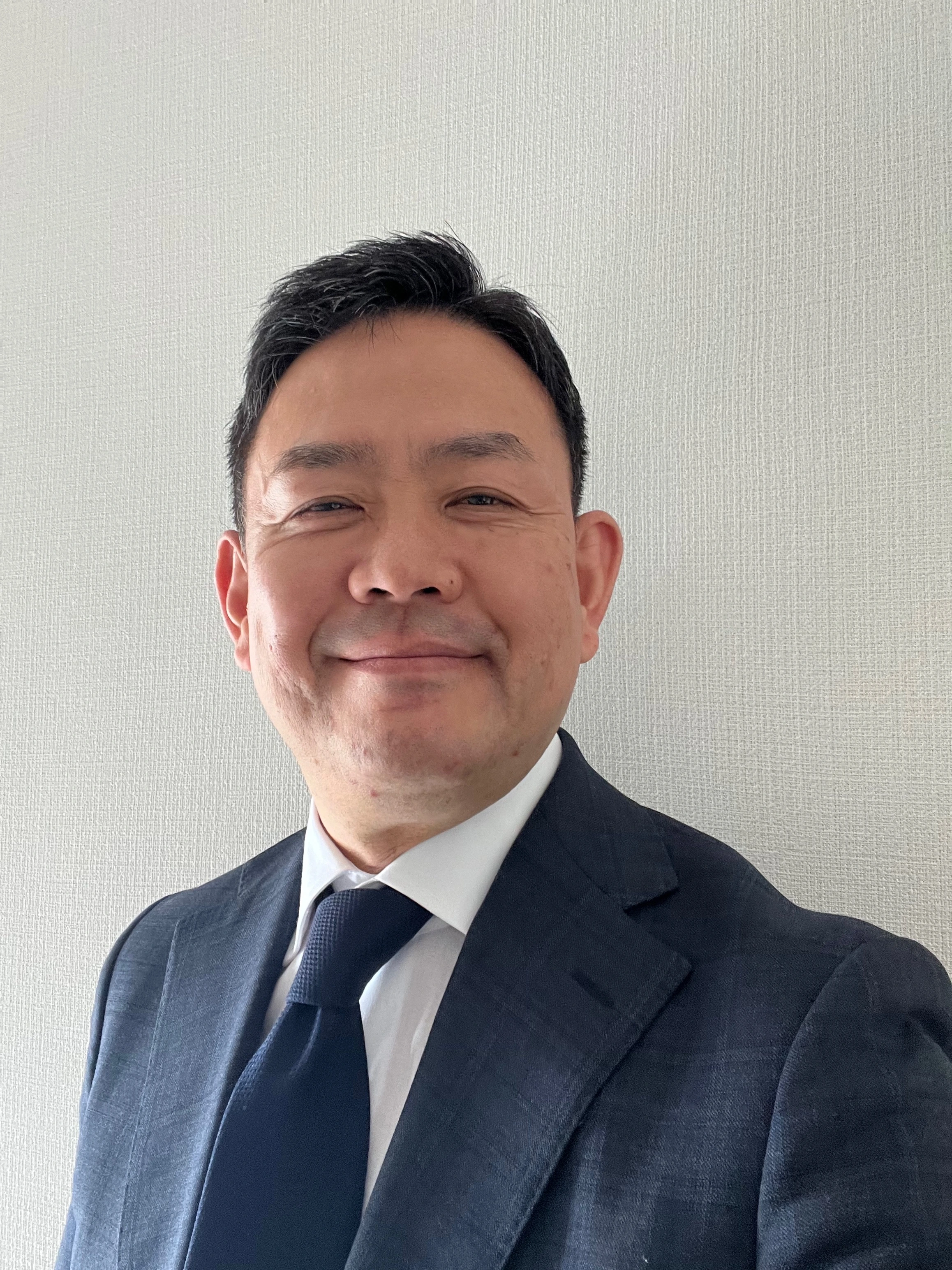
Author: Kenji Nishiyama (Certified Administrative Procedures Legal Specialist(Gyoseishoshi), Registration No.20081126)
Kenji Nishiyama is an Immigration and Visa Specialist who has supported many foreign residents with visa applications in Japan. On his firm’s website, he publishes daily updates and practical insights on immigration and residency procedures. He is also well-versed in foreign employment matters and serves as an advisor to companies that employ non-Japanese workers.