[Blog]How Does Trust Take Root in Society? — When Institutions Become Experience and Experience Becomes Trust —
2026-06-27
1. The Question
How does trust become embedded in society?
In Chapter 36, the Balanced Coexistence Model presented policy recommendations, including explainable immigration administration, institutional connectivity, preventive governance, RegTech, mutual obligations, and the integration of support with integration requirements.
Yet an even deeper question remains.
Does creating better institutions automatically generate trust?
Can legislation alone create confidence?
Can technology itself make society trust its institutions?
The Balanced Coexistence Model argues that trust is not created by command but by repeated experience.
2. Trust Cannot Be Commanded
Trust cannot be imposed from above.
A government cannot simply declare, "Trust us," and expect citizens to believe.
Nor can businesses earn confidence merely by claiming compliance.
Communities cannot achieve coexistence simply by promoting slogans.
Trust emerges only when institutions consistently deliver fair and reliable experiences.
Promises are kept.
Decisions are consistent.
Reasons are explained.
Responsibilities are fairly shared.
When problems arise, pathways for correction exist.
Only through these repeated experiences does genuine institutional trust develop.
3. Institutions Teach Trust
Institutions do more than regulate behavior.
They teach people how society works.
People learn that following rules produces predictable outcomes.
Procedures protect legitimate expectations.
Support is available when difficulties occur.
Reasoned explanations accompany important decisions.
Through these experiences, individuals gradually come to rely on institutions.
Conversely, if compliance leads only to uncertainty and disadvantage, people learn to avoid institutions instead.
Institutions therefore teach either trust or distrust.
4. Trust Begins with Predictability
Predictability forms the foundation of trust.
People can make long-term plans only when they can reasonably anticipate institutional decisions.
How are visa renewals assessed?
What conditions lead toward permanent residence?
How are employment, taxation, and social insurance evaluated?
How does employer misconduct affect an individual's immigration status?
Without predictable answers, stable lives cannot be planned.
Trust is not merely an emotion.
It is confidence that tomorrow will be governed by understandable rules.
5. Trust Requires Consistency
Trust also depends upon consistency.
Similar cases should receive similar treatment.
Comparable violations should receive comparable explanations and opportunities for correction.
People who satisfy equivalent conditions should be evaluated according to equivalent standards.
Consistency allows institutions to be perceived as fair.
When outcomes vary unpredictably between officials or regions, institutions appear arbitrary.
Even legally correct decisions may lose social legitimacy if consistency is absent.
6. Trust Requires Correctability
Trust does not require perfect institutions.
It requires institutions capable of correcting mistakes.
Incorrect information should be amendable.
Administrative errors should not permanently disadvantage individuals.
Employer failures should not automatically become migrants' burdens.
Deficiencies identified during examinations should be accompanied by opportunities for improvement.
No institution is flawless.
Trust grows because mistakes can be acknowledged, corrected, and repaired.
7. Trust Grows Through Mutual Interaction
Trust cannot develop unilaterally.
Foreign residents alone cannot create trust if institutions fail to respond.
Governments alone cannot create trust if employers neglect their responsibilities.
Employers alone cannot create trust if communities exclude newcomers.
Communities alone cannot create trust if institutions remain opaque.
Trust emerges through continuous interaction among migrants, governments, employers, financial institutions, educational organizations, and local communities.
Trust is not possessed by one actor.
It exists within relationships.
8. Technology Supports Trust but Is Not Trust
RegTech, API connectivity, digital procedures, and explainable AI provide powerful institutional tools.
Yet technology itself is not trust.
If consent is unclear, distrust grows.
If AI produces decisions without explanation, distrust grows.
If digitalization merely accelerates opaque procedures, uncertainty remains.
Technology amplifies institutional values.
Used within trustworthy institutions, it strengthens trust.
Used within opaque institutions, it magnifies distrust.
Therefore explainability, purpose limitation, access control, and correction mechanisms must always accompany technological innovation.
9. How Distrust Expands
Distrust often begins with seemingly isolated experiences.
An unexplained visa refusal.
Restrictions on banking during renewal procedures.
Employer misconduct resulting in personal disadvantage.
Exclusion within local communities.
Sudden policy changes without explanation.
Individually these may appear to be isolated incidents.
Collectively they become institutional memory.
Once people conclude that institutions cannot be trusted, they increasingly avoid formal systems and seek informal alternatives.
Distrust is therefore produced not outside institutions but through institutional experience itself.
10. Trust as Social Capital
Trust is more than an emotion.
It is a form of social capital.
Trust reduces administrative costs.
It enables employers to hire confidently.
It allows financial institutions to provide services securely.
It enables communities to welcome newcomers without unnecessary fear.
It allows individuals to plan their futures.
Without trust, societies require excessive documentation, excessive supervision, excessive verification, and excessive caution.
Trust lowers the cost of governance while strengthening social participation.
11. The Goal of the Balanced Coexistence Model
The Balanced Coexistence Model does not seek preferential treatment for migrants.
Nor does it advocate stronger control for its own sake.
Its objective is to create institutions that deserve public trust.
Explainability, consistency, predictability, correctability, mutual obligations, and institutional connectivity are not isolated techniques.
Together they form the conditions under which trust becomes sustainable.
The model therefore seeks to design not merely immigration policy but society's broader architecture of trust.
12. Conclusion
Trust is not created by ideals alone.
Nor by legislation alone.
Nor by technology alone.
Trust emerges when institutions repeatedly generate positive experiences.
People receive explanations.
Rules are applied consistently.
Outcomes are predictable.
Mistakes can be corrected.
Responsibilities are shared fairly.
Institutions genuinely support everyday life.
When these experiences accumulate, trust becomes embedded within society.
The Balanced Coexistence Model does not merely advocate trust as an abstract value.
It proposes institutions that allow trust to be experienced repeatedly until it becomes part of society itself.
Institutions become experience, and experience becomes trust.
Only then does coexistence become not an aspiration but a social reality.
This article is positioned as a chapter within the table of contents of the Balanced Coexistence Model.
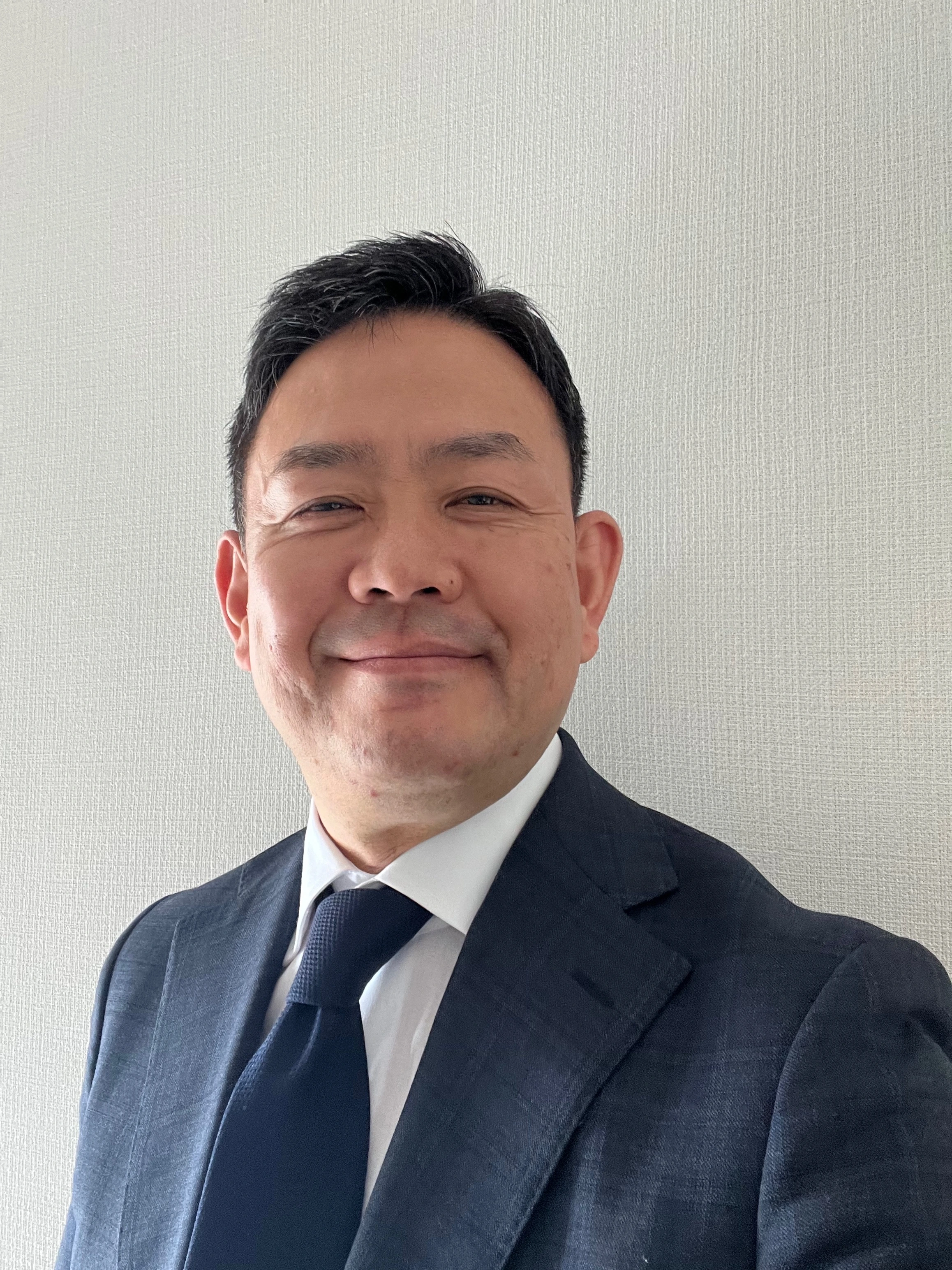
Author: Kenji Nishiyama (Certified Administrative Procedures Legal Specialist(Gyoseishoshi), Registration No.20081126)
Kenji Nishiyama is an Immigration and Visa Specialist who has supported many foreign residents with visa applications in Japan. On his firm’s website, he publishes daily updates and practical insights on immigration and residency procedures. He is also well-versed in foreign employment matters and serves as an advisor to companies that employ non-Japanese workers.