[Blog]Policy Recommendations from the Balanced Coexistence Model — Transforming Immigration Policy from Control to Trust
2026-06-24
1. The Question
What kind of immigration policy does Japan need for the future?
Public debates on immigration often become trapped in a simple binary choice: accept or reject.
Yet in an era of population decline, labor shortages, demographic change, and increasing global mobility, this question is no longer sufficient.
The real issue is not whether people should be accepted.
The real issue is how institutions should be designed.
The Balanced Coexistence Model proposes that immigration policy should be understood not merely as border control but as a form of social design that creates trust.
2. The Fundamental Principle: Reducing Distrust and Misfortune
The starting point of the Balanced Coexistence Model is simple.
Institutions exist to reduce distrust and misfortune.
Immigration and refugee policy are no exception.
When residence systems, employment, finance, insurance, housing, education, welfare, and local communities remain disconnected, people cannot trust institutions.
Without trust, compliance becomes difficult and long-term planning becomes uncertain.
The purpose of policy is therefore not merely to reduce violations.
Its purpose is to create a society in which following the rules is rational and stable participation is possible.
3. Recommendation 1: Create Explainable Immigration Administration
The first recommendation is to make immigration administration explainable.
Decisions concerning visas, renewals, permanent residence, refugee status, and deportation profoundly affect people's lives.
If the reasoning behind decisions cannot be understood, institutions appear arbitrary.
Transparency does not require full disclosure of internal deliberations.
What is necessary is the ability to explain which factors were evaluated, which concerns were identified, and how conclusions were reached.
Explainability, consistency, and predictability form the foundation of trust in immigration administration.
4. Recommendation 2: Connect Residence Systems with Living Infrastructure
The second recommendation is to connect residence systems with the infrastructure of daily life.
A residence status is not merely an administrative category.
It is the foundation for working, living, studying, receiving healthcare, accessing financial services, and supporting families.
Yet immigration systems often remain disconnected from employment, social insurance, taxation, finance, housing, and education.
As a result, even lawful residents may face unnecessary barriers.
Residence systems should therefore be redesigned as social infrastructure that supports life rather than as isolated mechanisms of control.
5. Recommendation 3: Shift from Immigration Policy to Social Policy
The third recommendation is to view immigration policy as social policy.
Issues involving foreign residents are not merely issues about foreigners.
They are closely connected to labor shortages, healthcare, transportation, education, housing, finance, and community sustainability.
When immigration policy is confined solely to immigration administration, it cannot adequately address these realities.
Foreign residents should not be treated as separate categories but as participants within broader social systems.
Immigration policy is ultimately a form of societal design.
6. Recommendation 4: Move from Enforcement to Prevention
The fourth recommendation is to shift from enforcement-centered administration toward preventive administration.
Unauthorized employment, unstable residence status, insurance non-compliance, and employer misconduct are often identified only after significant damage has occurred.
By that stage, individuals, employers, and communities have already incurred substantial costs.
The goal should not merely be to identify violations.
The goal should be to detect risks early and provide support while problems remain solvable.
Preventive administration is not surveillance.
It is a method of reducing distrust and misfortune before they escalate.
7. Recommendation 5: Build a RegTech State
The fifth recommendation is to place RegTech at the center of immigration governance.
RegTech is not simply the digitization of administrative procedures.
It is the implementation technology that enables institutions to function continuously and effectively.
Residence procedures, employment records, taxation, social insurance, finance, housing, and education should be securely connected through consent-based systems.
API integration, data governance, explainable AI, access control, and correction mechanisms can transform isolated administrative decisions into continuous institutional support.
RegTech is not a technology of surveillance.
It is a technology of trust.
8. Recommendation 6: Institutionalize Mutual Obligations
The sixth recommendation is to institutionalize mutual obligations.
A system that demands adaptation only from migrants cannot be sustainable.
Nor can a system that places all responsibility upon society.
Foreign residents, employers, government agencies, financial institutions, housing providers, educational institutions, and local communities must all bear responsibilities.
Foreign residents have obligations to comply with laws, learn, and participate.
Employers have obligations to provide lawful employment and support.
Governments have obligations to administer institutions consistently and transparently.
Communities have obligations to create opportunities for connection rather than exclusion.
Coexistence is not unilateral accommodation; it is the institutionalization of mutual responsibility.
9. Recommendation 7: Connect Integration Requirements with Support
The seventh recommendation is to connect integration requirements with support mechanisms.
Language proficiency, civic understanding, tax compliance, social insurance participation, employment, and children's education may reasonably be considered indicators of integration.
However, requirements alone do not create integration.
Without support, they become instruments of selection.
If language proficiency is required, accessible learning opportunities must exist.
If tax and insurance compliance are expected, employer responsibilities must also be enforced.
Integration requirements generate trust only when paired with institutional support.
10. Recommendation 8: Correct Asymmetries of Responsibility
The eighth recommendation is to correct asymmetries of responsibility.
In many cases, employers or sponsoring organizations are responsible for institutional failures, yet the consequences fall primarily upon migrants.
Support failures, insurance non-compliance, inappropriate job assignments, and contractual violations often lead to residence instability for the individual.
When the responsible party and the disadvantaged party are different, trust collapses.
The Balanced Coexistence Model therefore advocates aligning responsibility with accountability and corrective obligations.
11. Recommendation 9: Design for Long-Term Participation
The ninth recommendation is to design institutions based on long-term participation.
Japan increasingly depends upon foreign workers while continuing to treat them as temporary labor.
This contradiction creates instability, fragmented career development, community tensions, and uncertainty for families.
Policy should extend beyond short-term labor needs.
It should include skill development, career progression, family formation, permanent residence pathways, and transnational opportunities.
People should be viewed not merely as labor inputs but as participants in society.
12. Recommendation 10: Change How Policy Is Evaluated
The tenth recommendation is to change the metrics of policy evaluation.
Immigration policy is often assessed through admissions, approvals, refusals, deportations, and enforcement statistics.
The Balanced Coexistence Model proposes different measures.
Has distrust decreased?
Has misfortune decreased?
Has compliance become more rational?
Have living conditions become more stable?
Has social participation increased?
Institutions should be evaluated by their contribution to trust rather than by administrative outputs alone.
13. Why “Balance” Matters
The concept of balance is central because immigration policy inevitably involves competing values.
Human rights and sovereignty.
Labor demand and labor protection.
Security and openness.
Integration and diversity.
Fairness and efficiency.
Elevating any single value above all others creates new problems.
The challenge is not choosing one value over another.
The challenge is designing institutions capable of managing these tensions.
Balance is not compromise.
It is the institutional coexistence of competing values within a framework of trust.
14. Conclusion
The policy recommendations of the Balanced Coexistence Model are neither a proposal for unlimited immigration nor a proposal for stronger control alone.
They are a proposal to transform immigration and residence systems into trust-generating social infrastructure.
Explainable administration, institutional connectivity, preventive governance, RegTech, mutual obligations, support-linked integration, accountability alignment, long-term participation, and trust-based evaluation all contribute to this transformation.
Japan's challenge is no longer whether to accept foreign residents.
The challenge is how to design the multicultural and multinational society that is already emerging.
The Balanced Coexistence Model offers both a policy framework and an implementation model for building that future.
This article is positioned as a chapter within the table of contents of the Balanced Coexistence Model.
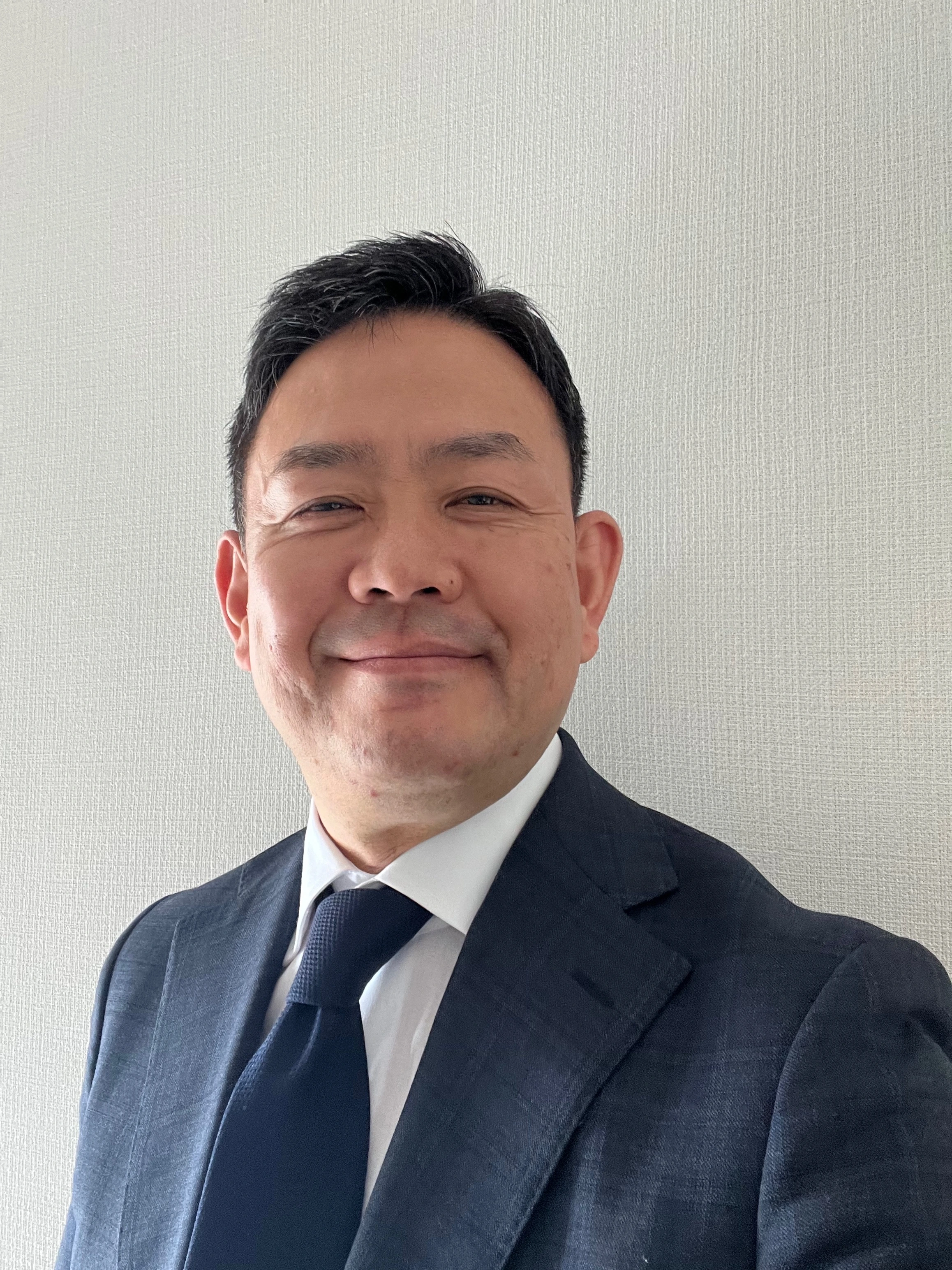
Author: Kenji Nishiyama (Certified Administrative Procedures Legal Specialist(Gyoseishoshi), Registration No.20081126)
Kenji Nishiyama is an Immigration and Visa Specialist who has supported many foreign residents with visa applications in Japan. On his firm’s website, he publishes daily updates and practical insights on immigration and residency procedures. He is also well-versed in foreign employment matters and serves as an advisor to companies that employ non-Japanese workers.