[Blog]Japan’s Current Position and Institutional Characteristics — A Model of Management Rather Than Integration
2026-06-22
1. The Question
Where does Japan’s immigration and residence management system fit within the global landscape of immigration policy?
Europe has institutionalized integration and discipline.
The United States has relied on labor markets and flexibility.
The Nordic countries have linked welfare with integration conditions.
What, then, characterizes Japan?
Japan is neither a European-style integration state, an American-style market state, nor a Nordic-style welfare state.
Its defining feature is a system centered on residence status management.
2. Is Japan Really Not an Immigration Country?
For many years, Japan has maintained that it does not pursue an immigration policy.
In reality, however, large numbers of foreign nationals work, study, live, raise families, and participate in local communities throughout the country.
Technical Intern Training, Specified Skilled Worker, Engineer/Specialist in Humanities/International Services, student visas, family visas, permanent residence, long-term residence, refugee protection, and complementary protection all form part of this reality.
Regardless of the terminology used, Japanese society increasingly depends on the presence of foreign residents.
Japan may not describe itself as an immigration country, but it is becoming an immigration society.
3. Residence Status Management as the Core of the Japanese Model
The Japanese system is characterized by detailed regulation based on visa categories.
What activities may be performed?
Which organization is the individual affiliated with?
What type of work is permitted?
How long is the authorized period of stay?
Through these mechanisms, the government manages and monitors lawful activities.
This approach provides a degree of order and protection against abuse.
However, it is less effective as a framework for social integration and long-term stability.
4. Weaknesses in Post-Admission Design
Japan's greatest challenge lies not in admission itself but in what happens afterward.
Even when residence status is granted, institutional connections to language education, housing, finance, healthcare, education, community participation, and career development remain limited.
Immigration systems and employment systems appear connected, yet practical monitoring and support are often fragmented.
Responsibilities among individuals, employers, and institutions are frequently unclear.
As a result, even lawful residents may struggle to establish stable foundations for daily life.
5. Strong Management, Weak Integration
Japan possesses a sophisticated residence management system.
What it lacks is a comprehensive integration system.
Language education, settlement support, labor protection, housing assistance, community participation, and educational support exist separately rather than as components of a unified framework.
Consequently, Japan is relatively strong at controlling entry and residence status but comparatively weak at supporting long-term participation in society.
While Europe institutionalized integration, America relied on markets, and the Nordic countries connected welfare with participation, Japan focused primarily on management.
6. Dependence on Foreign Labor and Resistance to Settlement
Japan increasingly depends on foreign workers.
Caregiving, restaurants, construction, agriculture, manufacturing, logistics, hospitality, cleaning, maintenance, and public transportation all rely on foreign labor.
Yet many institutional structures continue to reflect the assumption that foreign workers are temporary.
This creates a contradiction.
People who are essential to society are often treated as if they are only short-term participants.
Society depends on them, while institutions hesitate to support long-term settlement.
This contradiction generates instability and distrust.
7. Japan’s Institutional Strengths
Despite these challenges, Japan possesses significant strengths.
Its institutional infrastructure is stable and highly developed.
The residence card system, resident registry, My Number system, health insurance, pension programs, employment insurance, tax administration, and administrative accuracy provide a strong foundation.
If properly connected, these systems could form powerful trust infrastructure.
Japan also benefits from legal concepts such as administrative legitimacy and procedural control, which can support explainable and predictable governance.
8. What Japan Lacks Is Connectivity
The problem is not the absence of institutions.
Japan already possesses many institutions.
The problem is that they often operate independently.
Immigration and labor law.
Immigration and social insurance.
Immigration and taxation.
Immigration and finance.
Immigration and housing.
Immigration and education.
Without institutional connectivity, trust cannot emerge at the system level.
This is precisely where the Balanced Coexistence Model places its emphasis.
9. The Risks of the Japanese Model
A major risk of the Japanese model is the belief that stricter control alone can solve institutional problems.
Tighter language requirements.
Stricter capital requirements.
More demanding permanent residence criteria.
Stronger enforcement against irregular stay.
Some measures may be necessary.
However, control alone cannot resolve institutional fragmentation.
Without explainability, support, and connectivity, stricter rules may simply increase distrust.
What is needed is not merely stricter regulation but trustworthy governance.
10. Japan’s Position in Comparative Perspective
Europe institutionalized integration and discipline.
America relied on labor markets and flexibility.
The Nordic countries linked welfare with integration conditions.
Japan, by contrast, centered its system on residence status management.
Yet the future requires more than management.
Japan can learn integration from Europe.
It can learn labor-market flexibility from the United States.
It can learn the relationship between welfare and mutual obligations from the Nordic countries.
Most importantly, it can build upon its own institutional strengths to create a trust-based system.
11. Connection to the Balanced Coexistence Model
The Balanced Coexistence Model is designed to address the limitations of the Japanese model.
It is neither a framework for unrestricted admission nor a framework for stricter control alone.
It seeks to connect residence status, employment, finance, insurance, housing, education, and local communities into a coherent system.
It recognizes both Japan’s institutional strengths and its institutional fragmentation.
Its goal is to transform management into trust, procedures into life infrastructure, and residence status into meaningful social connection.
12. Conclusion
Japan has already become a society that depends upon the presence of foreign residents.
Yet its institutional architecture remains centered on residence status management.
The question is no longer whether Japan should become an immigration society.
The question is how to design the immigration society that is already emerging.
Management remains necessary.
But management alone cannot produce coexistence.
Integration is also necessary.
But integration requirements alone cannot create trust.
Japan must connect immigration systems with employment, finance, insurance, housing, education, and local communities.
Only then can residence management evolve into a trust-based institutional framework.
This is the next stage envisioned by the Balanced Coexistence Model.
This article is positioned as a chapter within the table of contents of the Balanced Coexistence Model.
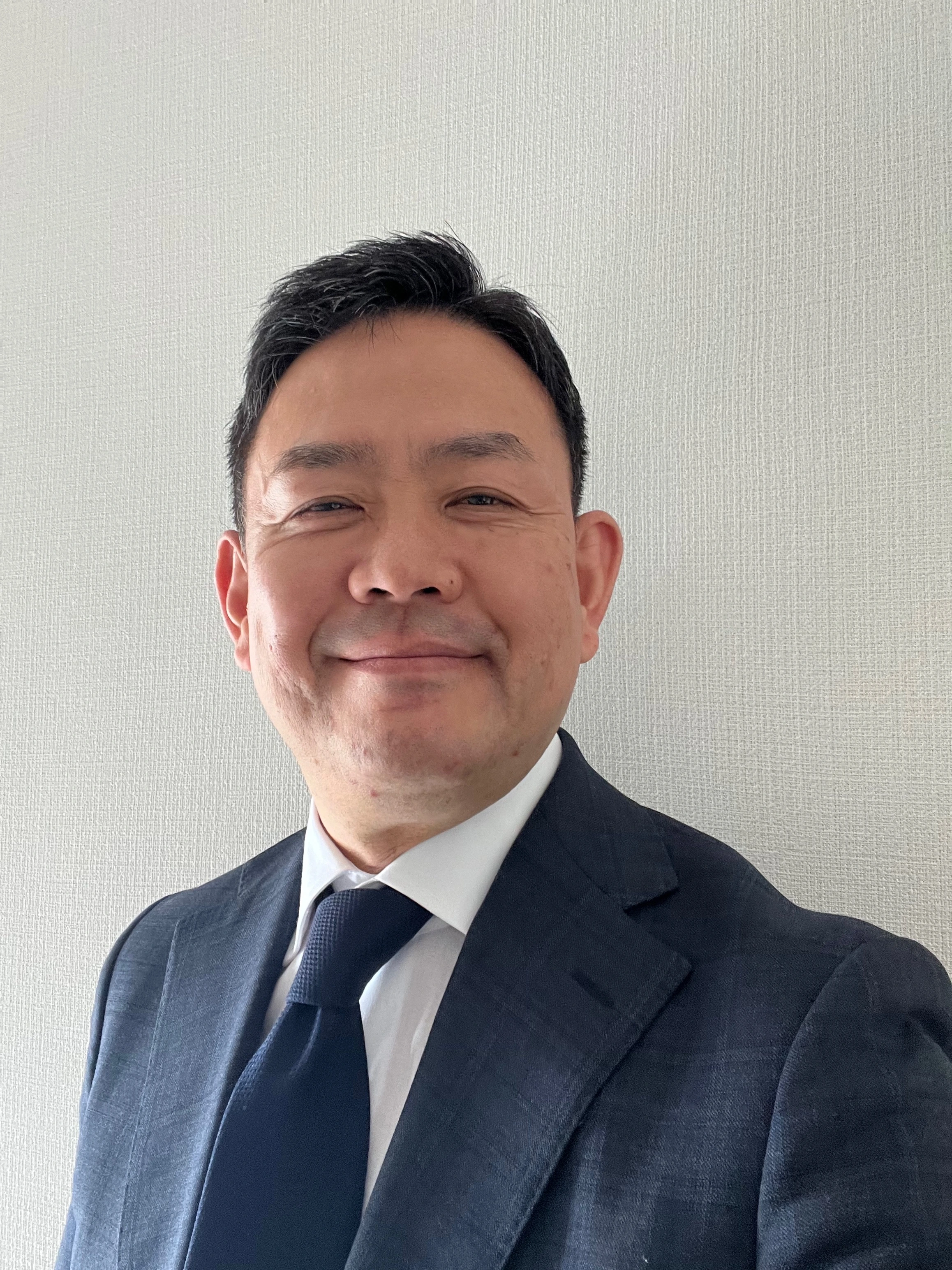
Author: Kenji Nishiyama (Certified Administrative Procedures Legal Specialist(Gyoseishoshi), Registration No.20081126)
Kenji Nishiyama is an Immigration and Visa Specialist who has supported many foreign residents with visa applications in Japan. On his firm’s website, he publishes daily updates and practical insights on immigration and residency procedures. He is also well-versed in foreign employment matters and serves as an advisor to companies that employ non-Japanese workers.