[Blog]Institutional Design as a Service for Social Integration — Bringing Immigration Systems into Everyday Life —
2026-06-11
1. The Question
What is the purpose of institutions?
Immigration and residence systems are often understood as mechanisms for permission, denial, control, and supervision.
However, when we look at the realities of foreign residents' lives, this understanding is insufficient.
If a person is granted a residence status but cannot work, secure housing, access financial services, obtain insurance, or connect with the local community, their life cannot become stable.
The Balanced Coexistence Model views institutions not merely as instruments of control, but as services that enable participation in society.
2. Institutions as Services
Institutions do not function simply because laws and administrative procedures exist.
They function only when people can access them, understand them, and rely upon them.
In this sense, institutions are a form of public service.
Residence examinations, renewals, status changes, notifications, consultations, support services, and information provision are not merely internal administrative processes. They are services that allow foreign residents, employers, and local communities to continue their lives and activities.
Once institutions are viewed as services, the central question changes.
The issue is not only whether a system is legally correct, but whether it actually reaches people's lives.
3. The Limits of the Control-Centered Model
Traditional immigration policy has been designed primarily around control.
Who should be admitted? Who should be allowed to stay? Who should be removed? Who satisfies the requirements?
These questions are undoubtedly important.
However, control alone cannot achieve social integration.
Control can define boundaries, but it cannot stabilize people's lives.
It can identify violations, but it cannot create conditions in which people can rely on institutions.
Social integration requires not only control but also institutional connectivity that supports everyday life.
4. Social Integration Cannot Be Achieved by Immigration Administration Alone
Social integration extends far beyond immigration administration.
The lives of foreign residents are supported by finance, insurance, housing, employment, education, healthcare, and local communities.
Without a bank account, receiving wages becomes difficult. Without housing, it is difficult to establish roots in a community. Without insurance, life becomes more vulnerable. Without educational access, children's futures become uncertain.
Social integration therefore means more than holding a valid residence status.
It means having stable access to multiple institutions and services.
5. Distrust Caused by Disconnected Services
When institutions and services are disconnected, distrust emerges.
A person may hold a valid residence status yet face banking difficulties. Someone awaiting a residence renewal may encounter obstacles in housing contracts. Responsibility for social insurance may be unclear among the individual, employer, and government. Support systems may exist, yet people may not know where to seek assistance.
Under such conditions, foreign residents struggle to trust institutions.
At the same time, employers, financial institutions, and housing providers become increasingly cautious.
Institutional fragmentation creates fragmentation in everyday life, and that fragmentation generates distrust.
6. The Concept of Social Integration Services
This is where the concept of social integration services becomes important.
Social integration services are designed not merely to manage foreign residents, but to provide the institutional connections necessary for participation in society.
They are not special privileges.
Nor are they forms of one-sided protection.
Rather, they provide a common foundation that enables foreign residents to comply with institutions, employers to hire appropriately, service providers to operate confidently, and communities to integrate newcomers sustainably.
Social integration services do not treat support and regulation as opposing concepts.
Support makes regulation effective, while regulation strengthens the credibility of support.
7. The Need for User-Centered Design
To build social integration services, institutions must be designed from a user-centered perspective.
The users are not only foreign residents.
Employers, financial institutions, insurance providers, housing managers, government agencies, and local communities are also users of the system.
Each requires different information.
Individuals need visibility regarding their residence status and procedures. Employers need to understand work eligibility and renewal risks. Financial institutions need reliable identity and status verification. Governments need to understand whether institutions are functioning properly.
Institutional design must therefore reflect the realities of those who rely on it, not merely administrative convenience.
8. Connecting to the RegTech Demonstration Model
The RegTech model discussed in Part V represents a practical implementation of social integration services.
Residence information, finance, insurance, housing, and employment can be securely connected through consent-based and purpose-limited information sharing.
This reduces repetitive documentation burdens for individuals, lowers uncertainty for service providers, and improves administrative visibility.
Importantly, this is not a system of surveillance.
It is a mechanism for ensuring that institutions reach people's lives and that emerging problems can be addressed before they become severe.
9. Services That Deliver Trust
The value of social integration services is not limited to convenience.
Their most important function is the provision of trust.
Individuals can trust that they will not be excluded arbitrarily. Employers can trust that compliance will not result in unnecessary disadvantages. Financial institutions and housing providers can provide services with greater confidence. Governments can trust that institutions remain connected to social realities.
In this way, social integration services create trust between institutions and everyday life.
Trust should not exist merely as an abstract principle. It should be delivered through services.
10. From Immigration Policy to Social Design
The perspective of social integration services expands the scope of immigration policy.
Immigration policy is not merely about managing entry and residence.
It is fundamentally a question of how labor markets, finance, housing, education, welfare, and communities are connected.
As long as foreign residents are viewed merely as temporary labor, institutions will remain instruments of short-term adjustment.
However, if they are recognized as members of society, institutions must evolve into foundations that support daily life.
This transformation lies at the heart of implementing the Balanced Coexistence Model.
11. Conclusion
Institutions do not exist solely to regulate people.
They exist to enable participation, stability, and future planning.
Social integration services are institutional designs that connect residence status, finance, insurance, housing, employment, education, and communities to create conditions in which people can rely on society.
They are based on connectivity rather than surveillance.
They are not privileges but foundations that make trust possible.
The Balanced Coexistence Model seeks to transform immigration policy from a system of control into a framework for social design.
When institutions reach people's lives and people's lives are supported by institutions, social integration becomes not an ideal, but a reality.
This chapter is positioned as part of the table of contents of the Balanced Coexistence Model.
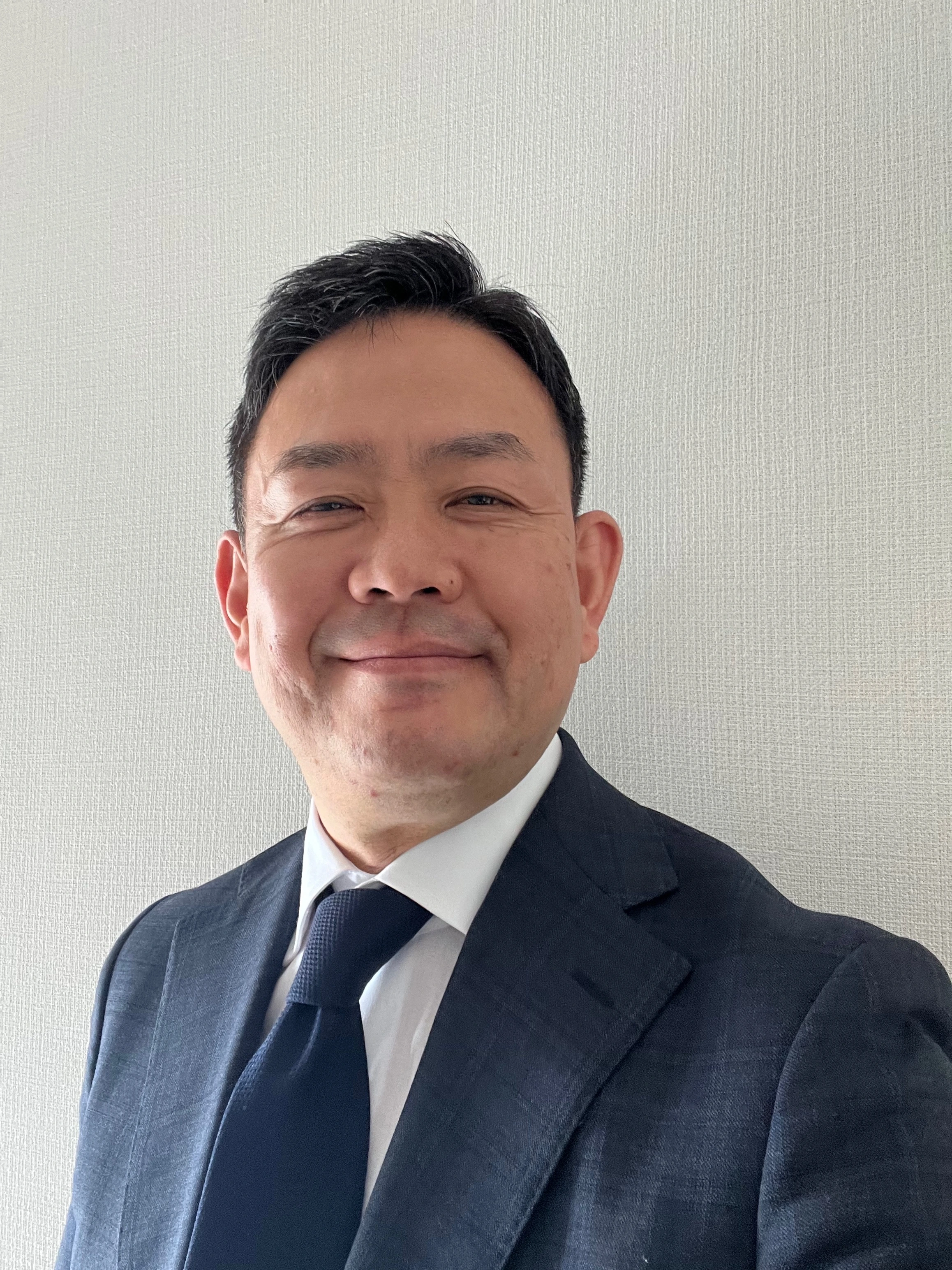
Author: Kenji Nishiyama (Certified Administrative Procedures Legal Specialist(Gyoseishoshi), Registration No.20081126)
Kenji Nishiyama is an Immigration and Visa Specialist who has supported many foreign residents with visa applications in Japan. On his firm’s website, he publishes daily updates and practical insights on immigration and residency procedures. He is also well-versed in foreign employment matters and serves as an advisor to companies that employ non-Japanese workers.