[Blog]Financial Services as Social Infrastructure for Foreign Residents — Building Trust, Credit, and Long-Term Stability
2026-06-08
1. The Question
What role do financial services play in the lives of foreign residents?
Bank accounts, salary payments, remittances, rent payments, utilities, credit cards, loans, and business financing are often regarded simply as financial products. Yet in reality, they constitute essential infrastructure for everyday life.
To work, support a family, secure housing, and plan for the future in Japan, foreign residents require stable access to financial services.
The Balanced Coexistence Model therefore views finance not merely as a private-sector service, but as institutional infrastructure that supports social integration.
2. Financial Access as a Foundation of Daily Life
For many foreign residents, opening a bank account is among the first steps toward establishing a stable life in Japan.
Receiving wages, paying rent, purchasing goods and services, sending money to family members abroad, and saving for the future all depend upon access to financial institutions.
Without such access, everyday life becomes more difficult and less secure.
Financial services are therefore not simply conveniences. They function as gateways to participation in society.
3. Residence Status and Financial Exclusion
Despite their importance, financial services are not always easily accessible to foreign residents.
Short periods of stay, approaching visa expiration dates, pending renewal applications, or uncertainty regarding immigration status may affect access to banking services, loans, and credit products.
Even when individuals reside lawfully in Japan, financial institutions may adopt cautious approaches because they lack sufficient information to evaluate immigration-related risks.
As a result, individuals may be legally integrated into society while remaining partially excluded from its financial infrastructure.
This is not primarily a problem of legality. It is a problem of institutional disconnection.
4. The Challenge of Building Credit
Financial stability depends not only on access to services but also on the ability to build credit.
Credit cards, mortgages, consumer loans, and business financing all rely on records of stable transactions and long-term reliability.
However, when residence periods are short or repeatedly renewed, foreign residents may find it difficult to accumulate sufficient credit history.
Without credit, purchasing a home, starting a business, or making long-term investments becomes more difficult.
Financial exclusion therefore limits not only present opportunities but also future possibilities.
5. Remittances and Transnational Responsibility
For many migrants, remittances are an essential part of life.
They support parents, spouses, and children abroad, contribute to education and healthcare expenses, and help maintain economic stability across borders.
Remittances are not merely financial transactions. They represent family responsibility and social connection.
At the same time, remittance systems must comply with anti-money-laundering regulations and identity verification requirements.
If legitimate channels become overly burdensome, individuals may be driven toward informal alternatives.
Reliable access to regulated financial services therefore benefits both individuals and society.
6. The Perspective of Financial Institutions
Financial institutions also face legitimate concerns.
What happens if a residence status expires? How should a pending renewal application be treated? How can immigration-related information be verified accurately?
Because answers to these questions are often unclear, institutions tend to adopt conservative risk-management practices.
These practices may restrict access beyond what is actually necessary.
Such outcomes are rarely the result of hostility. More often, they arise from uncertainty created by disconnected systems.
7. Trust Rather Than Surveillance
Some may view greater integration between immigration systems and financial institutions as a form of surveillance.
The Balanced Coexistence Model rejects this approach.
The objective is not to monitor foreign residents continuously.
The objective is to ensure that lawful residents can reliably access the financial infrastructure necessary for daily life.
Financial services should function as instruments of trust rather than instruments of control.
8. API Integration and Financial Infrastructure
As discussed in Chapter 14, API connectivity provides a practical solution.
With appropriate consent and safeguards, financial institutions could securely verify limited immigration-related information necessary to provide services.
Information such as visa validity, renewal status, or work authorization could be confirmed electronically without requiring repeated paper-based verification.
This would reduce administrative burdens while improving accessibility and reliability.
However, such connectivity must be governed by strict principles of consent, purpose limitation, access control, auditability, and correction mechanisms.
Only then can technological connectivity become trust infrastructure rather than surveillance infrastructure.
9. Financial Inclusion as Social Integration
Financial inclusion means more than having a bank account.
It means stable participation in the financial systems that support housing, employment, education, entrepreneurship, and long-term planning.
When people can access these systems, they are able to establish roots and participate fully in society.
When they cannot, even lawful residents may remain socially vulnerable.
Financial inclusion should therefore be understood as a component of social integration.
10. Conclusion
Financial services are not merely commercial products. They are essential infrastructure for building a stable life.
When immigration systems and financial systems remain disconnected, foreign residents face unnecessary barriers while financial institutions face unnecessary uncertainty.
The solution is not greater surveillance but better institutional connectivity.
Through secure information sharing, clear governance, and respect for individual rights, financial services can become a foundation of trust.
In the Balanced Coexistence Model, finance is not viewed as a peripheral issue. It is part of the social infrastructure that enables people to work, live, plan, and belong.
When stable access to financial services is achieved, foreign residents become more than participants in the labor market. They become fully connected members of society.
This chapter is positioned as part of the table of contents of the Balanced Coexistence Model.
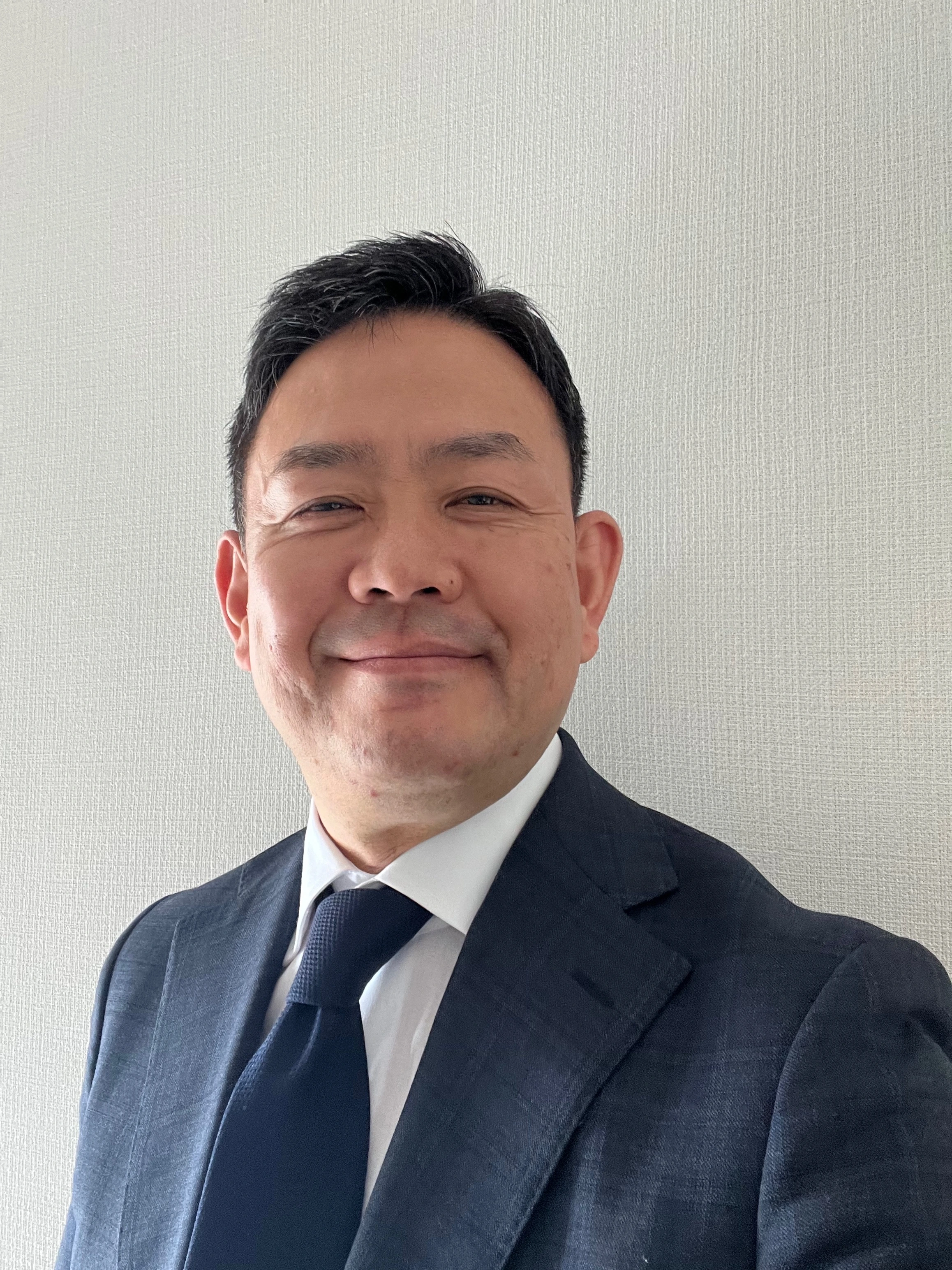
Author: Kenji Nishiyama (Certified Administrative Procedures Legal Specialist(Gyoseishoshi), Registration No.20081126)
Kenji Nishiyama is an Immigration and Visa Specialist who has supported many foreign residents with visa applications in Japan. On his firm’s website, he publishes daily updates and practical insights on immigration and residency procedures. He is also well-versed in foreign employment matters and serves as an advisor to companies that employ non-Japanese workers.