[Blog]Connection Between Residence Status and Financial, Insurance, and Housing Systems — Residence Status as Social Infrastructure —
2026-05-26
1. The Question
What is the true purpose of residence status?
In many cases, it is understood simply as permission to stay in Japan. That is, of course, correct. However, in reality, residence status extends far beyond immigration permission.
Residence status affects the ability to work, open bank accounts, obtain insurance, rent housing, sign mobile phone contracts, and plan one’s future.
In other words, residence status is not merely an administrative label. It is a condition for connection to the foundations of social life.
The Balanced Coexistence Model views residence status as institutional infrastructure for connecting individuals to society.
2. Being Legal Does Not Necessarily Mean Being Able to Live Stably
Even when foreign nationals possess lawful residence status, they may still struggle to access social infrastructure.
For example, short periods of stay may make it difficult to open or maintain bank accounts. Housing applications may be scrutinized because a visa expiration date is approaching. Insurance, mobile phone contracts, credit cards, and various services may also treat residence status as a risk factor.
As a result, individuals may legally reside in Japan while remaining socially unstable.
This is not a problem of “illegal stay.”
Rather, it is a problem in which legally existing individuals cannot sufficiently connect to social infrastructure.
Here, a gap emerges between legal existence and social existence.
3. Residence Status as a Qualification for Social Connection
Residence status is not merely authorization to remain in Japan.
It also functions as foundational information determining how various institutions treat an individual.
Financial institutions verify residence periods and visa categories. Insurance companies assess contractual risk. Housing providers evaluate long-term residency stability and payment reliability. Employers confirm work authorization and renewal risk.
In other words, residence status determines access to finance, insurance, housing, employment, education, and daily life services.
In this sense, residence status functions as a “qualification for social connection.”
4. Distrust Caused by Institutional Disconnection
The problem is that although residence status is socially important, it is not institutionally connected in a coherent manner.
Banks, insurance companies, landlords, and employers each independently verify residence cards, manage expiration dates, and monitor renewal status.
However, verification methods differ, and treatment during renewal procedures is inconsistent.
As a result, foreign residents must repeatedly explain and prove the same information.
At the same time, businesses fearing compliance risks may adopt excessively cautious practices.
Under such conditions, neither individuals nor institutions can easily trust the system.
5. Financial Exclusion and the Problem of Credit Formation
Access to financial services is particularly important for social integration.
Bank accounts, remittances, salary payments, rent payments, utility payments, and credit history are all fundamental infrastructure for modern life.
However, factors such as short residence periods, ongoing renewal applications, or lengthy verification procedures can destabilize access to financial services.
As a result, foreign residents often struggle to build credit history.
Without credit history, housing contracts, loans, credit cards, and business financing become more difficult.
Financial exclusion is therefore not merely an inconvenience.
It restricts opportunities for social participation and long-term future building.
6. Insurance and Life Risk
Insurance is another critical institution supporting social stability.
Medical care, disability, accidents, disasters, death, and liability risks all require protection. Such protection matters not only for individuals, but also for employers, families, and local communities.
However, residence status or visa duration may affect access to sufficient insurance coverage.
When this occurs, difficulties experienced by individuals can ultimately impose burdens on businesses and society as well.
Connection to insurance systems is therefore not only a matter of personal security, but also of social risk management.
7. Housing and the Possibility of Settlement
Housing is the starting point of social integration.
Without stable housing, employment, education, medical care, and community participation become unstable.
Yet foreign nationals often face disadvantages in housing contracts due to visa expiration dates, guarantor requirements, language barriers, contractual understanding, and concerns over payment reliability.
Even when residence status is lawful, inability to access stable housing destabilizes daily life.
This is not simply a private contractual issue.
It is a structural problem of social integration arising from the lack of connection between immigration systems and housing systems.
8. Connection Is Not Surveillance but Stabilization
Connecting residence status with finance, insurance, and housing may be perceived as expanding surveillance.
However, the Balanced Coexistence Model does not seek a society that constantly monitors foreign residents.
Its objective is to prevent situations where individuals suffer disadvantages because institutions remain disconnected despite lawful residence.
What is needed is a system that enables safe and simple verification of residence status, clarifies treatment during renewal periods, and reduces excessive risk avoidance by businesses.
In this way, individuals can live more securely while businesses can provide services with greater confidence.
Connection is therefore not reinforcement of control, but stabilization of life foundations.
9. API Integration and Social Infrastructure
As discussed in Chapter 14, API integration is a key mechanism for addressing these issues.
For example, if financial institutions or housing providers could verify only the minimum necessary residence information based on the individual’s consent, the burden of repeatedly submitting residence cards and certificates would be significantly reduced.
Furthermore, if renewal applications and pending issuance statuses could be appropriately verified, the risk of service denial solely because a visa expiration date is approaching would decrease.
However, information sharing must be designed carefully.
Consent, purpose limitation, minimum necessary use, access logs, and correction mechanisms are indispensable.
Without these safeguards, connection to social infrastructure would generate distrust rather than trust.
10. Conclusion
Residence status is not merely permission to remain in Japan.
It is a social foundation connecting individuals to finance, insurance, housing, employment, education, and daily life services.
Yet because immigration systems and life infrastructure remain insufficiently connected, foreign residents may face instability despite lawful residence.
The Balanced Coexistence Model understands this as a disconnection between legal existence and social existence.
What is necessary is institutional design that connects residence status to the foundations of daily life.
This connection must not be created for surveillance, but for stabilizing lives, reducing uncertainty for businesses, and strengthening trust in institutions.
When residence status functions as a qualification for social connection, foreign residents are able not merely to stay in Japan, but to live stably, work, and design their futures within society.
At that point, the immigration system transforms from a mechanism of control into life infrastructure supporting trust and coexistence.
※ This article is positioned as a chapter within the table of contents constituting the Balanced Coexistence Model.
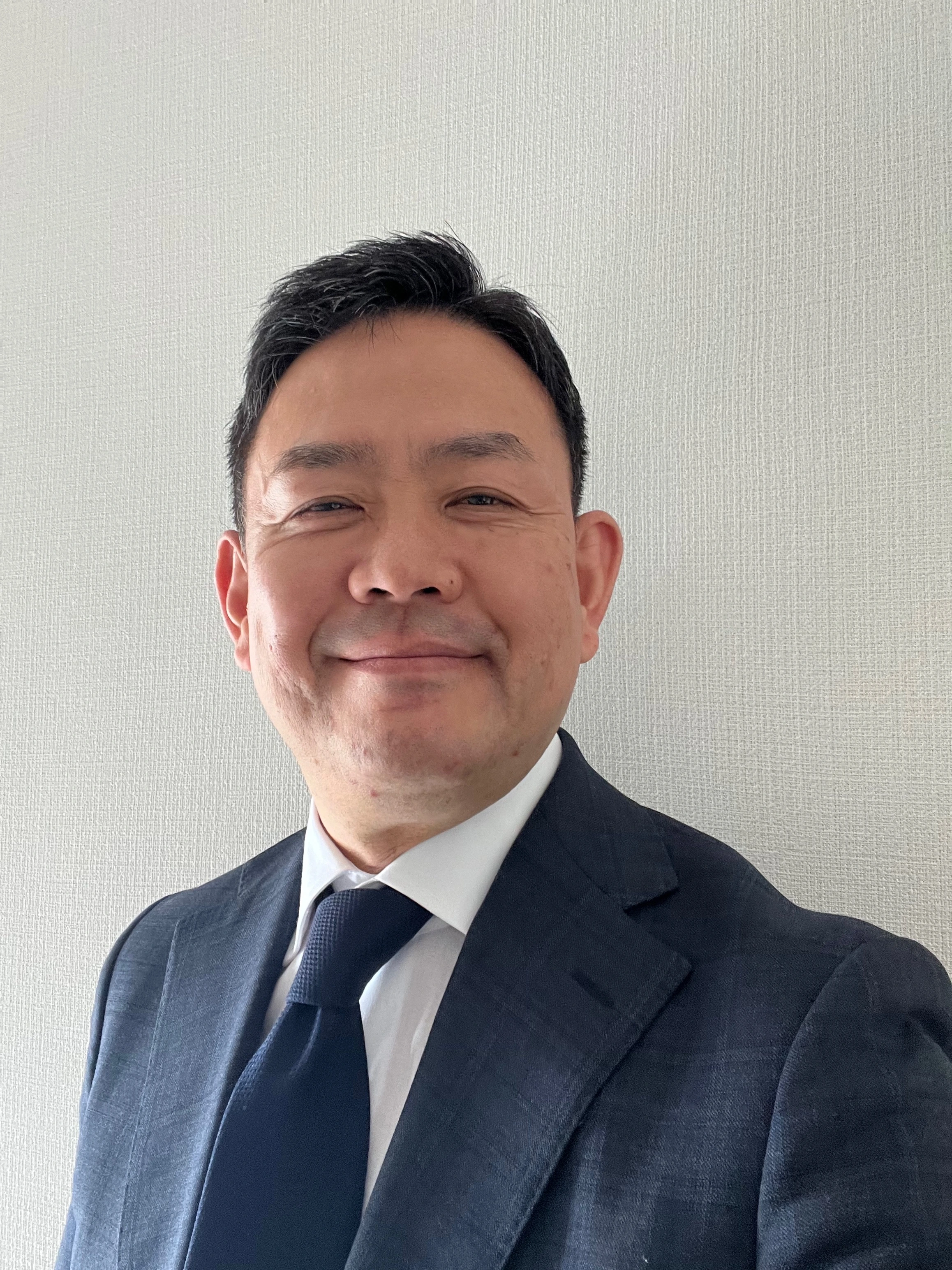
Author: Kenji Nishiyama (Certified Administrative Procedures Legal Specialist(Gyoseishoshi), Registration No.20081126)
Kenji Nishiyama is an Immigration and Visa Specialist who has supported many foreign residents with visa applications in Japan. On his firm’s website, he publishes daily updates and practical insights on immigration and residency procedures. He is also well-versed in foreign employment matters and serves as an advisor to companies that employ non-Japanese workers.