[Blog]Trust, Immigration, and Japan’s Social Future
2026-05-22
The Debate Over Japan’s Expanding Foreign Labor Policy
Japanese commentator and journalist Tetsuhide Yamaoka has recently criticized the Japanese government’s expansion of foreign worker acceptance policies, arguing that Japan is moving toward a de facto immigration policy without sufficient national debate. According to his argument, the government continues increasing the intake of foreign labor as a response to labor shortages while failing to adequately address the economic insecurity faced by young Japanese citizens.
Yamaoka argues that many Japanese young people struggle with low wages, unstable employment, heavy student loan burdens, and declining confidence in their future ability to marry and raise children. In this context, he criticizes the government for relying on foreign labor as a source of inexpensive manpower rather than fundamentally reforming domestic economic conditions.
He further claims that systems such as the Specified Skilled Worker program and the newly introduced “Training and Employment” framework are gradually creating pathways through which low-skilled foreign workers may settle permanently in Japan. From his perspective, these systems effectively function as immigration policies, even if the government does not officially describe them as such.
Concerns About Social Stability and Security Risks
Another important aspect of Yamaoka’s criticism concerns the speed and scale of labor recruitment from countries such as Bangladesh and other developing nations. He argues that Japanese society has not sufficiently discussed the potential long-term consequences associated with accepting large numbers of workers from politically unstable regions.
His concerns extend beyond labor market issues. He points to risks involving organized crime, identity verification difficulties, political instability in sending countries, and broader national security implications. In addition, he references migration-related tensions seen in parts of Europe and the social transformations experienced in the United Kingdom as examples of how rapid demographic change can generate social fragmentation if integration mechanisms are weak.
From this viewpoint, immigration policy cannot be treated merely as an economic adjustment mechanism. It inevitably affects national identity, public trust, community cohesion, and democratic legitimacy.
The Need to Restore Confidence Among Japanese Youth
Yamaoka also emphasizes that Japan should first focus on rebuilding economic security and social confidence among its own citizens. He argues that younger generations increasingly face conditions under which stable family formation appears difficult. Rising living costs, stagnant wages, and long-term financial insecurity have weakened confidence in the future.
He additionally points to the growing phenomenon of Japanese citizens seeking employment opportunities abroad due to declining domestic prospects. In his view, a sustainable national policy should begin by creating conditions under which Japanese citizens themselves can live with stability and dignity before expanding dependence on foreign labor.
Finally, he argues that voters should evaluate foreign labor expansion policies carefully and pragmatically rather than accepting them uncritically. The issue, according to this perspective, is not hostility toward foreigners themselves, but whether the government is adequately considering the long-term consequences of structural demographic change.
The Balanced Coexistence Model and Institutional Trust
These arguments intersect in important ways with the principles of the Balanced Coexistence Model (BCM). BCM does not approach immigration policy from a simplistic “pro-immigration” or “anti-immigration” position. Instead, it begins from the recognition that modern democratic societies must constantly balance competing legitimate interests.
Economic sustainability, labor shortages, public safety, democratic legitimacy, social cohesion, human dignity, and national sovereignty are all real concerns that cannot simply be reduced to ideological slogans. BCM therefore focuses primarily on the maintenance of institutional trust.
According to BCM, public trust depends on three conditions: citizens must be able to understand how institutions operate, predict how rules will be applied, and rely on systems being enforced fairly over time. When governments expand immigration-related systems without transparent explanation or open democratic discussion, institutional trust can deteriorate even if the economic objectives themselves are understandable.
The Problem of “Implicit Immigration”
One of the strongest connections between Yamaoka’s concerns and BCM theory lies in the concept of “implicit immigration.” If the government publicly frames foreign worker systems as temporary labor measures while simultaneously constructing long-term settlement pathways, many citizens may perceive a contradiction between official explanations and institutional reality.
BCM identifies this gap between official narrative and operational reality as highly dangerous for democratic stability. Once citizens believe that important structural changes are occurring without transparent consent or explanation, distrust spreads not only toward immigration policy itself, but toward political institutions more broadly.
This does not necessarily mean that long-term settlement pathways are inherently wrong. Rather, BCM argues that structural social transformation must occur transparently, predictably, and with democratic legitimacy. Public trust weakens when governments appear to avoid direct discussion of the long-term implications of their own policies.
Immigration Is Not Only an Economic Question
BCM also strongly agrees with the idea that immigration policy cannot be treated solely as labor market management. Foreign worker acceptance affects housing systems, schools, healthcare, taxation, social insurance, local infrastructure, financial services, and community relations.
Japan’s current institutional structure often handles these areas separately. Immigration administration, labor regulation, tax administration, welfare systems, housing access, and educational policy frequently operate independently from one another. BCM repeatedly argues that this fragmentation creates instability because social coexistence cannot function properly when institutions themselves are disconnected.
Under BCM, the central issue is therefore not simply how many foreign workers Japan accepts. The more important question is whether Japan possesses an integrated institutional framework capable of managing coexistence fairly, consistently, and predictably.
BCM Does Not Advocate Blanket Restrictionism
At the same time, BCM does not support simplistic restrictionist narratives either. Japan’s demographic decline and labor shortages are structural realities that cannot easily be reversed. Sectors such as elderly care, transportation, construction, agriculture, and food service increasingly depend on foreign labor to maintain operations.
From the BCM perspective, the question is therefore not whether immigration can be completely avoided, but whether immigration can occur in a manner that preserves social trust and institutional legitimacy.
BCM also rejects the assumption that foreign workers themselves are inherently the source of social instability. Instability usually emerges when systems are poorly designed, inconsistently enforced, or politically opaque. Workers who legally enter society, follow rules, pay taxes, and contribute economically should not be permanently treated as outsiders.
The Principle of Reciprocal Responsibility
The Balanced Coexistence Model instead proposes a framework of reciprocal responsibility. Governments must provide transparent rules and predictable enforcement. Employers must ensure fair treatment and lawful labor conditions. Foreign residents must comply with laws and participate responsibly within society. Citizens must maintain democratic oversight while avoiding collective prejudice.
Under BCM, coexistence cannot be sustained through unconditional openness, nor through permanent exclusion. Stability emerges only when rights and responsibilities remain balanced across all participants within society.
Why Simple Comparisons With Europe Are Insufficient
Yamaoka’s references to Europe and the United Kingdom reflect understandable concerns, but BCM also warns against simplistic international comparisons. Japan’s legal system, welfare structure, demographic composition, cultural norms, and labor market differ significantly from those of European countries.
Importing either strongly pro-immigration or strongly anti-immigration narratives directly from foreign contexts risks distorting Japan’s own policy discussions. BCM instead argues that Japan must develop an institutional model adapted to its own demographic realities and social conditions.
This includes more transparent disclosure regarding acceptance numbers, regional impacts, labor market effects, settlement trends, and infrastructure capacity. Integration policy should not begin only after social tensions appear. It must be designed proactively alongside immigration policy itself.
Domestic Inequality and Immigration Policy Are Connected
BCM also strongly agrees that domestic inequality among Japanese citizens cannot be ignored while immigration policy expands. A society that asks younger generations to accept declining wages, economic insecurity, and reduced life opportunities while simultaneously increasing labor imports risks generating resentment and political backlash.
For this reason, BCM supports a dual-track approach. Japan must improve conditions for domestic workers while simultaneously constructing fair and transparent frameworks for foreign labor acceptance. These goals are not contradictory. In fact, they depend on one another.
A low-trust society cannot sustain stable immigration policy, and an economically stagnant society cannot sustain social coexistence either.
The Future of Japan’s Immigration Debate
Ultimately, the debate raised by Yamaoka reflects a broader challenge faced by many advanced democracies. Modern economies increasingly depend on migration, while democratic legitimacy depends on public trust, transparency, and social cohesion.
Attempting to solve labor shortages purely through economic logic while ignoring political, institutional, and cultural dimensions creates long-term instability. At the same time, attempting to reject immigration entirely while ignoring demographic realities is equally unrealistic.
The Balanced Coexistence Model argues that the future of immigration policy lies not in ideological extremes, but in maintaining equilibrium between competing legitimate concerns. Japan is entering a stage where immigration is no longer a temporary supplement to society, but part of the structure of society itself.
The critical question is whether Japan’s institutions can evolve quickly enough to preserve fairness, predictability, transparency, and mutual trust before polarization deepens. The answer will shape not only immigration policy, but the future stability of Japanese democracy itself.
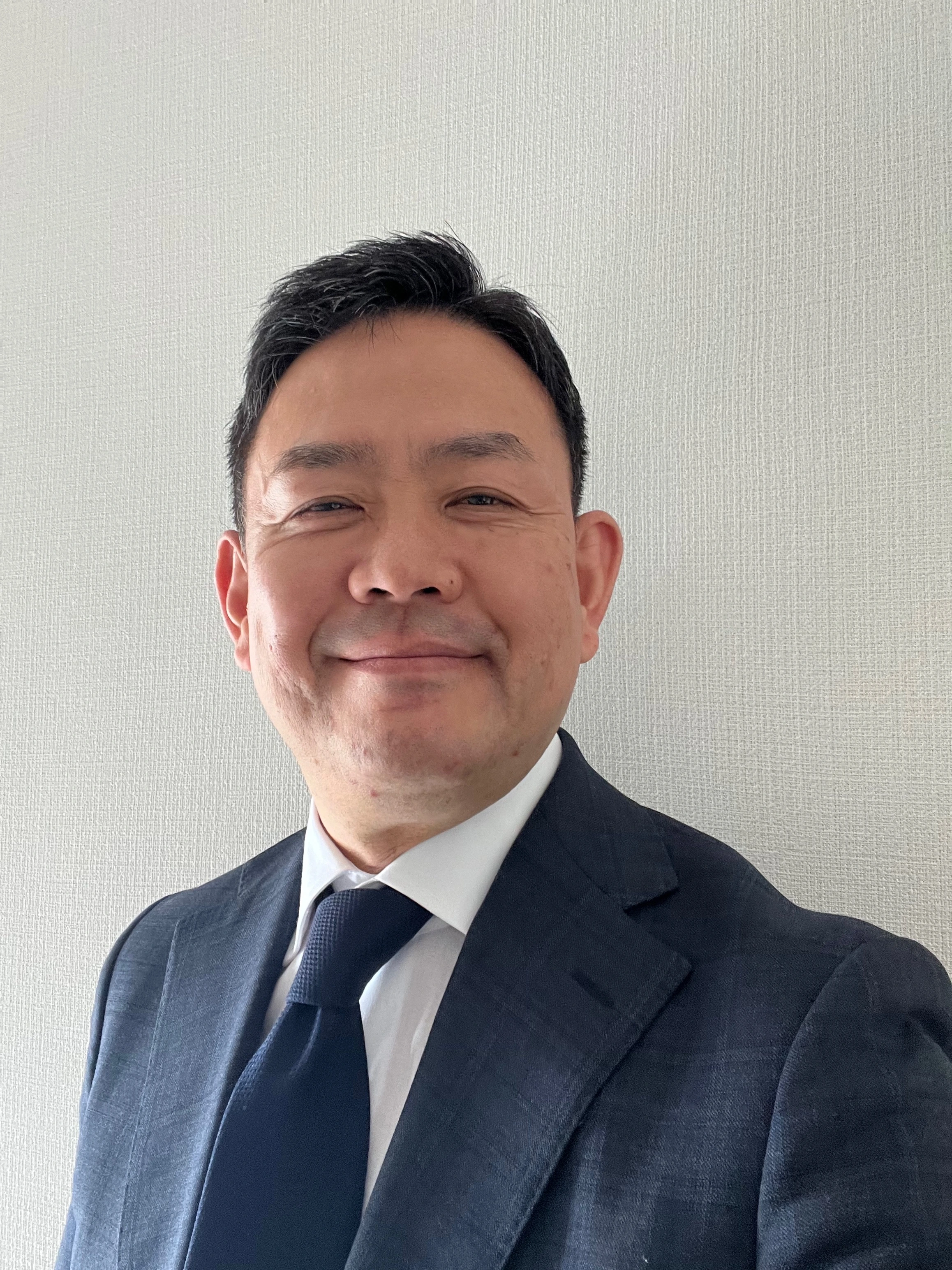
Author: Kenji Nishiyama (Certified Administrative Procedures Legal Specialist(Gyoseishoshi), Registration No.20081126)
Kenji Nishiyama is an Immigration and Visa Specialist who has supported many foreign residents with visa applications in Japan. On his firm’s website, he publishes daily updates and practical insights on immigration and residency procedures. He is also well-versed in foreign employment matters and serves as an advisor to companies that employ non-Japanese workers.