[Blog]Do Stricter Immigration Policies Really Build Trust?
2026-05-16
Recent policy changes surrounding Japan’s immigration system reveal several points that appear inconsistent with the principles of the Balanced Coexistence Model. In particular, the tightening of requirements for the “Business Manager” status of residence, the sudden suspension of new applications under the Specified Skilled Worker “Food Service Industry” category due to quota limits, and the addition of Japanese language requirements for the “Engineer/Specialist in Humanities/International Services” status all raise serious concerns from the perspective of institutional trust.
Preventing abuse of the immigration system is, of course, necessary. However, the issue is not the goal itself, but the methods chosen to achieve it. Several of these recent measures appear overly simplistic, overly uniform, and insufficiently attentive to the realities of actual businesses, workers, and long-term residents. As a result, they risk increasing distrust toward the system rather than strengthening confidence in it.
The Problem Is Not Abuse Prevention Itself
No immigration system can function without safeguards against abuse. Fake companies, sham management activities, misuse of professional visas for unskilled labor, and uncontrolled labor inflows can undermine the legitimacy of the entire system. However, there is a critical distinction between preventing abuse and designing policies primarily around suspicion.
When immigration policy becomes centered on broad restrictions and sudden rule changes, even compliant individuals and legitimate organizations begin to feel insecure. The system stops being perceived as predictable and dependable. Instead, it becomes something arbitrary and unstable.
The Tightening of the Business Manager Visa
Japan has strengthened the requirements surrounding the “Business Manager” status of residence, including higher capital requirements, operational conditions, and additional expectations regarding business structure and staffing. The underlying assumption appears to be that larger capital investment equals greater legitimacy.
However, this assumption is structurally flawed. A company with substantial capital can still lack genuine business substance, while many small businesses with limited capital operate responsibly, employ people, pay taxes, and contribute to local economies. The problem is therefore not the amount of capital itself.
From the perspective of the Balanced Coexistence Model, what should be examined is the actual substance of the business: continuity, transactions, taxation, employment practices, operational stability, and social responsibility. A policy focused primarily on capital thresholds risks excluding legitimate entrepreneurs together with abusive cases.
More importantly, sudden tightening of entry conditions creates anxiety among existing foreign business operators. It produces the perception that immigration rules may change unpredictably at any time, regardless of past compliance. This directly weakens institutional trust.
The Sudden Suspension in the Food Service Sector
The suspension of new applications in the Specified Skilled Worker “Food Service Industry” sector after quota limits were reached illustrates another major structural problem: lack of predictability.
Quota management itself is not inherently unreasonable. However, employers make hiring plans, workers spend time and money preparing for examinations, and sending organizations coordinate recruitment long before applications are submitted. When the system suddenly stops accepting applications, all parties involved suffer significant uncertainty and financial damage.
The Balanced Coexistence Model emphasizes that institutions must remain predictable. If businesses and foreign workers cannot reasonably anticipate how the system will operate, they cannot build stable long-term relationships around it. Sudden operational closures create the impression that immigration policy is reactive rather than structurally designed.
The Japanese Language Requirement for Professional Visas
The strengthening of Japanese language requirements for the “Engineer/Specialist in Humanities/International Services” category also reflects a potentially misplaced approach.
Language ability is certainly important in occupations requiring communication with customers or colleagues. However, the core structural problem behind abuse of this status is often not the foreign worker’s language ability. Rather, it is the practice of employers using a professional status of residence while assigning workers to unrelated or effectively unskilled labor.
If this is the true structural issue, imposing stricter language requirements on applicants does not address the root cause. Instead, responsibility risks being shifted from the receiving organization to the individual foreign worker.
The more appropriate response would be to strengthen verification of actual job duties, consistency between educational background and assigned tasks, organizational placement, and employer accountability. The issue is fundamentally one of institutional supervision and operational responsibility.
Short-Term Restrictions Increase Distrust
All three recent developments share a common pattern: when abuse or management difficulties emerge, the immediate response is to narrow entry conditions or strengthen generalized restrictions.
However, tighter entry barriers alone do not necessarily increase trust in the system. On the contrary, they often create collateral damage for legitimate applicants and responsible employers. The result is a system perceived not as fair and dependable, but as unpredictable and reactive.
The Balanced Coexistence Model approaches immigration policy differently. Trust is not produced through suspicion alone. It is designed through predictability, explainability, proportionality, and clear allocation of responsibility.
Alternative Proposal 1: Examine Business Substance Rather Than Capital Amount
For the Business Manager category, policy should move away from uniform capital thresholds and toward evaluation of actual business substance.
This could include examination of sales activity, operational continuity, office existence, tax payments, employment creation, social insurance participation, licensing status, and realistic business plans. Small businesses and start-ups could be evaluated through staged reviews rather than large upfront capital requirements.
Such an approach would target genuinely abusive cases without unnecessarily excluding legitimate entrepreneurs contributing to Japanese society.
Alternative Proposal 2: Introduce Early Warning Systems for Quotas
For Specified Skilled Worker quotas, sudden closures should be replaced with transparent early-warning mechanisms.
For example, public announcements could be issued when quotas reach 70%, 85%, and 95% capacity. Expected timelines, application priorities, and transitional protections should be clearly disclosed in advance.
Cases already involving employment contracts, examination completion, or finalized support plans could receive limited transitional protection. Even when restrictions become necessary, institutional predictability must be preserved.
Alternative Proposal 3: Strengthen Verification of Actual Work Duties
For professional residence statuses, policy should focus less on generalized language thresholds and more on verification of actual job assignments.
This includes reviewing job descriptions, organizational charts, task allocation, consistency between educational background and assigned duties, and post-arrival operational reality. Employers accepting workers under professional categories should bear responsibility for maintaining genuinely professional work conditions.
The core issue is not simply language ability. It is whether institutions are accurately supervising how the status system is being used.
Immigration Systems Should Be Designed Around Trust
Preventing abuse is necessary. However, when systems are designed primarily around distrust, even compliant actors begin to lose confidence in the institution itself.
The Balanced Coexistence Model does not advocate unlimited immigration, nor does it reject regulation. Rather, it seeks to construct systems in which abuse can be controlled while legitimate individuals, businesses, and communities can continue to rely on the system with reasonable predictability.
Immigration policy should not become a structure that assumes everyone is a potential violator. It should become a structure capable of distinguishing risk carefully while preserving institutional trust.
Conclusion
The tightening of the Business Manager visa, the abrupt suspension of applications in the food service sector, and the expansion of Japanese language requirements for professional visas all attempt to respond to real challenges. However, if these responses are overly uniform, reactive, and heavily burdensome toward applicants themselves, they risk undermining trust in the immigration system.
What is needed is not simplistic restriction at the entrance, but precise institutional design combining operational verification, employer responsibility, gradual quota management, and predictable implementation. Immigration policy should not merely function as a mechanism of exclusion. It should function as a system that manages risk while enabling sustainable coexistence based on institutional trust.
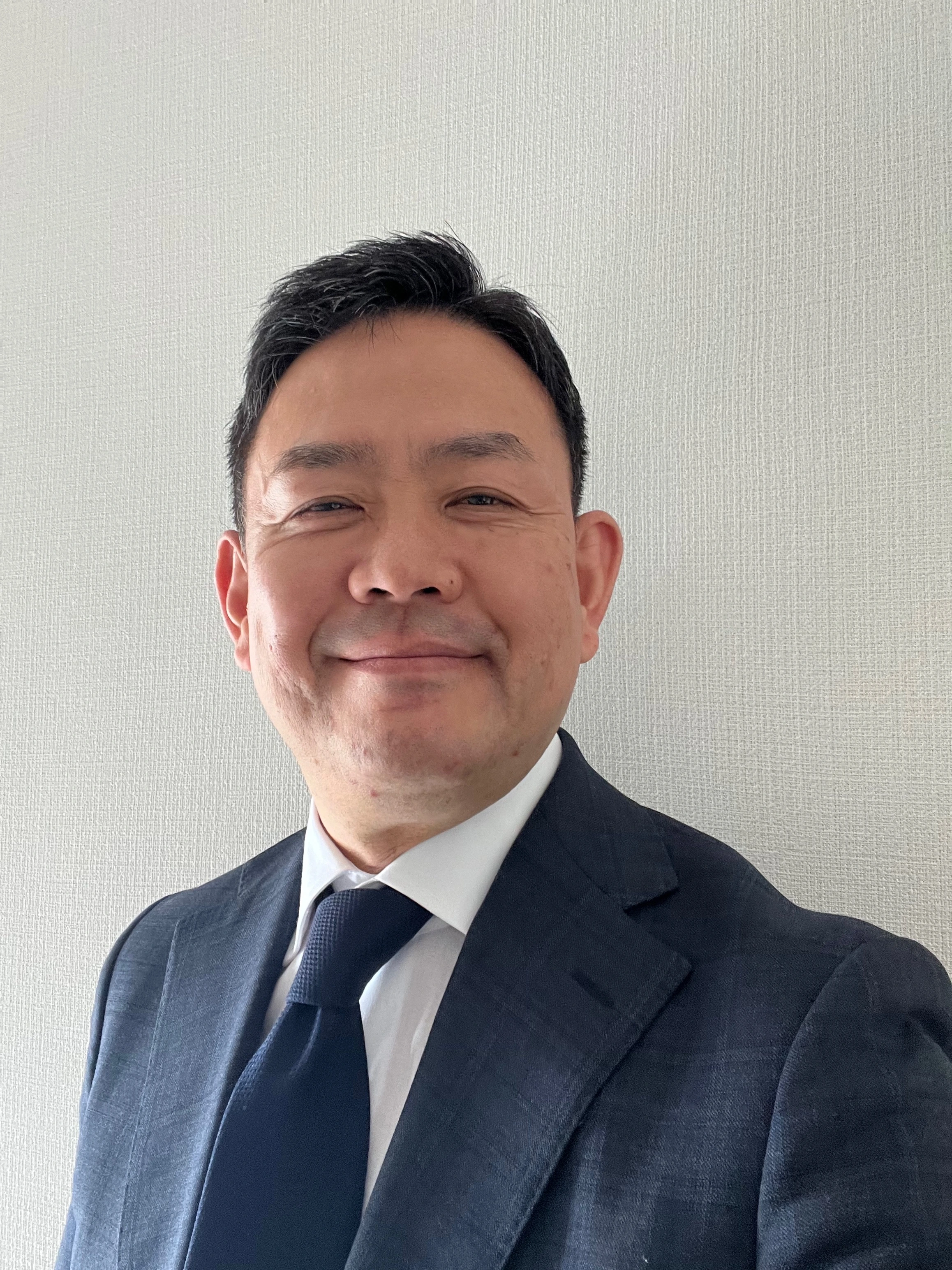
Author: Kenji Nishiyama (Certified Administrative Procedures Legal Specialist(Gyoseishoshi), Registration No.20081126)
Kenji Nishiyama is an Immigration and Visa Specialist who has supported many foreign residents with visa applications in Japan. On his firm’s website, he publishes daily updates and practical insights on immigration and residency procedures. He is also well-versed in foreign employment matters and serves as an advisor to companies that employ non-Japanese workers.