[Blog]A Yomiuri Kansai article made me stop: --Specified Skilled Worker (Tokutei Ginou) and permission for outside activities?--
2026-01-20
I recently came across a Yomiuri Online Kansai piece (published January 3, 2026) and, to be honest, my first reaction was: “Wait—really?” The reason is simple. In day-to-day practice, Tokutei Ginou is widely understood as a status of residence with tight boundaries: you are expected to work full-time under the designated field and job scope, and side jobs—i.e., “activities outside the status” (shikakugai katsudou)—are not something you plan for. I have also been operating under that practical understanding for a long time, so seeing the topic raised the way it was in the article genuinely surprised me.
My baseline understanding so far: Tokutei Ginou is not designed for side jobs
Tokutei Ginou is built around a full-time employment contract with an accepting organization, and the worker is expected to engage in the relevant duties within the approved industrial field. Conceptually, this is the opposite of student status, where comprehensive permission for part-time work (up to 28 hours/week) is a familiar model. Tokutei Ginou exists precisely because the person is “in Japan to work in that specific field,” and the system requires stable, contract-based full-time employment. That is also why the framework includes structured obligations—support plans, notifications, and labor management—making casual “double work” (W-work) difficult to reconcile with the 制度趣旨 (the system’s core intent).
Why the article surprised me: the “how to read the rules” trap
At the same time, the legal mechanism of permission for activities outside the status is not as simplistic as “work statuses = absolutely no side work.” In my office blog post (detailed write-up here), I explain that shikakugai katsudou is not a blanket pass to do anything. As a general idea, “outside activities” are assessed for appropriateness and consistency—often framed around whether the additional activity is of a type that can be considered reasonably compatible, and in practice, activities requiring a certain level of knowledge/skills are more plausibly evaluated as “appropriate.” A frequent source of confusion is a parenthetical note such as “excluding Technical Intern Training and Tokutei Ginou.” People sometimes read that as “Tokutei Ginou can never receive permission,” when in reality it may relate to the categorization of what kinds of outside activities are considered eligible, rather than a simple statement about the person’s current status. This is exactly where misreadings can occur.
Even if theory allows a nuance, the practical hurdle is huge: the full-time requirement
However, even if you can map out a theoretical interpretation, whether Tokutei Ginou holders can actually obtain permission for outside activities is a separate, highly practical question. The biggest obstacle is the full-time requirement. Tokutei Ginou is administered with a strong expectation of full-time engagement—often reflected in operational benchmarks (for example, the common practical understanding of “five days a week” and “around 217 working days per year” as a full-time baseline). As a result, any design that reduces the main job’s days or hours to “make room” for a different job is likely to collide with the very premise of the Tokutei Ginou employment contract. In other words, before you even discuss outside-activity permission, the work arrangement itself may already be incompatible with what Tokutei Ginou is supposed to be.
Where employers are most likely to slip—and why the risk is serious
This episode also reminded me that Tokutei Ginou is not a status where you can safely rely on vague assumptions. If misunderstandings spread—“It’s probably okay on days off,” “I heard someone got approval,” and so on—the compliance risk becomes very real. If the worker engages in unapproved side work, it can constitute a violation by the worker; and the party hiring them can face exposure as “facilitating illegal work” (fuhou shuuro joshi). Beyond that, Tokutei Ginou requires consistency across the contract, notifications, support plan, and labor management. If you disrupt that consistency, the problem is not just immigration compliance—it becomes a system-wide operational failure.
My practical takeaway: don’t design Tokutei Ginou around W-work
Putting it plainly: for Tokutei Ginou, it is safer to operate on the assumption that side jobs are not part of the intended model. Even if there are exceptional situations suggested by media reporting, those are exceptions—and they should not become “standard practice” for employers or support organizations. If there is a genuine need for additional work, the proper order is: (1) ensure the full-time Tokutei Ginou employment foundation is not undermined; (2) assess whether the proposed additional activity could be evaluated as appropriate under the outside-activity framework; (3) verify that the employment contract, notifications, support plan, and labor management remain consistent and defensible; and then (4) seek individual, case-specific confirmation from immigration authorities. The one thing you should not do is move forward based on “it seems fine” or “someone else did it.”
Related: a detailed explanation of “permission for activities outside the status”
If you want the deeper structure—how outside-activity permission works, how “work statuses” are evaluated, and where misreadings commonly occur—please refer to my office blog post (here). If the Yomiuri article made you uneasy or curious, the most productive step is to go back to the system’s “core logic” and rebuild your understanding from there.
Conclusion: when news shakes your assumptions, return to the system’s core intent
News reports sometimes shake even a practitioner’s instincts. This time, because I had been operating with the practical understanding that “Tokutei Ginou does not allow outside activities,” the surprise was significant. But the safest way forward is to return to fundamentals: Tokutei Ginou is a full-time, field-specific work status; and outside-activity permission is not a free-for-all mechanism. When in doubt, reverse-calculate from the system’s purpose—full-time engagement, field alignment, contract integrity, structured support, and proper notifications. That discipline is the best risk hedge for both the accepting organization and the worker.
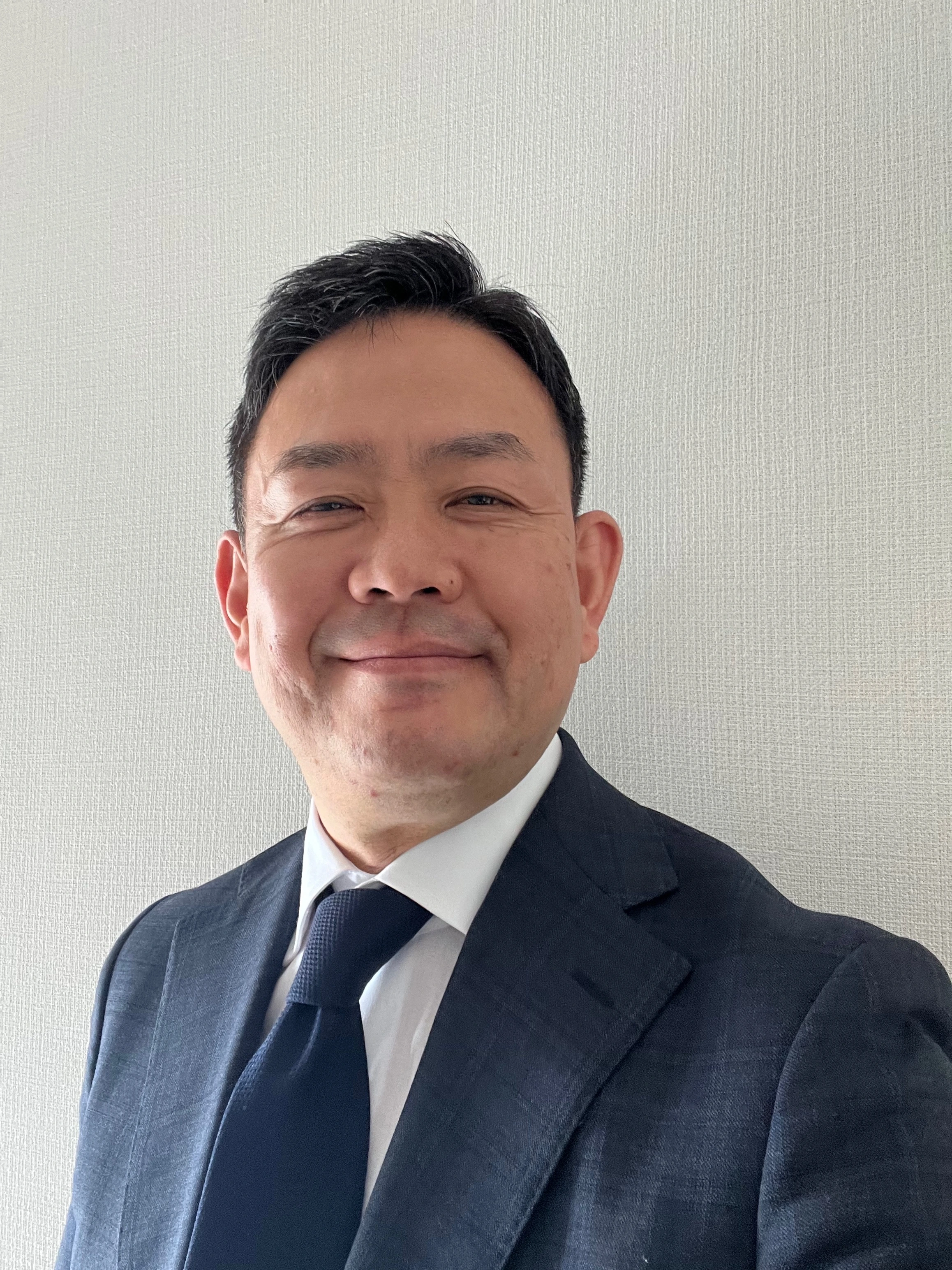
Author: Kenji Nishiyama (Certified Administrative Procedures Legal Specialist(Gyoseishoshi), Registration No.20081126)
Kenji Nishiyama is an Immigration and Visa Specialist who has supported many foreign residents with visa applications in Japan. On his firm’s website, he publishes daily updates and practical insights on immigration and residency procedures. He is also well-versed in foreign employment matters and serves as an advisor to companies that employ non-Japanese workers.