[Blog]Prologue: Immigration and Refugee Policy That Begins with Trust (Revised, Balanced Coexistence Model)
2026-10-03
1. Immigration and Refugee Policy Is About Designing Society Itself
What is the purpose of immigration and refugee policy? It is not merely a system for controlling the entry and residence of foreign nationals or maintaining order at national borders.
The state has a responsibility to decide whom to admit, under what conditions residence should be permitted, and under what circumstances departure should be required. Maintaining public safety and order and ensuring the sustainability of institutions are also important responsibilities of the state. Yet these powers should not exist for the sake of classifying, excluding, or controlling people as ends in themselves.
People who cross borders do not exist solely as legal categories defined by their residence status. They work, pay taxes and social insurance contributions, rent homes, use banks, form families, raise children, and live within local communities. Accepting a foreign national therefore means more than allowing one person to enter the country. It means creating an ongoing relationship between that person and society.
Immigration and refugee policy is therefore not simply a question of how to control foreign nationals. It is a question of social design: what kind of society the state seeks to sustain, what rights and responsibilities it recognizes, and what kinds of relationships it creates among people with different backgrounds.
This book places trust at the center of that social design.
2. This Book Begins with Distrust and Unhappiness
Why must we begin with trust? Because behind many of the problems surrounding immigration and refugee policy lies a cycle of distrust.
The criteria for decisions are unclear. Explanations are inconsistent. The reasons for institutional changes are difficult to understand. Application outcomes are unpredictable. Employers do not know how far their responsibilities extend. Local residents may not understand how immigration is being managed. Foreign residents may not fully understand what Japanese society expects of them.
Under such conditions, each actor begins to become wary of the others. Foreign residents may lose trust in administrative institutions and employers. Businesses may feel unable to predict the behavior of foreign workers. Local communities may become uncertain about whether institutions can adequately address emerging problems. Citizens may perceive unfairness because the relationship between social costs and benefits is unclear. Administrative authorities may, in turn, strengthen controls because they anticipate noncompliance.
Distrust produces stronger control, while opaque control produces further distrust. Distrust reproduces itself.
The consequences are not limited to dissatisfaction with institutions. They may include unstable lives, workplace conflict, tensions within communities, higher administrative costs, greater burdens on businesses, and social unhappiness affecting both foreign and Japanese residents.
What this book seeks to reduce is not the presence of foreign nationals, nor social change itself. It seeks to reduce the distrust and unhappiness that institutions and social relationships can reproduce.
3. Trust Must Be Understood as a Structure, Not Merely as Goodwill
The trust discussed in this book does not mean believing unconditionally in foreign nationals or in administrative institutions. Nor does it rest on the moral assumption that coexistence will emerge automatically if everyone simply acts with goodwill.
Trust is a condition in which, despite uncertainty, people can form reasonable expectations about the behavior of other people and institutions.
Administrative authorities apply publicly stated standards. Employers honor their contracts. Foreign residents comply with laws and social rules. Local communities provide necessary information. When problems arise, facts are examined, responsibilities are clarified, and necessary corrections are made.
Through repeated experiences of this kind, people become able to anticipate the future not by assuming the goodwill of others but by relying on institutions and accumulated experience.
This book describes that process as a progression: Understanding → Predictability → Reliability → Trust.
When people understand an institution, they can anticipate how it will operate. When its operation is predictable, they can organize their lives and activities on the assumption that the institution will function as explained. When experience confirms that they can actually rely on it when necessary, trust begins to develop.
Trust cannot be created by command. It becomes embedded in society only when institutions and relationships prove worthy of reliance through repeated experience.
4. Trust Has Been Built Through History
Designing trust does not mean creating an entirely new society from nothing.
The labor laws, workers' compensation and employment insurance systems, social insurance arrangements, employment administration, and administrative procedures that support contemporary society all have histories. They were developed over time as societies sought to reconcile worker protection, business stability, livelihood security, and social solidarity.
Rights and protections that may now appear self-evident did not exist in complete form from the beginning. They are social achievements created through experience, recognition of institutional deficiencies, and repeated reform.
Foreign nationals who work and live in Japan are also connected to these institutions. They provide labor, pay taxes and social insurance contributions, and support businesses and local communities while receiving institutional protection when necessary.
If foreign residents are viewed only as exceptional people standing outside existing institutions, society cannot fully use the foundations of trust it has already developed. What is needed is an explanation of why institutions exist, who contributes to them, whom they protect, and what responsibilities sustain them, so that this understanding can be shared with new members of society.
Explaining the history of institutions is therefore more than explaining the past. It is a way of transmitting the trust that society has built to future generations and to new members of the community.
5. Designing Trust as an Institution
For trust to become embedded in society, it cannot depend solely on goodwill or morality. It must also be supported institutionally.
Transparency, consistency, predictability, and explainability are central to this task.
Administrative institutions require a certain degree of discretion. Human lives and social problems cannot always be evaluated solely through numerical or formal criteria. Yet the necessity of discretion does not mean that reasons for decisions need not be explained.
What standards were applied? Which circumstances were considered? Why was a particular conclusion reached? Even when not every piece of information can be disclosed, institutions should explain, to the extent possible, their purposes, decision-making structures, and available procedures.
Trust in institutions does not arise only when individuals receive outcomes they prefer. Even an unfavorable decision may remain institutionally reliable if the reasons can be understood, similar circumstances are assessed according to consistent standards, and errors can be challenged and corrected.
The state should not demand trust merely by declaring itself correct. The state itself must explain its decisions, remain open to scrutiny, and correct them when necessary. That structure is what creates institutional trust.
6. Institutions Cannot Support People Unless They Are Implemented
Good laws and well-designed institutions alone are not enough.
A right that exists in law but cannot be accessed because procedures are too complex does not fully reach people's lives. When necessary information is fragmented across different public institutions, the same information must repeatedly be submitted, and a delay in one procedure affects employment, housing, finance, and insurance, institutions may create insecurity rather than stability.
This is the problem of implementation.
This book examines how RegTech, digitalization, API integration, and connections between immigration procedures and financial, insurance, and housing systems may help make legal institutions function in everyday life.
Technology itself, however, is not treated as a source of trust. A decision is not correct merely because an algorithm produced it. Nor does digitalization automatically make a procedure fair.
Who makes the decision? What information is used? What criteria are applied? Who is responsible for correcting errors? If these questions cannot be understood, digitalization merely transforms an existing black box into a larger one.
What is needed is an explainable black box. Institutions provide direction, technology implements rules accurately and continuously, and human actors retain ultimate responsibility. Only when institutions and technology are connected in this way can trust function within everyday life.
7. What Does the Balanced Coexistence Model Seek to Balance?
The Balanced Coexistence Model presented in this book is not a theory for expanding immigration without conditions. Nor is it a theory that treats foreign nationals primarily as risks or burdens and places control and exclusion at its center.
National interests and individual dignity. Security and liberty. Humanitarian protection and institutional sustainability. Labor-market demand and workers' lives. Admission and social integration. Rights and responsibilities. Administrative discretion and oversight. Privacy and information sharing. These values frequently come into conflict in actual policymaking.
Balanced coexistence does not mean blending these values together until their differences disappear. It means making conflicting values visible, recognizing the legitimacy and limits of each, and creating institutions capable of reconciling them.
This requires avoiding both one-sided demands that foreign nationals alone adapt and arrangements in which the receiving society alone bears responsibility. The state, employers, foreign residents, support organizations, and local communities possess different powers, information, and capacities. Their responsibilities must therefore be defined according to their respective positions.
Integration is not a one-way process. Support and responsibility are not opposing concepts. Institutions should provide access to necessary support while clearly communicating the rules that members of society are expected to follow. At the same time, receiving institutions must ensure fair administration, lawful employment, understandable explanations, and mechanisms capable of correcting problems.
This structure of reciprocal obligations lies at the heart of the Balanced Coexistence Model.
8. Labor Is Not a Commodity
Foreign labor policy often begins with a numerical question: How many workers are needed? How many should be admitted into industries facing labor shortages? From which countries should workers be recruited? How long should they remain?
But workers are not quantities. Labor cannot be separated from human life, family, ability, dignity, and the future and treated merely as a commodity.
Foreign workers have lives in their countries of origin, families, reasons for migration, and expectations for their futures, including life after returning home. International labor mobility affects not only receiving countries but also the communities, education systems, industries, and human-capital development of sending countries.
Foreign labor policy therefore cannot be designed solely around Japan's domestic labor shortages. It must consider simultaneously the interests of receiving countries, the sustainability of sending countries, and the development and lives of workers themselves.
Pre-departure education, fair recruitment, allocation of costs, skills development, family life, and the use of acquired skills after return should all be considered. Cross-border labor mobility should be designed not as one-way consumption of human resources but as sustainable circulation of human capabilities.
The principle that labor is not a commodity is more than a humanitarian ideal. It is also an institutional principle for creating a sustainable international labor market.
9. Permanent Residence Raises the Question of Social Recognition
When a foreign national lives in Japan for an extended period, the relationship between that person and the state changes.
A person who originally entered as a temporary resident may work, pay taxes and social insurance contributions, form a family, participate in a local community, and spend many years of life in Japan. At some point, a question arises: Is it appropriate to continue treating that person indefinitely as a temporary outsider?
This book distinguishes among residence as permission, permanent residence as recognition, and nationality as membership in the state.
This distinction does not create a hierarchy of human worth. Rather, it provides a framework for examining the different forms of continuity, rights, and obligations created between individuals and the state by different legal statuses.
Permanent residence is more than a status that eliminates the need for periodic extensions of stay. It signifies that the state recognizes a person's continuing presence in Japanese society as a premise of their legal status.
At the same time, permanent residents, as enduring members of society, are expected to comply with the law, bear applicable social responsibilities, and maintain their relationship with the community.
Permanent residence should therefore not be understood solely as a system through which foreign nationals prove that they deserve the state's trust. The state, too, must respect the stable status it has granted and maintain institutions that are consistent and predictable. In this sense, permanent residence raises the question of how mutual trust between foreign residents and the state can be institutionalized.
10. Testing Theory in Everyday Life
The Balanced Coexistence Model does not end with theory.
This book examines, through practical RegTech experimentation, the possibility of connecting immigration procedures with the everyday infrastructure of banking, insurance, housing, and employment.
For a foreign resident, residence status is not merely one piece of administrative information. A change or renewal of status may affect employment, income, banking, housing, insurance, and family life.
Yet social institutions are often operated as separate systems. As a result, foreign residents and businesses must move between institutions and repeatedly explain or submit the same information.
If necessary systems can be connected on the basis of individual consent, purpose limitation, appropriate access controls, and personal-data protection, immigration procedures may be redesigned from isolated administrative events into continuous social infrastructure supporting people's lives.
The validity of a theory cannot be judged solely by the attractiveness of its principles. Is the system understandable to those who use it? Does it reduce unnecessary burdens on businesses? Does it support appropriate administrative decision-making? Can information be connected without undermining rights? Can errors be corrected when problems arise?
Implementing theory and then returning the experience gained from implementation to theoretical design is what allows the Balanced Coexistence Model to move closer to a functioning social institution.
11. Immigration Policy Cannot Be Completed Within One Country
Human mobility crosses borders. Immigration and refugee policy therefore cannot be fully understood through the domestic circumstances of a single country alone.
Labor markets, refugee protection, removal, family migration, competition for talent, and social integration interact with policies in other countries. When one country changes its policies, migration routes may shift, producing consequences for countries of origin and neighboring states.
Europe, the United States, the Nordic countries, and Japan have different histories of immigration, welfare systems, labor markets, nationality laws, and approaches to social integration. Their institutions therefore cannot simply be transplanted into Japan.
Yet comparing the problems other societies have encountered, the values they have prioritized, the institutions they have selected, and the difficulties that have followed can help place Japan's own institutions in perspective.
The purpose of international comparison is not to determine which country's model is superior. It is to understand the available choices and the trade-offs associated with them.
12. Institutions Alone Cannot Complete the Formation of Trust
So far, the discussion has focused primarily on institutions. Yet social trust is not formed by laws and administrative systems alone.
People form perceptions of foreign nationals and of Japanese society through news, social media, reputation, workplaces, schools, local communities, administrative encounters, and many other experiences.
A positive relationship with one foreign resident may influence a person's broader understanding of foreigners. Conversely, a single negative encounter may be generalized into a judgment about an entire nationality or culture. Foreign residents likewise form perceptions of "Japanese people" and "Japanese society" through their encounters with individuals and institutions.
Part 9 examines how such experiences contribute to trust. It considers institutional experience and interpersonal experience, small everyday encounters, the quality of contact, and processes of reflection and correction. It asks whether individual experiences can be transformed into social learning.
Trust does not emerge only from grand principles. It is built through small experiences: receiving an understandable explanation at an administrative counter, seeing a workplace commitment honored, or cooperating with neighbors in a local community.
13. We Do Not Perceive Even Our Own Experiences Neutrally
Yet emphasizing experience does not resolve the problem by itself.
Human beings do not simply record events and evaluate them with perfect neutrality. We categorize people and events, pay greater attention to information that confirms existing beliefs, evaluate our own groups more favorably, and sometimes perceive outside groups as more homogeneous than they really are.
If the conduct of one foreign national is explained as occurring "because that person is foreign," while identical conduct by a Japanese person is explained through personality or individual circumstances, the same behavior may be receiving different causal interpretations.
Bias can also operate in the opposite direction. If every disadvantage experienced by a foreign national is automatically interpreted as discrimination, or every problem in Japanese society is attributed to a single cultural characteristic, important individual and institutional causes may also be overlooked.
The objective of the Balanced Coexistence Model is not to be "positive toward foreigners." Nor is its objective to affirm Japanese society.
What is necessary is to apply, as far as possible, the same standards to the same facts regardless of whom we are judging; to distinguish facts, inferences, and value judgments; and to revise our perceptions when new information becomes available.
Part 10 therefore asks us to question not only "them" but also the way "we" perceive "them." It begins from the premise that no group, including foreign residents themselves, is entirely free from cognitive bias, and examines social categorization, ingroup bias, confirmation bias, threat perception, scapegoating, and the historical structures through which exclusion has emerged.
14. Turning Social Anxiety into Policy Rather Than Exclusion
Cognitive processes do not remain confined to individual minds. People's anxieties and perceptions become public opinion, political demands, and eventually forces that shape policy.
When people are concerned about housing, employment, wages, public safety, education, social security, or changes in their communities, asking government to respond is a legitimate act in a democratic society. Such concerns should not simply be dismissed as prejudice or hostility toward outsiders.
However, the existence of anxiety and the claim that foreign nationals are its cause are not the same proposition.
Housing shortages may involve housing supply and land-use policy. Low wages may reflect industrial structures and employment practices. Community tensions may be related to insufficient information or inadequate local integration infrastructure. Even where immigration has some effect, its magnitude and causal relationship must be examined before an appropriate policy response can be selected.
Reducing complex problems to a single conflict—whether to increase or decrease the number of foreign nationals—may make political messages easier to understand. But a simple political message is not necessarily the same as a policy capable of solving the underlying problem.
This book does not dismiss public opinion. Instead, it seeks to break the concerns and expectations expressed through public opinion into specific policy problems. It then examines facts and causal relationships, compares policy alternatives, and considers implementing institutions, budgets, personnel, effects on rights, and methods of evaluation in order to translate political demands into implementable policy.
Democracy requires neither ignoring the voices of the public nor mechanically converting those voices into policy. It requires transforming the problems identified by society into institutions that can be examined, implemented, and corrected.
15. Trust Does Not Mean Never Making Mistakes; It Means Being Able to Correct Them
No matter how carefully institutions are designed, errors cannot be eliminated entirely. Administrative bodies may make incorrect decisions. Employers may respond improperly. Foreign and Japanese residents alike may violate laws or contracts. Society cannot predict the future perfectly.
A trustworthy society, therefore, is not a society in which problems never occur.
It is a society capable of discovering problems. It can establish facts, identify responsibility appropriately, correct erroneous decisions, and transform what it learns into the next round of institutional improvement.
The same principle applies to individual cognition. Reliability does not mean refusing to change one's mind after reaching a conclusion. Revising a judgment when new evidence emerges is not defeat; it is learning.
Whether we are dealing with institutions or people, trust is not unconditional certainty. It is the reasonable expectation that when problems arise, a relationship or institution will be capable of addressing them and correcting itself where necessary.
Understanding, predictability, reliability, and trust. Then problem detection, reflection, correction, and redesign. When this cycle continues, trust becomes not a fixed condition but a capacity that society continually maintains.
16. The Balanced Coexistence Society This Book Envisions
This book begins with the structure of distrust.
It examines the institutions that society has built throughout history and asks how trust can be designed institutionally. It considers how institutions can be implemented through technology and how rights and responsibilities, control and integration, and the interests of the state and the individual can be balanced. Through permanent residence, it examines what it means for foreign nationals to become enduring members of society. Through RegTech, it connects theory with real social infrastructure, while international comparison places Japan's institutional choices in a broader perspective.
It then considers how everyday experiences create trust and examines the cognitive processes that can distort our interpretation of those experiences. It analyzes how social anxiety becomes public opinion and political demand and asks how those demands can be transformed into implementable policy.
Finally, it reconnects institutions, technology, experience, cognition, and policy into a single framework.
A balanced coexistence society does not mean a society in which foreign and Japanese residents never disagree. As long as people hold different interests, values, cultures, and experiences, conflict and friction cannot be eliminated entirely.
What matters is whether, when conflicts arise, society can avoid immediately turning them into exclusion or hostility and instead establish facts, coordinate competing interests through institutions, and make necessary corrections.
The model does not demand unconditional trust in foreign nationals, Japanese citizens, the state, or businesses. Each must remain subject to explanation, examination, responsibility, and correction. Through repeated experiences of such processes, people with different backgrounds can learn to rely on the same social institutions.
Design trust. Explain trust. Implement trust. Experience trust. Then learn from those experiences and redesign institutions.
Through this cycle, society can reduce distrust and unhappiness and create conditions in which people and institutions support one another.
The Balanced Coexistence Model presented in this book does not claim to provide a final answer for such a society. Rather, beginning with immigration and refugee policy, it offers a model for thinking about what kind of society we wish to build, with whom we share that society, and how trust can be created and sustained among us.
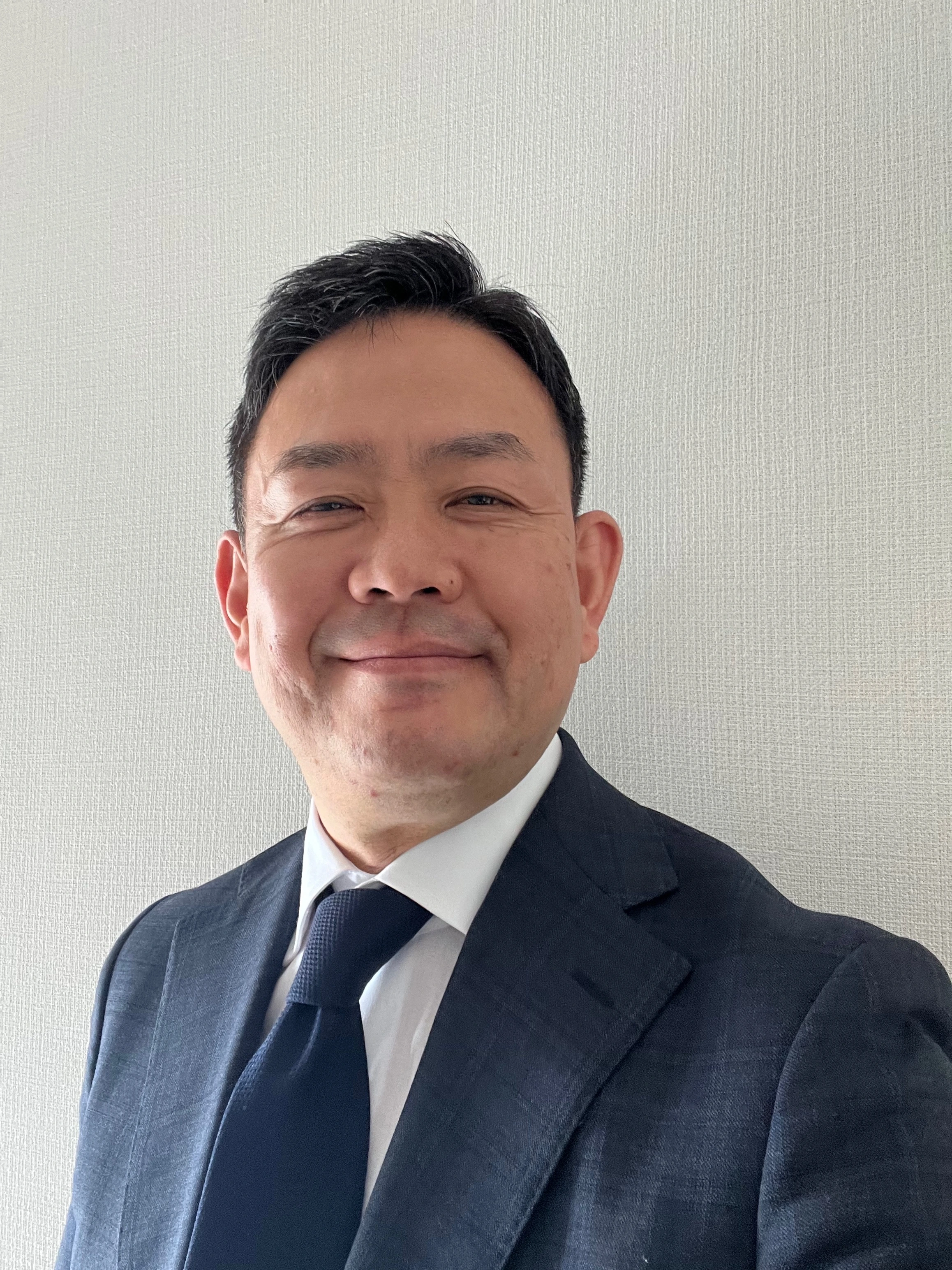
Author: Kenji Nishiyama (Certified Administrative Procedures Legal Specialist(Gyoseishoshi), Registration No.20081126)
Kenji Nishiyama is an Immigration and Visa Specialist who has supported many foreign residents with visa applications in Japan. On his firm’s website, he publishes daily updates and practical insights on immigration and residency procedures. He is also well-versed in foreign employment matters and serves as an advisor to companies that employ non-Japanese workers.