[Blog]What Can We Learn from History? — The Cognitive Structures That Produced Exclusion —
2026-09-25
1. The Purpose of Studying History Is Not Simply to Condemn the Past
The previous chapter examined how, when social anxiety intensifies, people may attribute complex problems to particular groups through threat perception, scapegoating, and a diminished sense of control. Anxiety itself is not necessarily mistaken. However, when responsibility is concentrated on a visible group without adequately examining the causes, concrete policy issues can turn into conflicts between groups.
These cognitive problems are not unique to the modern world. Throughout history, people have repeatedly identified groups perceived as different from themselves as the causes of social anxiety and attempted to restore order through their exclusion.
Yet the purpose of studying history is not to judge people of the past solely by present-day values and confirm that we are superior to them. Doing so would reproduce the very ingroup bias examined in the preceding chapters.
What matters is understanding why people at the time perceived particular groups as threats, how those perceptions spread through society, and under what conditions they developed into institutionalized exclusion.
The Balanced Coexistence Model does not casually equate different historical events. Every period has its own political, economic, social, and legal circumstances. Nevertheless, examining how human cognition and institutions interact, while respecting these differences, offers important lessons for contemporary social design.
2. Exclusion Does Not Necessarily Begin in an Extreme Form
When looking back at severe historical persecution, we already know its eventual consequences. We may therefore assume that the earliest events contained unmistakable signs of the tragedies that followed.
But people living at the time did not know what would happen next.
Negative jokes about particular groups, reporting that repeatedly emphasizes certain attributes, explanations that blame a single group for social problems, and the habit of treating exceptional incidents as characteristics of an entire group are not, individually, equivalent to institutionalized exclusion.
Nevertheless, when such perceptions are repeated, contradictory information is discounted, and explanations blaming a particular group become socially established, discriminatory treatment of that group may become easier to accept.
Furthermore, when institutions such as public administration, the judiciary, education, the media, and businesses begin acting on those perceptions, individual prejudice can develop into a social mechanism.
Understanding exclusion therefore requires examining not only its eventual consequences, but also the processes through which perceptions become socially shared and institutionalized.
3. The Black Death and the Persecution of Jews in Medieval Europe
During the fourteenth century, the Black Death caused enormous loss of life across Europe. Scientific understanding of infectious diseases had not yet been established, and people faced a danger whose causes they could not adequately explain.
Amid this anxiety, false rumors spread in various regions that Jews had poisoned wells. Jewish communities were subsequently subjected to attacks and massacres.
In this case, fear of a poorly understood catastrophe became associated with suspicion toward a group already distinguished by religious and social boundaries. A complex and seemingly uncontrollable epidemic was explained as the deliberate action of particular people.
That explanation had no factual basis. Nevertheless, rumors, existing prejudice, religious hostility, and other circumstances combined to make false accusations a justification for violence.
The lesson is not simply that people in an age without modern scientific knowledge made mistaken judgments. Rather, when people cannot understand the causes of a disaster or predict what will happen next, they may search for an identifiable perpetrator and use existing social categories to construct an explanation.
Does an actual causal relationship exist between the phenomenon generating anxiety and the group being blamed for it? Losing sight of this distinction can become a starting point for exclusion.
4. The Great Kanto Earthquake and the Massacre of Koreans: When Rumors Become Violence
During the Great Kanto Earthquake of 1923, a devastating earthquake and widespread fires caused enormous social disruption. False rumors circulated that Koreans were committing arson and poisoning wells. Against this background, vigilante groups and others killed large numbers of Koreans. Some Japanese and Chinese people were also among the victims.
Multiple historical factors contributed to these events, including fear generated by the disaster, insufficient information, discrimination and ethnic tensions under Japanese colonial rule, the spread of rumors, and the responses of administrative and security authorities.
One important lesson is that a shared disaster does not necessarily strengthen social solidarity.
When reliable information is scarce and people do not understand what is happening, rumors consistent with existing prejudices may be accepted as facts. Even when people believe they are acting to protect themselves, their families, or their communities, actions based on false assumptions can produce devastating violence within the very society they seek to defend.
Furthermore, classifying people according to appearance, language, or pronunciation and treating those identified as members of a particular group as dangerous replaces the examination of individual conduct with judgments based on perceived group membership.
This history demonstrates the importance of accurate information during disasters, rapid responses to rumors, protection of rights by law enforcement authorities, and social mechanisms that prevent unjustified generalizations about entire groups.
5. Nazi Germany: How Prejudice Became State Policy
One historical example in which prejudice against a group became intertwined with state institutions and produced catastrophic consequences is the persecution of Jews and the Holocaust under Nazi Germany.
Following the First World War, Germany experienced military defeat, economic turmoil, political instability, and the effects of the Great Depression. The Nazis exploited existing antisemitism and conducted propaganda linking Jews to the country's political, economic, and social problems.
However, the existence of economic crises and political instability does not mean that persecution was inevitable. The political decisions of the Nazi leadership, organized propaganda, changes to the legal system, mobilization of state institutions, and actions of those involved in persecution must be examined as distinct factors.
Through measures including the Nuremberg Laws of 1935, Jews became targets of legal discrimination. Their property, occupations, educational opportunities, freedom of movement, and ordinary lives were increasingly restricted. During the Second World War, persecution escalated into systematic mass murder organized by the state.
Social categories were transformed into legal classifications, and those classifications became institutional mechanisms determining people's rights and ultimately their lives.
It is important not to explain the Holocaust merely as the result of extreme prejudice. Persecution became systematic and extensive because institutions and organizations—including political authorities, bureaucracies, police, judicial bodies, businesses, and transportation systems—participated in its implementation.
Institutions possess the capacity to sustain social trust. But when institutions are used to deny human dignity, the same organizational capacity can enable devastating harm. This is one reason the Balanced Coexistence Model emphasizes institutional transparency, limits on authority, explainability, and the protection of rights.
6. Rwanda: When Group Boundaries Determine Who Lives and Who Dies
In Rwanda in 1994, historical divisions involving Hutu and Tutsi identities, political struggles, civil war, and organized incitement contributed to a genocide primarily targeting Tutsi people. Moderate Hutu were also killed.
It would be inaccurate to explain these events simply by claiming that two ethnic groups had always hated each other. Understanding the genocide requires examining the institutionalization of group classifications under colonial rule, post-independence politics, civil war, organized incitement, and other historical factors.
Particularly important is the way social group classifications were politically exploited, causing people to be regarded as dangerous not because of their individual actions but because of their group membership.
Incendiary rhetoric obstructed the recognition of targeted individuals as human beings with distinct identities and portrayed the group itself as a threat. When these perceptions became connected to organized violence, group boundaries could determine whether people lived or died.
Nevertheless, Rwanda's history cannot be reduced to the idea that greater contact between groups would have prevented the genocide. Political power, armed organizations, administrative institutions, and the information environment played major roles in determining how violence was organized and carried out.
Understanding cognitive bias is important, but it is not sufficient. Institutional safeguards are also necessary to prevent biased perceptions from being transformed into organized violence.
7. Different Historical Events Must Not Be Reduced to a Single Narrative
The examples examined so far contain certain common cognitive elements: anxiety and crisis, existing group classifications, rumors and propaganda, the generalization of individual actions to entire groups, and perceptions that particular groups constitute threats.
However, these events cannot be explained by a single common cause.
The epidemics of medieval Europe, the Great Kanto Earthquake, Nazi Germany, and Rwanda differed significantly in the role of the state, political objectives, social structures, methods of communication, organization of violence, and scale of victimization.
Nor is it appropriate to equate contemporary debates over immigration policy directly with these historical events. Policy discussions concerning immigration levels, residence status, labor markets, social security, public safety, and border control must be distinguished from the denial of a particular group's rights or lives.
Learning from history does not mean assigning people who hold different opinions today to the roles of historical perpetrators.
Instead, it means examining the conditions under which legitimate policy debates may turn into collective blame extending beyond individual responsibility, and how that blame may develop into institutional discrimination or violence.
8. Why Do “Ordinary People” Participate in Exclusion?
When trying to understand historical persecution, portraying perpetrators solely as exceptionally cruel individuals allows us to place ourselves outside the problem.
Yet severe persecution has involved not only active instigators and direct perpetrators, but also people who followed orders, conformed to those around them, remained silent out of fear of personal consequences, or performed ordinary duties within institutions.
Of course, their responsibilities were not identical. Policymakers, those who ordered violence, direct perpetrators, people who cooperated despite having opportunities to resist, and those acting under coercion or threats cannot all be evaluated according to the same circumstances.
Nevertheless, when society's understanding of normal behavior changes, individual judgments can be influenced by that change.
Discriminatory treatment that was unacceptable yesterday may be presented as an official rule today. Others begin following it. It becomes incorporated into administrative procedures or workplace duties. Before people consider the ethical implications of their actions, the explanation “I was simply doing my assigned job” may become available.
The Balanced Coexistence Model therefore does not propose relying exclusively on individual conscience to protect society. Mechanisms are also necessary to detect, challenge, and correct institutions or organizations when they move in the wrong direction.
9. Dehumanization Removes Our Ability to See Others as Individuals
As exclusion intensifies, people may become increasingly unable to recognize members of a targeted group as individual human beings.
Personal details such as names, families, occupations, everyday lives, experiences, and aspirations disappear from view, leaving only the group label. When that group is repeatedly portrayed as a danger or burden to society, individuals may be regarded as problematic simply because they belong to it, regardless of their actual behavior.
Furthermore, rhetoric portraying people as though they lack human dignity or feelings can weaken psychological resistance to discrimination and violence. This is the problem of dehumanization.
Outgroup homogeneity, examined in Chapter 54, obscures differences within groups. Ingroup bias, discussed in Chapter 55, can lead people to view their own group more favorably. Asymmetrical attribution and confirmation bias, examined in Chapter 56, can reinforce negative perceptions. Threat perception and scapegoating, discussed in the previous chapter, can then position a particular group as the cause of social anxiety.
When these cognitive tendencies overlap and become connected to political incitement or institutional discrimination, there is a danger that individuals' dignity and rights will be denied solely because of their group membership.
However, the existence of these cognitive tendencies does not mean that severe exclusion will inevitably follow. Precisely for that reason, we must consider where and how the progression can be interrupted.
10. Institutions Can Both Implement and Prevent Exclusion
The Balanced Coexistence Model positions institutions as an essential foundation for building trust. Yet the mere existence of institutions does not guarantee that they are fair.
Laws, administrative procedures, identity registration, information management, supervision, and enforcement are necessary functions for maintaining social order. However, if these functions are used to exclude particular groups unjustifiably, their effects can be far greater than those of individual prejudice.
Administrative authority therefore requires defined purposes and limits. Decision-making criteria require rational justification. Adverse decisions require appropriate procedures and explanations. Mechanisms for correcting errors are also necessary.
In immigration administration, the state's authority to regulate the entry and residence of foreign nationals does not mean that this authority is unlimited.
Even when establishing residence requirements, responding to violations, or carrying out deportation procedures, decisions must be grounded in applicable law, factual examination, consideration of relevant individual circumstances, and appropriate procedures.
Rather than presuming an individual's dangerousness or responsibility solely from foreign nationality, institutions should employ classifications necessary for legitimate policy purposes and make individualized decisions based on concrete facts wherever such decisions are required.
Institutional trust depends not only on the strength of administrative authority but also on how that authority is controlled.
11. Digital Technology Can Amplify Cognitive Bias
Modern societies circulate information on a scale and at a speed unknown in earlier historical periods.
Information about incidents or conflicts involving particular groups can spread widely within a short time. People may repeatedly encounter information consistent with their interests or existing beliefs, potentially creating the impression that exceptional events represent ordinary social reality.
Artificial intelligence and data analysis have also made it easier to classify people according to their attributes or behavioral patterns.
Used appropriately, these technologies can improve administrative efficiency, detect misconduct, and deliver necessary support. However, if they reproduce biased historical data or inappropriate classifications, they may also reinforce existing cognitive and institutional inequalities.
For example, if enforcement activities are concentrated on a particular group, more violations may be detected within that group. If those detection figures are then used to justify even greater concentration of enforcement, it becomes difficult to distinguish actual patterns of misconduct from the effects of unequal scrutiny.
Within the Balanced Coexistence Model, RegTech is not simply technology for strengthening surveillance or accelerating administrative screening. Its design must also address data collection methods, classification criteria, decision-making processes, error correction, personal information protection, and limits on authority.
Precisely when technology supports decision-making, mechanisms allowing human beings to question the assumptions underlying those decisions become essential.
12. How Can Historical Lessons Inform Contemporary Policy?
Studying historical exclusion does not automatically justify either expanding or restricting immigration in the present.
States have responsibilities to regulate entry and residence, maintain social order, and consider the effects of immigration on public services and labor markets. At the same time, they must protect rights recognized under applicable law, exercise administrative authority appropriately, and avoid unjustifiably extending individual responsibility to entire groups.
The important task is to distinguish policy objectives from the means used to achieve them.
If illegal employment must be addressed, policymakers should examine not only individual residence status but also businesses that facilitate unlawful employment and any relevant institutional problems. If conflicts arise within local communities, their specific causes should be investigated and addressed through an appropriate combination of information, supervision, and support. If immigration levels are debated, their effects should be examined using relevant data on population, employment, housing, education, and social security.
Throughout this process, we must ask whether a particular incident is being used to infer the characteristics of all foreign residents, whether classifications necessary for policy are being transformed into judgments about human worth, and whether people holding different opinions are being indiscriminately assigned moral labels.
Historical lessons should be used not only to question others, but also to examine our own methods of judgment.
13. Designing a Society That Can Interrupt the Progression Toward Exclusion
The historical cases examined in this chapter show that several stages may exist between social anxiety and the exclusion of particular groups.
First, a social crisis or widespread anxiety emerges. Next, an easily recognizable group category is used to explain a complex problem. Particular incidents or information reinforce that explanation, while contradictory evidence is discounted. The perception that the entire group constitutes a threat spreads, and discriminatory treatment may gradually become justified. If political authorities or institutions adopt that perception, exclusion can become embedded in the organization of society.
However, this is not an inevitable path that every society must follow. At every stage, opportunities exist to correct perceptions and institutions.
Social anxiety should be addressed through policies grounded in actual conditions. Generalizations about groups should be examined against individual facts and appropriate statistics. Rumors should be met with accurate and timely information. Institutional discrimination should be challenged through limits on authority, due process, mechanisms for appeal, judicial review, and other safeguards.
In everyday life, institutional and interpersonal experiences can also help people recognize the concrete individuals who exist behind abstract group categories.
The society envisioned by the Balanced Coexistence Model is not one in which no person ever experiences prejudice. It is a society that recognizes cognitive bias as a human possibility and can identify and correct it before it develops into institutional disadvantage or severe exclusion.
14. Learning from History Means Recognizing That We Are Not Exceptions
Knowing the tragedies of the past, we may be tempted to believe that we can make better judgments than the people who lived through them. Yet that confidence itself can become another expression of ingroup bias or collective self-enhancement.
Modern societies possess scientific knowledge, international human rights protections, judicial institutions, and information technologies that were unavailable in many earlier periods. These are important social achievements. But the existence of institutions and knowledge does not eliminate human cognitive bias.
Learning from history does not mean believing, “People in the past made mistakes, but we will not.” It means understanding that similar cognitive tendencies may exist in our own societies and within ourselves.
When criticizing prejudice against foreign residents, we should also ask whether we are excessively idealizing our own group. When seeking to maintain social order, we should distinguish actual dangers from perceived threats. When making institutions more efficient, we should examine whether their decision-making criteria concentrate unjustified disadvantages on particular groups.
Within the Balanced Coexistence Model, history is not a tool for condemning someone in the present. It is a source of knowledge through which society can examine its own cognition and institutions.
Understanding leads to predictability, predictability to reliability, and reliability to trust. Maintaining this progression requires more than confidence that institutions are functioning correctly. It also requires the ability to recognize that our own judgments may be mistaken and to correct them.
The next chapter concludes Part X by examining how awareness of cognitive bias and the willingness to question our own judgments can contribute to learning throughout society. The first step toward overcoming cognitive traps is not merely trying to change how “they” think. It is learning to question how “we” ourselves perceive the world.
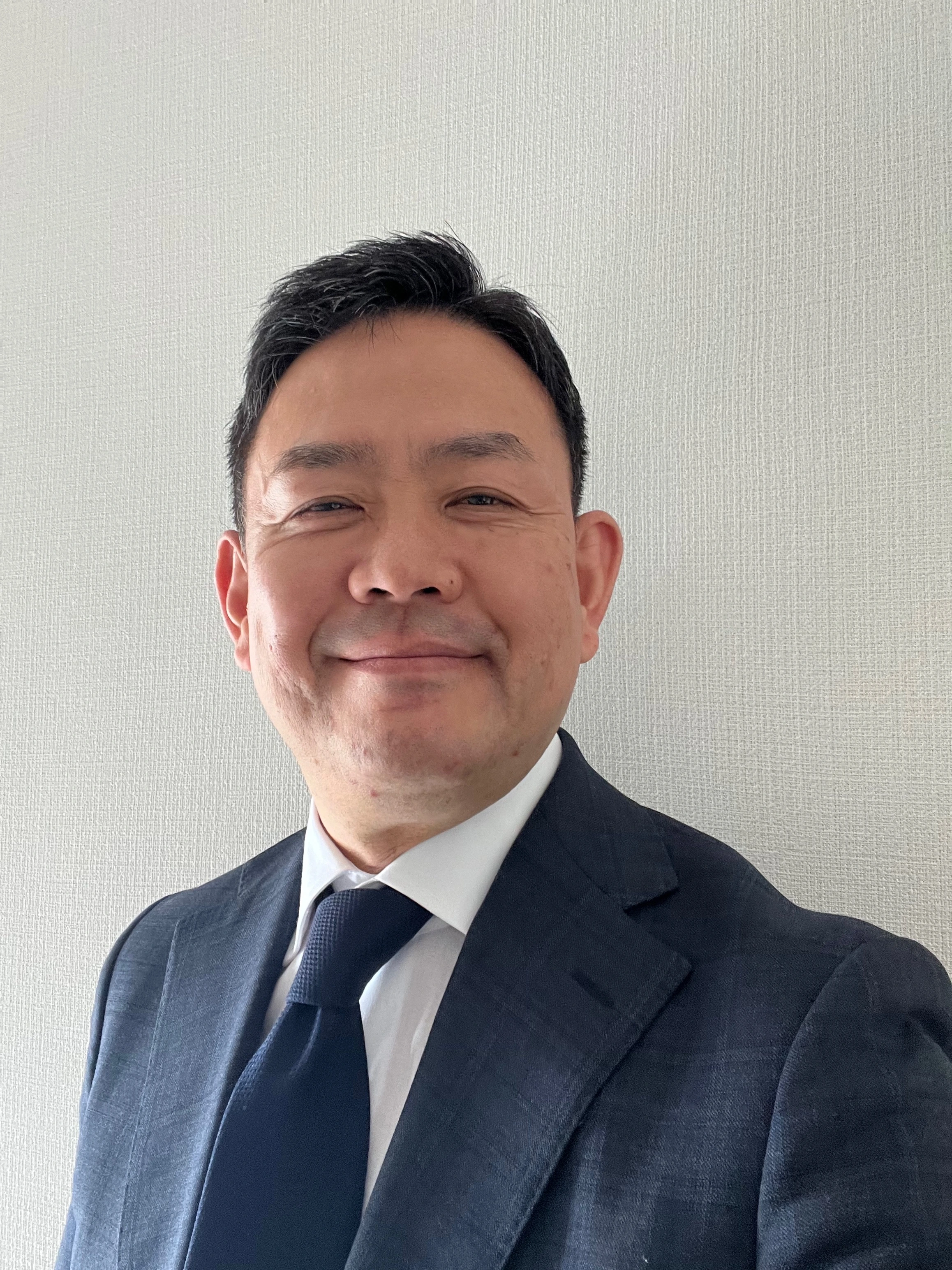
Author: Kenji Nishiyama (Certified Administrative Procedures Legal Specialist(Gyoseishoshi), Registration No.20081126)
Kenji Nishiyama is an Immigration and Visa Specialist who has supported many foreign residents with visa applications in Japan. On his firm’s website, he publishes daily updates and practical insights on immigration and residency procedures. He is also well-versed in foreign employment matters and serves as an advisor to companies that employ non-Japanese workers.