[Blog]Why Does Anxiety Seek a Target for Exclusion? — Threat Perception, Scapegoating, and Sense of Control —
2026-09-23
1. Looking at the Anxiety Behind Exclusion
The previous chapter examined how the behavior of one foreign resident can be generalized into a characteristic of an entire group through asymmetrical attribution and confirmation bias. Yet cognitive bias alone cannot fully explain why people sometimes develop negative perceptions of outgroups.
When life is stable, the future is reasonably predictable, and people feel that their own efforts can improve their circumstances, they are generally better able to respond calmly to social change. But when prices rise, housing becomes scarce, employment becomes unstable, public services appear strained, concerns about public safety increase, or the future becomes difficult to foresee, the psychological conditions through which people perceive society can change.
At such times, a highly visible change such as “the number of foreigners is increasing” may become associated with a wide range of anxieties.
Of course, an increase in foreign residents or visitors can have real effects on housing, education, healthcare, labor markets, administrative services, and local communities. Examining such effects is a legitimate and necessary part of policymaking.
However, the fact that an increase in foreign residents occurs during the same period in which social anxiety grows does not by itself establish that foreign residents are the cause of that anxiety.
The Balanced Coexistence Model does not simply dismiss anxiety about immigration as “prejudice.” At the same time, it does not assume that the existence of anxiety proves that foreign residents are its cause. The starting point is to distinguish the anxiety itself from the causes attributed to it.
2. What Do People Perceive as a “Threat”?
A threat does not mean only physical danger such as crime or violence.
People may fear losing their jobs. They may worry that wages will fall, housing will become harder to obtain, hospitals and schools will become overcrowded, taxes or social security burdens will increase, local customs will change, or familiar cultures and languages will lose their place in society.
Economic, institutional, and cultural changes can therefore all be perceived as threats.
The important distinction is between “feeling threatened” and establishing that an objective threat actually exists.
Sometimes perceived threats correspond closely to reality. Sometimes they are partially grounded in fact. In other cases, misunderstanding or insufficient information may cause risks to appear larger than they actually are.
For this reason, simply criticizing people for feeling threatened is insufficient, but treating every perceived threat as an established fact is equally inadequate. We must examine what is actually happening and assess the distance between perception and reality.
3. The Stronger the Anxiety, the Harder Complex Explanations Become
Most social problems cannot be explained by a single cause.
Rising housing costs may involve population movements, housing supply, land prices, construction costs, interest rates, investment demand, and urban concentration. Wages may be affected by productivity, industrial structure, corporate behavior, labor supply and demand, inflation, and regulation. Pressure on healthcare or education may reflect demographic structure, geographic distribution, staffing shortages, public finances, and institutional design.
Yet when anxiety becomes intense, complex causal relationships become more difficult to process.
A statement such as “many factors interact with one another” is harder to grasp than a simple explanation that says, “This is the cause.” Groups that are highly visible and perceived as different from “us” can therefore become convenient explanations for complex social problems.
A complicated problem can then be compressed into a single identifiable group. At that point, the policy question risks shifting from “How do we solve the problem?” to “Whom should we exclude?”
4. Scapegoating Does Not Arise Only from Imaginary Problems
Scapegoating is sometimes understood simply as blaming a group that has done nothing wrong. In real societies, however, the process can be more complicated.
Even when a genuine problem involving some members of a group exists, its scale or causes may be overgeneralized until the group itself becomes a container for broader social dissatisfaction.
Suppose, for example, that some foreign residents genuinely violate particular rules. Those violations should be addressed. But if that fact gradually becomes an explanation for housing shortages, low wages, anxiety about social security, concerns about public safety, and changes in local communities all at once, causal analysis begins to disappear.
The opposite mistake is also possible. It would be inappropriate to conclude that because scapegoating exists, every underlying problem must be imaginary. Denying genuine problems can deepen the distrust of people who experience them.
The Balanced Coexistence Model therefore seeks to hold two principles together: acknowledge real problems where they exist, while refusing to extend responsibility beyond what the evidence supports.
5. The Category “Foreigner” Easily Becomes a Container for Anxiety
As Chapter 54 explained, “foreigner” is an exceptionally broad category.
Tourists, international students, skilled workers, professionals, business owners, permanent residents, dependent family members, and asylum seekers may all be grouped under a single word despite major differences in legal status and everyday life.
The breadth of this category makes it particularly convenient as a container for anxiety. Congestion in tourist areas, housing, employment, social security, public safety, culture, and immigration control can all be placed inside the single statement that “there are more foreigners.”
But the broader the category, the less precise the policy response becomes.
If the problem is tourism-related congestion, it should be examined as a tourism policy issue. If it concerns working conditions in a particular industry, it should be treated as a labor policy issue. If the problem is illegal employment, enforcement should include employers and other responsible actors. If local residents lack necessary information, the issue may involve municipal communication or community support.
The task is to open the large box labeled “foreign resident problems,” take out the different issues placed inside it, and examine them separately. That is necessary when transforming public concern into effective policy.
6. People Become Anxious When They Feel They Cannot Influence What Happens
A crucial concept for understanding anxiety is the “sense of control.”
People generally cope better with difficult circumstances when they feel that their actions can influence outcomes to some degree. Anxiety becomes stronger when people believe that nothing they do will change the situation, that they do not know who is making decisions, or that they cannot anticipate what will happen next.
This issue of control is particularly important in immigration policy.
How many people will be admitted? In which sectors? What happens when rules are violated? Who monitors the impact on local communities? How will effects on social security, education, and housing be managed? Why are policies being changed?
If these questions are not adequately explained, people may develop the feeling that “society is being changed somewhere beyond our control.”
If this anxiety is treated merely as hostility toward foreigners, distrust in institutions may deepen further. Building trust toward foreign residents therefore also requires building trust in the policies and institutions governing immigration.
7. Lack of Predictability Magnifies Perceived Threats
This is another reason why the Balanced Coexistence Model consistently emphasizes predictability.
People do not fear change only because it is change. They may fear not knowing how far the change will go, what rules govern it, or how it will affect their own lives.
In immigration policy, explaining the purpose, scale, conditions, responsible institutions, responses to violations, and support for affected communities can at least make the range of possible outcomes more understandable.
By contrast, when policies are opaque and authorities repeatedly respond to problems only after they occur, the impression that immigration is “uncontrolled” may become stronger than the problems themselves would justify.
Understandable institutions create predictability. Predictable institutions strengthen the sense that society operates according to identifiable rules. That sense of control can reduce excessive threat perception.
Explainability is therefore necessary not only to protect the rights of foreign residents. It is also necessary to reduce anxiety within the receiving society.
8. “Strictness” Does Not Automatically Create Reassurance
When anxiety grows, demands for stricter policies can arise from the belief that greater strictness will create greater security.
Appropriate enforcement against unlawful conduct and abuse of systems is necessary. Rules that are never enforced can undermine institutional trust.
But strictness by itself does not create trust.
If screening becomes stricter while the criteria remain unclear, administrative discretion expands without explanation, or people living lawfully can no longer predict their future status, instability affects not only foreign residents but also employers, families, and communities.
The choice is therefore not simply between a “strict system” and a “lenient system.” What is needed is a system that responds effectively to violations while providing stable outcomes for lawful conduct.
Predictable strictness and unpredictable strictness are different. The former can support social order; the latter can generate new distrust.
9. Ignoring Anxiety Can Strengthen Exclusion
Responding to people who hold negative views of foreign residents only by saying, “That is prejudice” or “That is discriminatory” does not remove the anxieties that may lie beneath those views.
People may struggle to find housing. Their wages may not rise. They may worry about healthcare or education. Their neighborhoods may be changing rapidly. They may not understand what the government is doing. If such concerns exist, each should first be examined as a policy issue in its own right.
Where a causal relationship with immigration is supported by evidence, appropriate measures should be considered. Where that relationship is weak, other causes should be identified and the underlying problem should still be addressed.
The goal cannot simply be to explain that “foreigners are not responsible” and stop there.
If the problem people experience is real, policy must address its actual causes. Otherwise, unresolved anxiety may simply search for another scapegoat.
One way to reduce exclusion is therefore not merely to criticize the targeting of particular groups, but to reduce the accumulated anxieties that create demand for such targets in the first place.
10. Foreign Residents Experience the Same Structure of Anxiety
Threat perception and sense of control are not issues limited to the receiving society.
Foreign residents may also fear losing their residence status, being unable to renew it, having to leave Japan after losing a job, seeing long-term plans disrupted by policy changes, or suffering disadvantages because they cannot communicate sufficiently in Japanese.
When institutions are opaque, foreign residents can also develop the feeling that they have little control over their own future.
This may generate distrust toward public administration, employers, or Japanese society itself.
Balance is therefore necessary here as well. Coexistence cannot be achieved by treating only the anxieties of Japanese society as legitimate while ignoring those of foreign residents. Nor can trust be created by discussing only the anxieties of foreign residents while dismissing the concerns of the receiving society as prejudice.
Designing mutual trust means making visible what both sides fear and reducing, through institutions, those uncertainties that can reasonably be reduced.
11. Turning Anxiety from an “Enemy” into a “Problem to Solve”
Anxiety tends to search for an object. When people believe they know “who is responsible,” a complex society can temporarily feel easier to understand.
But once a group of people becomes the enemy, causal analysis stops.
If the issue is housing scarcity, analyze housing supply and demand. If it is low wages, examine industrial structure and labor markets. If systems are being abused, identify the mechanisms and actors enabling that abuse. If there is community friction, determine which rules are involved, between whom the friction occurs, and why.
The problem should be moved from categories of people such as “foreigners” into categories of issues such as “housing,” “employment,” “education,” “social security,” “public safety,” and “immigration administration.”
Policies can be applied to problems. Merely blaming a category of people leaves the underlying causes intact.
The Balanced Coexistence Model does not seek a society without anxiety. It seeks a society capable of translating anxiety into concrete problems that institutions can address.
12. Institutions That Restore a Sense of Control Build Trust
When society changes rapidly, people cannot simply be instructed not to feel anxious.
What matters is showing the principles by which change is being managed, who is responsible when problems arise, and how those problems will be corrected.
If foreign residents are admitted, explain why. If the scale of admission is determined, explain the basis for it. If social costs arise, prepare measures to address them. If violations occur, enforce the rules appropriately. Provide stable institutional treatment to foreign residents who live lawfully. Then evaluate the results of the policy and correct problems when they appear.
When this cycle is visible, people can understand that society is not beyond control.
Understanding creates predictability. Predictability restores a sense of control. A sense of control can reduce excessive threat perception and create greater room to rely on people and institutions. The accumulation of those experiences can then develop into trust.
Within the Balanced Coexistence Model, responding to exclusion does not begin by morally classifying people according to whether their attitudes are good or bad. It begins by identifying real problems accurately, separating the causes of anxiety, implementing appropriate governance and support, and accumulating experiences showing that society is capable of addressing its problems.
Human societies, however, have repeatedly sought to restore order by attributing anxiety and crisis to particular groups and excluding them. In some historical cases, dissatisfaction with individuals became generalized to entire groups, social categories became moral hierarchies, and institutions themselves eventually became mechanisms of exclusion.
The next chapter therefore turns to history—not to mechanically equate a particular country or period with the present, but to examine the cognitive structures through which exclusion has developed. The lesson of history is not merely a conclusion about “who was wrong.” It is an understanding of how ordinary societies can move toward exclusion through interacting patterns of cognition and institutional development.
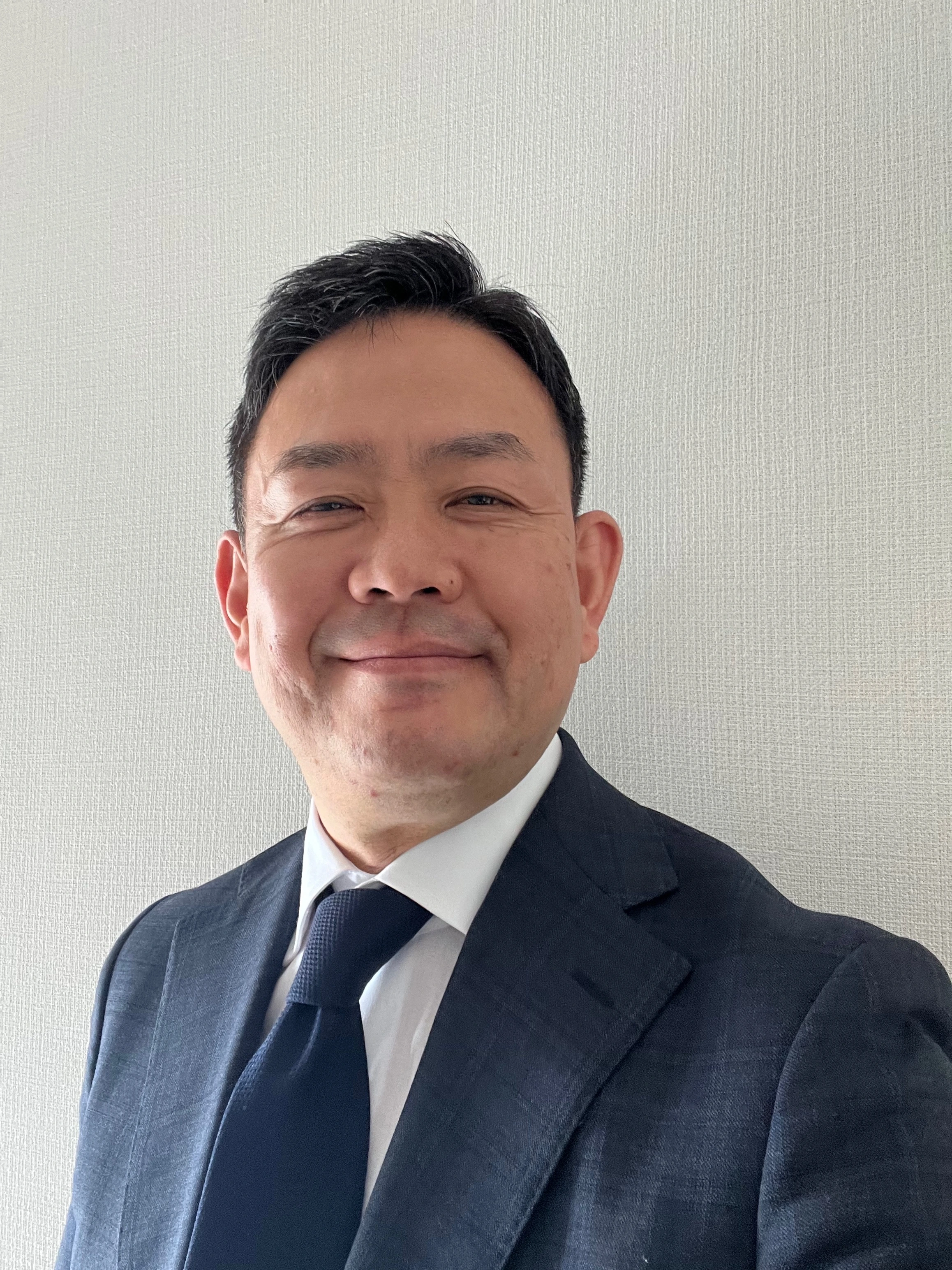
Author: Kenji Nishiyama (Certified Administrative Procedures Legal Specialist(Gyoseishoshi), Registration No.20081126)
Kenji Nishiyama is an Immigration and Visa Specialist who has supported many foreign residents with visa applications in Japan. On his firm’s website, he publishes daily updates and practical insights on immigration and residency procedures. He is also well-versed in foreign employment matters and serves as an advisor to companies that employ non-Japanese workers.