[Blog]Understanding Society Through Experience — Judging Through Successes and Failures —
2026-08-14
1. Thinking from Experience, Not Simply from Opinion
When thinking about foreign residents, we encounter a vast amount of information through news reports, social media, statistics, political arguments, and the opinions of people around us. Such information is necessary for understanding society. Yet knowing information and forming one's own judgment are not the same thing. If we simply substitute the opinions of others for our own understanding, we lose the opportunity to examine reality for ourselves.
The Balanced Coexistence Model does not ask people to hold favorable views of foreign residents, nor does it demand that negative views be avoided. Instead, it asks what actually happened, how each person acted, and what resulted from those actions. If cooperation with foreign residents succeeded, we should ask why it succeeded. If problems occurred, we should ask why they occurred. The starting point of judgment should therefore shift from attributes and reputation to concrete experience.
2. Successful Experiences Have Causes
If a positive relationship with a foreign resident is dismissed simply by saying, “That person happened to be a good person,” society learns very little from the experience. Successful experiences usually have conditions that made them possible.
If foreign workers remain with a company and demonstrate their abilities, perhaps the company provided careful explanations during recruitment. Their roles may have been clearly defined. Japanese colleagues may have created an environment in which questions could easily be asked. The foreign workers themselves may have made efforts to learn Japanese and understand workplace rules. The company may also have provided appropriate wages, social insurance coverage, and accessible consultation mechanisms.
The important point is not to consume successful cases merely as inspiring stories, but to identify the behaviors and conditions that produced success. If we can understand what created trust, there is a greater possibility that those conditions can be reproduced in other workplaces and communities.
3. Unsuccessful Experiences Are Also Important Information
In considering balanced coexistence, unsuccessful experiences must not be ignored. Friction can arise between foreign and Japanese residents. Promises may not be kept. Workplace rules may be violated. Conflicts may occur with local residents over everyday community rules. If such realities are left undiscussed simply because acknowledging them might contribute to prejudice, there will be no opportunity to improve them.
However, when failure occurs, we must avoid immediately attributing its cause to nationality or culture. Was the problem caused by the individual's conduct? Were the rules inadequately explained? Did the employer fail to manage the workplace properly? Did a support organization fail to perform its role? Was the administrative system too complex for the person to understand? The causes must be separated and examined.
An unsuccessful experience can become material for discovering what needs to be corrected rather than evidence for excluding someone. Individual responsibility should be identified when misconduct has occurred, while institutional or organizational shortcomings should also be recognized where they exist. This is what it means to learn from experience.
4. Looking at Behavior Rather Than Attributes
In personnel assessment, there are approaches that focus not merely on academic background, titles, or impressions, but on the actual behaviors that lead to results. This perspective can also be useful when thinking about foreign residents.
Instead of predicting behavior from attributes such as “being a foreigner” or coming from a particular country, we can examine what the individual actually does. Does the person keep promises? Complete necessary procedures? Try to understand explanations? Seek help when problems arise? Cooperate with others? Correct mistakes when they occur? Such concrete behavior provides more meaningful information for building trust than nationality alone.
This principle should not apply only to foreign residents. Businesses and public authorities should be evaluated in the same way. A company may claim that it values foreign employees, but if it fails to provide adequate explanations or imposes inappropriate working conditions, its conduct should matter more than its stated philosophy. Likewise, government should be evaluated not merely by its declarations of coexistence, but by how it responds to consultations and whether institutions are provided in ways that people can actually understand.
5. Interpersonal Experience Changes Social Perception
Institutional experience matters, but interpersonal experience is equally important. When foreign residents are discussed only in the abstract, the word “foreigners” can appear to describe one enormous category. Once people work together, meet as neighbors, or participate in community activities together, however, the other person begins to appear not as a category but as an individual.
A “foreign colleague” gradually becomes a particular colleague with a name through everyday work. Conversely, for a foreign resident who initially has only an abstract impression of Japanese society, experiences with a supervisor who patiently teaches the job, a neighbor who provides help during difficulty, or a public official who offers a careful explanation can shape perceptions of Japanese society.
Coexistence does not mean that different groups come to understand one another only at an abstract level. It develops through the accumulation of reciprocal experiences in everyday relationships, in which people observe the conduct of others while their own conduct is also observed and evaluated.
6. Institutional and Interpersonal Experiences Cannot Be Separated
Human relationships do not exist independently of institutions. A deteriorating relationship between a foreign worker and Japanese employees may have its roots in unclear job responsibilities or unequal treatment. Conflict with local residents may partly result from insufficient explanation by local government concerning community rules.
Conversely, well-designed institutions can make positive interpersonal experiences more likely. When roles are clear, responsibilities are fairly distributed, consultation channels exist when problems arise, and both sides understand the same rules, unnecessary suspicion between people is less likely to develop.
Institutions and human relationships should therefore not be considered separately. Institutions create the conditions under which people encounter one another, while experiences arising from those encounters influence how institutions themselves are evaluated. Positive institutional experiences and positive interpersonal experiences can mutually reinforce trust.
7. Do Not Extend One Experience to Society as a Whole
Precisely because experience matters, its limitations must also be understood. Building a good relationship with one foreign resident does not demonstrate that immigration policy has no problems. Experiencing a problem with one foreign resident does not demonstrate that foreign residents as a whole are problematic.
People tend to place considerable confidence in events they have personally experienced. Yet every personal experience occurs within a particular place, time, and relationship. Learning from experience and generalizing from experience are two different things.
Experience should therefore be compared with statistics, institutional conditions, and the experiences of others. Was the event I experienced common or exceptional? Would the outcome have been different under different conditions? By continuing to ask such questions, experience can become a foundation for more reliable social understanding rather than merely reinforcing existing assumptions.
8. Asking “Why” Between Success and Failure
The most important question when learning from experience is not only “What happened?” but also “Why did it happen?”
Foreign employment succeeded. Why? Was it because the employee had strong Japanese-language skills? Because workplace training functioned effectively? Because the person's expertise matched the job? Foreign employment failed. Why? Was the individual responsible? Was recruitment information inadequate? Was there a problem with an intermediary? Was there a mismatch between the residence system and the actual work?
If we evaluate only outcomes, we may end with categories such as “good foreigner” and “bad foreigner.” If we examine causes, however, we can distinguish individual behavior from institutional conditions. We can then reproduce the conditions associated with success and correct those associated with failure.
The Balanced Coexistence Model therefore calls not for emotional evaluation, but for identifying causes through experience and applying what has been learned to future behavior and institutional design.
9. Small Experiences Accumulate to Form Perceptions
Social perceptions are not formed only by major events. Small everyday experiences accumulate until people begin to think, “I can trust this person,” “I can ask this company for help,” or “I can rely on this institution.”
Someone returns a greeting. An unfamiliar word is explained. An agreed time is respected. Necessary documents are prepared by the deadline. Someone helps another person who is in difficulty. Each experience may appear insignificant. Yet when such small successful experiences are repeated, predictability increases and gradually develops into trust.
Small failures also accumulate. Explanations differ each time. Promises are repeatedly broken. Requests for help receive no response. Rules seem to change depending on the person involved. When these experiences are repeated, distrust ceases to be a reaction to a single event and becomes a stable perception of the surrounding society.
Both trust and distrust are learned through everyday experience. Social integration, therefore, cannot be achieved only through large-scale policies. It also requires continuous improvement in the quality of small experiences.
10. Experience Does Not Become Learning Without Reflection
Simply having an experience does not necessarily deepen understanding. Even after experiencing failure, people may strengthen prejudice if they misunderstand its cause. Likewise, success cannot easily be reproduced if no one examines why it occurred.
Reflection is therefore essential. What happened? What did I do? What did the other person do? How did institutions influence the situation? Could a different action have produced a different outcome? Experience becomes something that can be learned from when it is examined through questions such as these.
Past perceptions should also be revised in light of new experiences. A judgment that once appeared correct may change when new facts emerge. Such revision should not be regarded as failure. The ability to update one's understanding of society is itself an essential part of learning from experience.
11. Toward a Society Grounded in Experience
The society envisioned by the Balanced Coexistence Model does not require citizens to feel positively toward foreign residents. Nor does it require foreign residents to adapt unconditionally to Japanese society.
What it seeks is a society that judges people by behavior rather than attributes, evaluates institutions by how they actually function rather than by their stated ideals, and learns from both success and failure. When a problem exists, it should be recognized as a problem. Its causes should then be examined accurately. When something succeeds, the conditions that enabled success should be shared. New experiences should then be used to revise both social perceptions and institutions.
News can provide a starting point for thinking about society. The opinions of others can also provide valuable perspectives. But trust that becomes embedded in society develops through the accumulation of institutional and interpersonal experiences in everyday life.
Experience, reflection, learning, and improvement can form a continuing cycle. When that cycle is repeated, coexistence moves from an abstract ideal into everyday life. A balanced coexistence society is not a state of completed harmony. It is a society in which people and institutions continue to improve by learning from both their successes and their failures.
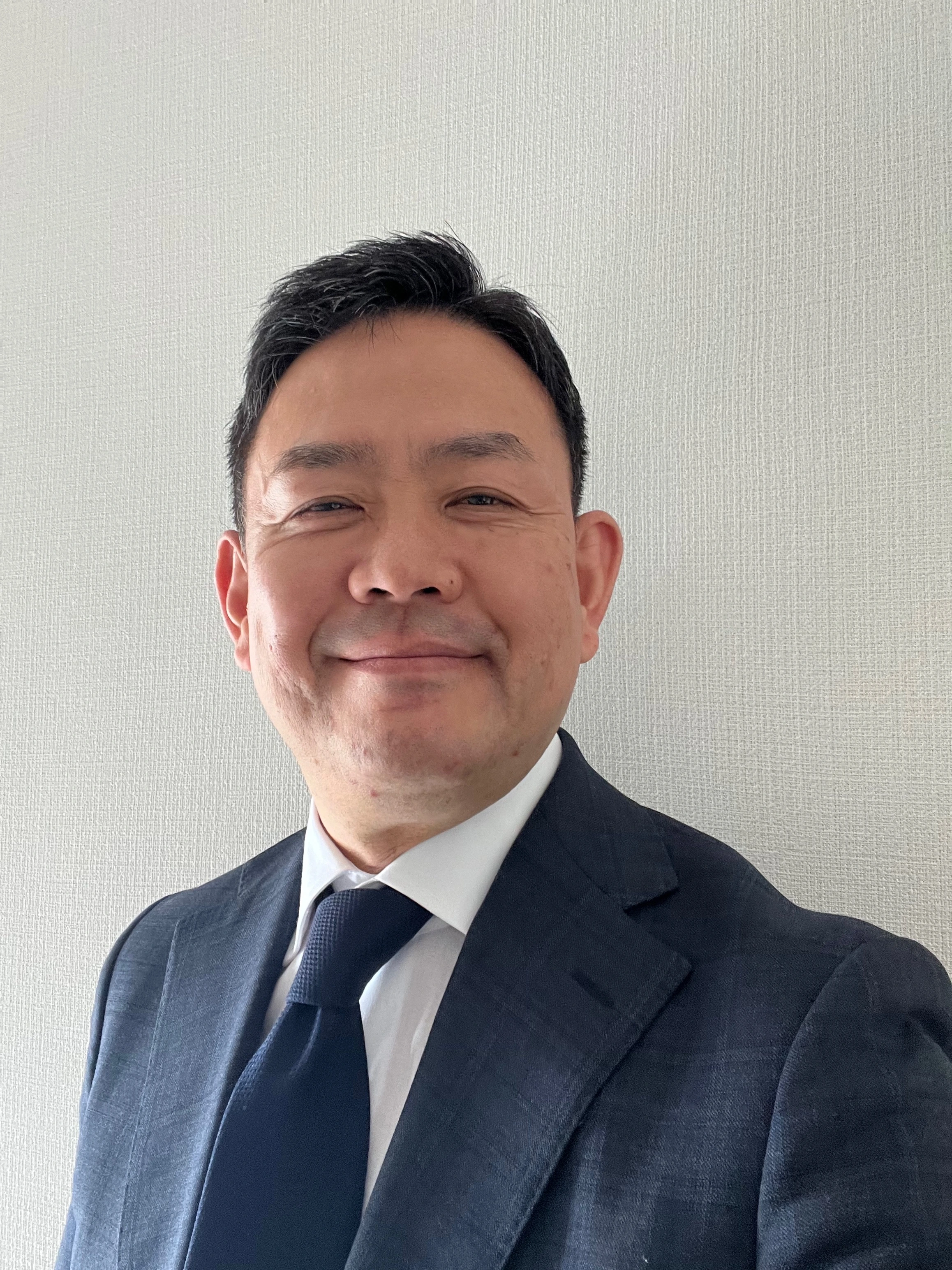
Author: Kenji Nishiyama (Certified Administrative Procedures Legal Specialist(Gyoseishoshi), Registration No.20081126)
Kenji Nishiyama is an Immigration and Visa Specialist who has supported many foreign residents with visa applications in Japan. On his firm’s website, he publishes daily updates and practical insights on immigration and residency procedures. He is also well-versed in foreign employment matters and serves as an advisor to companies that employ non-Japanese workers.