[Blog]What Do People Base Their Judgments About Foreign Residents On? — Social Perceptions Shaped by News, Reputation, and Experience —
2026-08-10
1. How Do We Come to Know Foreign Residents?
When forming opinions about foreign residents, what do we actually rely upon? Some people base their views on direct experience, such as working with foreign colleagues, living alongside foreign neighbors, or interacting through schools and community activities. In many cases, however, perceptions of foreign residents are formed through news reports, social media, statements by politicians and commentators, and stories heard from family members or acquaintances.
When people have not experienced something directly, they must rely on information provided by others. Since no one can personally experience every aspect of society, journalism and expert analysis are indispensable. The problem is not the use of indirect information itself. The problem arises when people forget that such information captures only part of reality and begin to believe that they understand foreign residents as a whole.
The term “foreign resident” includes workers, international students, family members, permanent residents, refugees, tourists, investors, and many others with different backgrounds and purposes. Yet when a particular incident or institutional problem is presented broadly as a “foreign resident issue,” diverse individuals become perceived as a single group. Social perception is shaped not by reality in its entirety, but by selected information about reality.
2. News Makes Exceptions Visible
News naturally focuses on events that depart from ordinary life. Foreign residents who work lawfully, pay taxes and insurance contributions, and live quietly within their communities rarely become news. Crime, abuse of institutions, community conflict, and administrative failure, by contrast, attract attention because of their public significance.
This is not an unnatural function of journalism. Making social problems visible and connecting them to institutional reform and accountability is important. However, the frequency with which events are reported is not the same as the proportion in which they occur in society. When exceptional events repeatedly appear before us, we may begin to feel that they represent a general pattern.
Learning about one incident is not the same as understanding the characteristics of all foreign residents. Learning about improper employment practices at one company is not the same as understanding foreign employment as a whole. News can be an important gateway to social problems, but it should not by itself determine judgments about an entire group.
3. Social Media Accelerates Judgment
On social media, short texts, images, videos, and forceful language spread rapidly. Information that provokes anger, anxiety, surprise, or sympathy often travels more widely than explanations of complex institutional backgrounds or factual relationships. Debates concerning immigration policy are easily reduced to simple oppositions, such as admission versus exclusion or rights versus order.
Immigration, refugee, and foreign labor policies, however, involve many interconnected institutions and areas of life. Residence status, employment contracts, social insurance, taxation, housing, education, family life, local communities, and international relations cannot be understood in isolation. A short post may present one fact, but that fact alone does not reveal its causes, background, or institutional allocation of responsibility.
The danger of social media lies not only in false information. Even accurate information can create a misleading overall impression when only one aspect is repeatedly emphasized. People tend to accept information that confirms their existing beliefs and reject information that challenges them. In this way, the information environment itself can become a mechanism that repeats and intensifies distrust.
4. Another Person’s Experience Is Not Your Own
When an acquaintance says that they had a problem with a foreign resident, the story may remain more strongly in memory than abstract statistics. Conversely, stories about being helped by a foreign colleague or building a positive relationship in the community may also transform perceptions. Other people’s experiences often feel more immediate and concrete than news reports.
Yet another person’s experience is communicated through that person’s position and interpretation. Unless we distinguish what occurred, how the other party acted, and what problems existed within the institution or workplace environment, a single experience may become connected to nationality itself.
For example, when a foreign employee fails to follow workplace rules, the cause may lie in the individual’s conduct. However, the rules may not have been adequately explained. The employee may have been assigned duties different from those stated in the employment contract, or requests for consultation may have been ignored. If the outcome alone is treated as a problem of nationality, the institutional or organizational issues that should be corrected remain invisible.
5. Experience Connects Conduct with Outcomes
The concept of competency in personnel assessment emphasizes actual behaviors and characteristics that produce results rather than relying solely on academic background, personal attributes, or impressions. This perspective can also be applied when forming social perceptions of foreign residents.
What matters is not only the country from which a person comes. More relevant questions include whether the person kept promises, attempted to understand explanations, cooperated with others, and tried to correct problems when they arose. Similarly, businesses and public authorities should be evaluated not merely by their stated principles or reputations, but by the explanations they actually provided and how they responded to concrete problems.
When judgments are based on conduct and outcomes, nationality can be separated from individual behavior. It also becomes possible to examine whether success or failure resulted from the individual, the employer, the institution, insufficient information, or the language environment. This does not mean affirming foreign residents unconditionally. It is a practical method for identifying problems accurately and allocating responsibility appropriately.
6. Both Successful and Unsuccessful Experiences Matter
When considering coexistence with foreign residents, presenting successful cases alone is insufficient. If only positive examples are emphasized, genuine conflicts and institutional problems may become invisible. On the other hand, collecting only failures creates a narrative that justifies distrust and exclusion.
Successful experiences reveal the conditions that produced good relationships. Clear explanations, appropriate divisions of responsibility, equal treatment, accessible consultation, and shared purposes may all contribute to success. Unsuccessful experiences reveal what was lacking, at what stage correction was possible, and who should have borne responsibility.
The Balanced Coexistence Model does not merely praise success and condemn failure. It seeks to connect both successful and unsuccessful experiences to future institutional design and behavioral improvement. Experience should be used not to finalize judgment, but to update understanding.
7. A Single Experience Must Not Be Generalized
Direct experience is more concrete than news or reputation. Yet the fact that an experience is personal does not mean that it accurately represents society as a whole. It is inappropriate to conclude from one positive encounter that no foreign resident presents any problem, just as it is inappropriate to conclude from one negative encounter that foreign residents as a whole cannot be trusted.
Every experience has a scope. We must consider where it occurred, within what relationship, and over what period of time. An impression formed within a strongly hierarchical workplace relationship is not the same as one formed through equal cooperation in a community activity. Care must also be taken not to interpret conduct under severe institutional constraints as a person’s inherent character.
Valuing experience does not mean treating experience as absolute. It means comparing multiple experiences, examining them alongside statistics and institutional contexts, and continually revising one’s own understanding.
8. Information Fills the Space Where Experience Is Absent
In regions and workplaces where contact with foreign residents is limited, people have few opportunities to form perceptions through direct experience. News, social media, political discourse, and rumor fill that gap. The less direct experience people possess, the greater the influence of indirect information becomes.
This does not mean that increasing contact with foreign residents will automatically eliminate prejudice. Depending on the conditions, contact may intensify conflict and distrust. Admission without explanation, unclear roles, unfair burdens, and the absence of mechanisms for resolving problems can produce harmful experiences.
Policy should therefore do more than place foreign and Japanese residents in the same physical spaces. It must create conditions for constructive interpersonal experience by establishing shared purposes, understandable rules, fair divisions of responsibility, and pathways for consultation and correction.
9. Institutions Also Bear Responsibility for Shaping Social Perception
Institutions do more than permit, prohibit, or regulate conduct. Through their operation, they provide people with particular experiences, and those experiences shape social perception.
When the purpose and scale of foreign admission, employer responsibilities, available support, and procedures for responding to problems are not explained, local communities cannot determine whether the system is functioning properly. Under opaque institutions, individual problems are more likely to be transformed into distrust of foreign residents as a whole.
Conversely, when the purpose of admission is clear, rules are applied fairly, problems are corrected early, and the contributions of foreign residents are made visible, people become better able to distinguish between institutions and individuals. Positive institutional experiences support positive interpersonal experiences, and the accumulation of both creates trust in society.
10. Social Perceptions Can Be Revised
Human views are not fixed once formed. Perceptions can be corrected when people encounter new experiences, discover facts that differ from their previous understanding, and reflect upon the causes of events.
What matters is not dismissing experiences that contradict one’s existing beliefs as mere exceptions. If someone who holds a negative view of foreign residents works with a trustworthy foreign colleague, that experience can become an opportunity to reconsider earlier assumptions. Likewise, if someone who has unconditionally supported intercultural exchange encounters institutional abuse or community conflict, that experience can become an opportunity to examine institutional defects and responsibility.
Balanced coexistence does not mean accepting only positive information. It means recognizing both success and failure, benefit and burden, rights and obligations, and updating judgment through experience.
11. From Information to Experience, and from Experience to Trust
News and the opinions of others are important gateways to understanding society. However, they cannot replace one’s own judgment. When thinking about foreign residents, people should examine the source and scope of information, avoid generalizing individual events to entire groups, and base judgments as far as possible on concrete conduct and experience.
At the same time, people should not become confined within their own experience. Personal experiences must be reflected upon, compared with the experiences of others and with objective information, and used to revise one’s understanding. Information and experience are not opposites. Information provides context for interpreting experience, while experience offers an opportunity to test information within reality.
People can form opinions through news. Trust, however, is formed through concrete experiences with institutions and other people. When those experiences are reflected upon, trust becomes not blind expectation, but a social perception grounded in evidence.
The Balanced Coexistence Model does not demand favorable feelings toward foreign residents. It asks people to judge individuals and society through concrete conduct, institutional performance, and experiences of both success and failure rather than through attributes or impressions. Through the accumulation of such judgments, a foundation for coexistence grounded in experience can emerge—one that avoids both information designed to inflame distrust and idealism detached from reality.
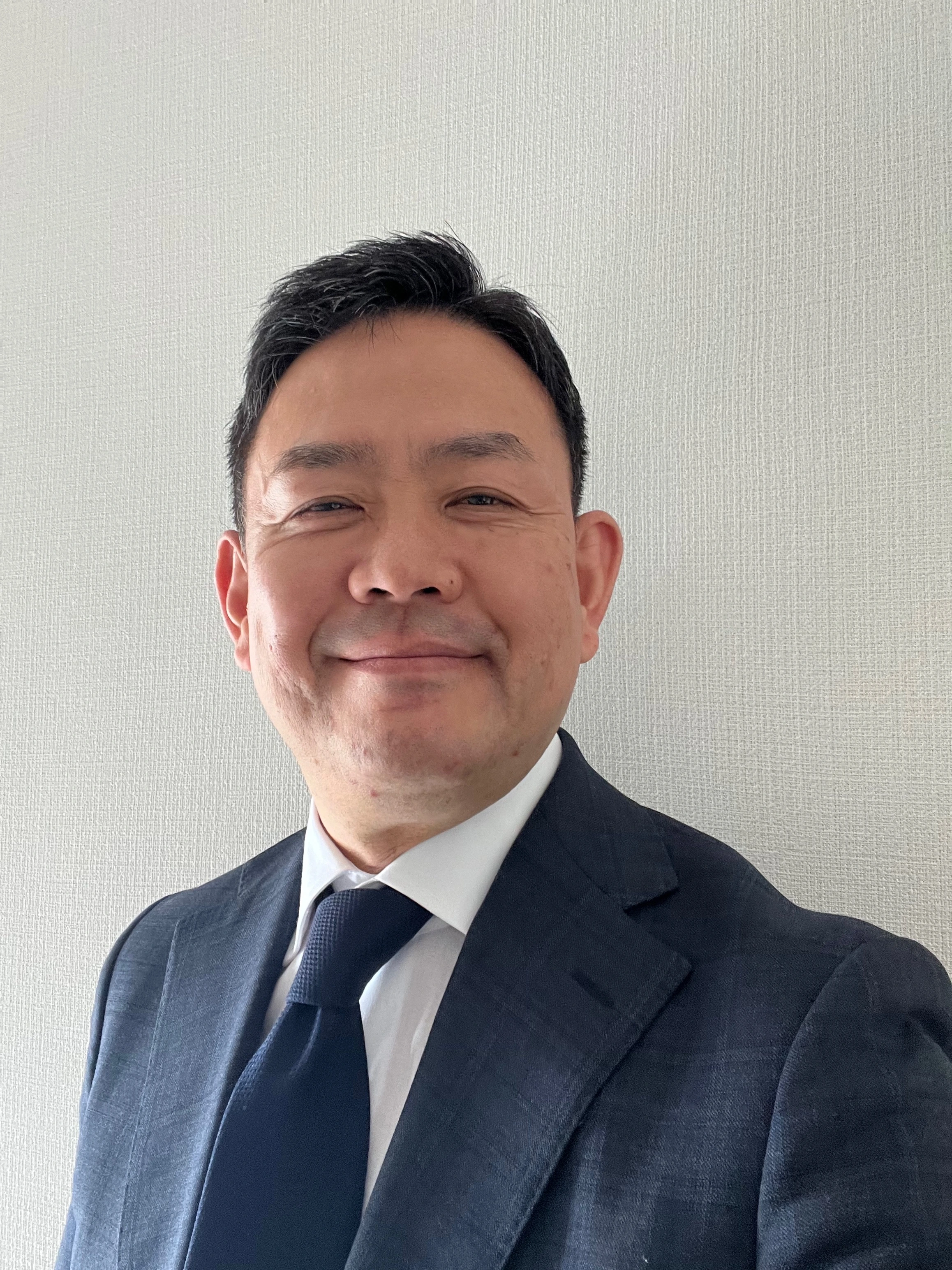
Author: Kenji Nishiyama (Certified Administrative Procedures Legal Specialist(Gyoseishoshi), Registration No.20081126)
Kenji Nishiyama is an Immigration and Visa Specialist who has supported many foreign residents with visa applications in Japan. On his firm’s website, he publishes daily updates and practical insights on immigration and residency procedures. He is also well-versed in foreign employment matters and serves as an advisor to companies that employ non-Japanese workers.